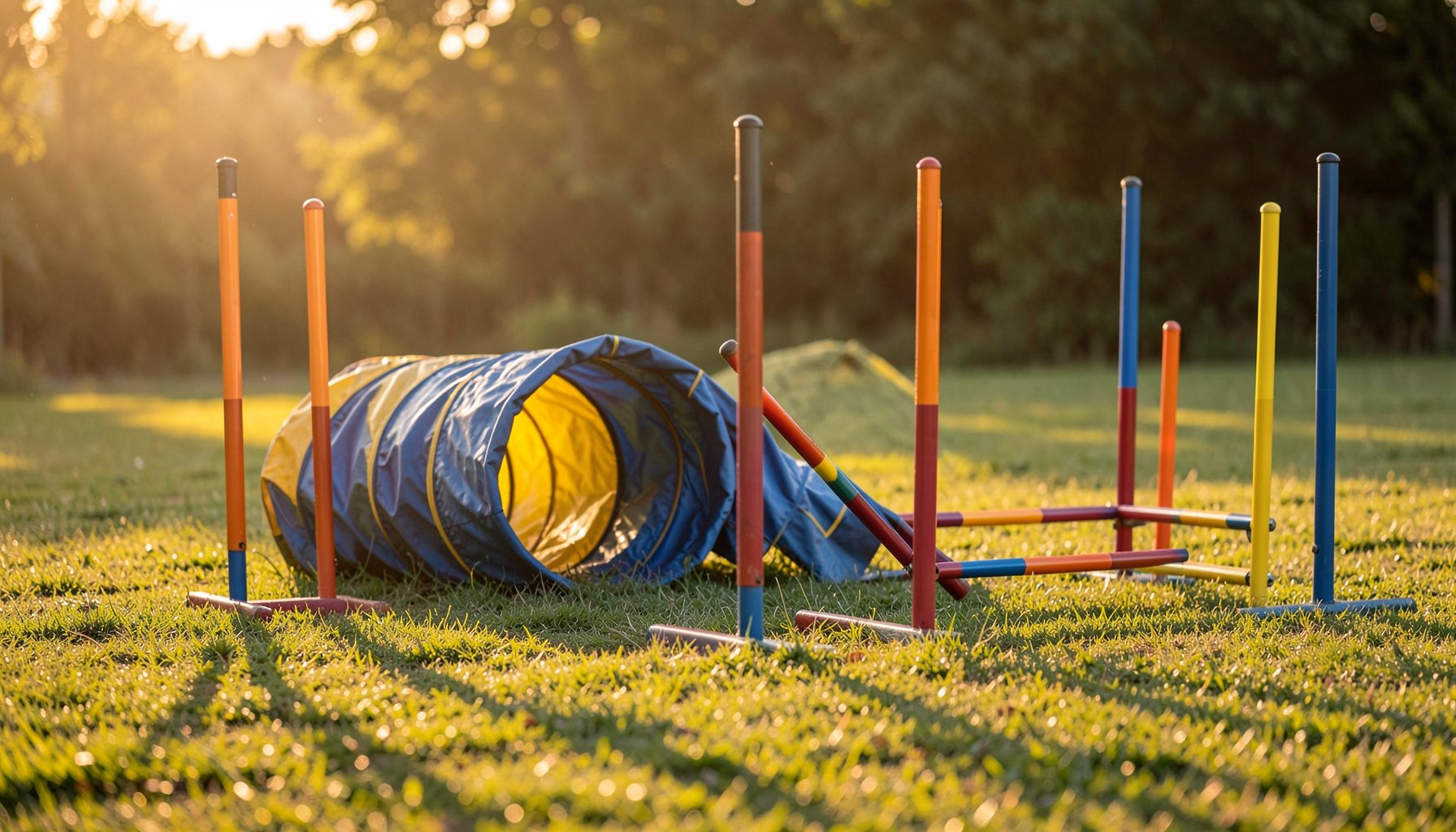
A Beginner’s Guide to USDAA Agility Classes and Titles
USDAA dog agility combines speed, accuracy, problem-solving, and teamwork between a handler and dog. A beginner may start with simple obstacle skills in a class, then enter competition when both partners can complete a course safely and confidently. The path from first lesson to a recognized title is flexible, allowing teams to progress at different speeds.
The United States Dog Agility Association offers several types of competition, including Standard, Jumpers, Gamblers, Snooker, and relay events. Each class tests different skills. Standard courses include contact obstacles and usually emphasize full-course performance, while Jumpers focuses on efficient movement over jumps and tunnels.
USDAA events also create a useful record of a dog’s development. Results, qualifying scores, and accumulated titles can show progress over time, while professional event photography preserves the memorable runs, celebrations, and partnership moments. A USDAA event gallery can help handlers locate images by event, club, or dog name.
Choosing the right first class
Most new teams benefit from a foundation or beginner agility class before entering a trial. These lessons typically introduce handling cues, obstacle names, reward placement, start-line routines, and safe approaches to jumps, tunnels, weave poles, and contact equipment. A good instructor adapts exercises to the dog’s age, confidence, physical condition, and learning style.
A beginner does not need a fast dog or a perfect heel to begin agility training. The important foundations are responsiveness, willingness to work with the handler, and the ability to focus around moderate distractions. Dogs should also have appropriate veterinary clearance, especially before repeated jumping, tight turns, or contact work.
Classes may be organized by experience rather than by USDAA title level. Ask whether a session is designed for foundation work, novice competitors, or experienced teams. A class that moves gradually from individual obstacles to short sequences is often a better starting point than one that immediately asks a new team to run a full competition course.
Skills that carry into competition
Agility training begins with communication. Dogs learn that verbal cues, body position, hand signals, and motion can indicate where to go next. Handlers learn to plan a line, manage their own movement, and deliver information early enough for the dog to respond without hesitation.
Obstacle performance must be reliable and safe. Contact zones need careful training, weave poles require patience and repetition, and tunnels should be introduced in ways that build confidence rather than startle a cautious dog. Reward-based methods help create enthusiasm while allowing the handler to reinforce precise behavior.
Course reading becomes increasingly important as teams advance. Before a run, the handler studies obstacle numbers, evaluates turning points, identifies areas where the dog may lose commitment, and chooses a handling plan. Walking the course also helps determine where to position for the next cue and how to maintain a comfortable pace.
How USDAA levels and titles work
USDAA competition traditionally includes Starters, Advanced, and Masters levels. A team generally begins at Starters, earns qualifying performances, and progresses when the applicable requirements are met. The exact criteria can depend on the class, program, jump height, and current USDAA regulations, so competitors should consult the organization’s official rulebook before planning a title campaign.
USDAA also has different programs and title paths, including the Championship Program and Performance Program. The Performance option may suit dogs that benefit from modified jump heights or other program-specific accommodations. Eligibility, class availability, and title abbreviations can change, making current event premium information an essential reference.
The word “qualifying” usually means that a run met the requirements for a score or leg toward a title. A qualifying performance may require a clean round, a minimum score, a time standard, or another combination of conditions. A single exciting run is valuable, but titles are built through consistent results across the required classes.
Comparing common USDAA competition classes
Each class rewards a different type of teamwork. Some handlers prefer the strategic choices in Gamblers or Snooker, while others enjoy the flowing lines of Jumpers. Standard is often the class beginners recognize first because it combines several familiar agility obstacles in one numbered course.
| Competition class | Main emphasis | Skills a beginner develops |
|---|---|---|
| Standard | A complete course with jumps, tunnels, contacts, and other obstacles | Obstacle reliability, sequencing, contacts, and course navigation |
| Jumpers | Speed and accuracy over jumps and tunnels | Tight turns, forward motion, commitment, and handler timing |
| Gamblers | Independent work and strategic point collection | Distance handling, obstacle value, planning, and time management |
| Snooker | Completing a prescribed pattern of red and colored obstacles | Course strategy, impulse control, and flexible decision-making |
| Relay events | Two or more teams sharing a competitive performance | Transitions, consistency, teamwork, and ring awareness |
The best class for a first competition depends on the dog’s preparation and the instructor’s advice. Some teams begin with a straightforward Standard run, while others gain confidence through a class with fewer technical demands. A beginner should focus on completing a safe, enjoyable performance rather than rushing toward every available title.
Preparing for a first USDAA trial
Before entering, attend a few classes in unfamiliar environments if possible. Training at different facilities helps the dog adjust to new flooring, ring gates, sounds, spectators, and equipment. Practice settling in a crate or vehicle, walking politely near other dogs, and responding to warm-up cues without becoming overstimulated.
Study the premium list carefully. It will explain the host club, venue, entry deadlines, offered classes, jump heights, measuring requirements, check-in details, and sometimes camping or parking information. Arrive early enough to walk the course, locate the ring, and give the dog time to relieve itself and settle.
On trial day, keep the routine simple. Bring water, treats, a leash, waste bags, a crate or mat, suitable footwear, and any required records. Watch a few competitors, but avoid comparing your first effort with advanced teams. A calm start, clear cues, and a positive exit from the ring are worthwhile goals even if the run does not qualify.
Building progress between trials
Consistent short sessions are usually more productive than occasional marathon practices. End while the dog is still engaged, vary the rewards, and revisit foundation skills even after competition begins. Video can reveal handler habits that are difficult to notice during a fast run, such as late turns, unclear deceleration, or movement that blocks the dog’s line.
Physical preparation deserves equal attention. Warm up with controlled movement, allow recovery after strenuous work, and discuss conditioning with a qualified professional when appropriate. Dogs that show stiffness, reluctance, repeated refusals, or unusual fatigue should be evaluated rather than pushed through another session.
Keep a simple record of classes, trial entries, qualifying scores, title legs, and skills that need attention. The record can make progress visible when improvement feels slow. It also helps with entry planning and provides useful context when speaking with an instructor about the next training goal.
Practical habits for steady improvement
A clear routine can make USDAA training less overwhelming. Choose one or two priorities for each practice, such as start-line focus, tunnel commitment, weave-pole entries, or handling a sharp turn. Celebrate accurate choices instead of measuring every session by speed.
Use these habits to support a confident path toward competition:
- Attend a class that matches the team’s current experience and physical ability.
- Practice short sequences with clear rewards before adding full-course complexity.
- Learn the current USDAA rules and verify title requirements before entering.
- Keep trial-day equipment organized and allow extra time for walking and settling.
- Review run videos or notes to identify one useful adjustment for the next session.
Photography can add another layer to the experience by capturing the dog’s concentration, takeoff, and teamwork with the handler. When ordering event images or creating a customer account, review the site’s privacy policy so you understand how personal information is handled.
USDAA agility rewards patience as much as athletic ability. A beginner can make meaningful progress by learning safe obstacle skills, developing reliable communication, choosing suitable classes, and treating each trial as another training opportunity. Browse upcoming event information, prepare your team gradually, and preserve the runs that mark each new step with Pawprint Pictures.