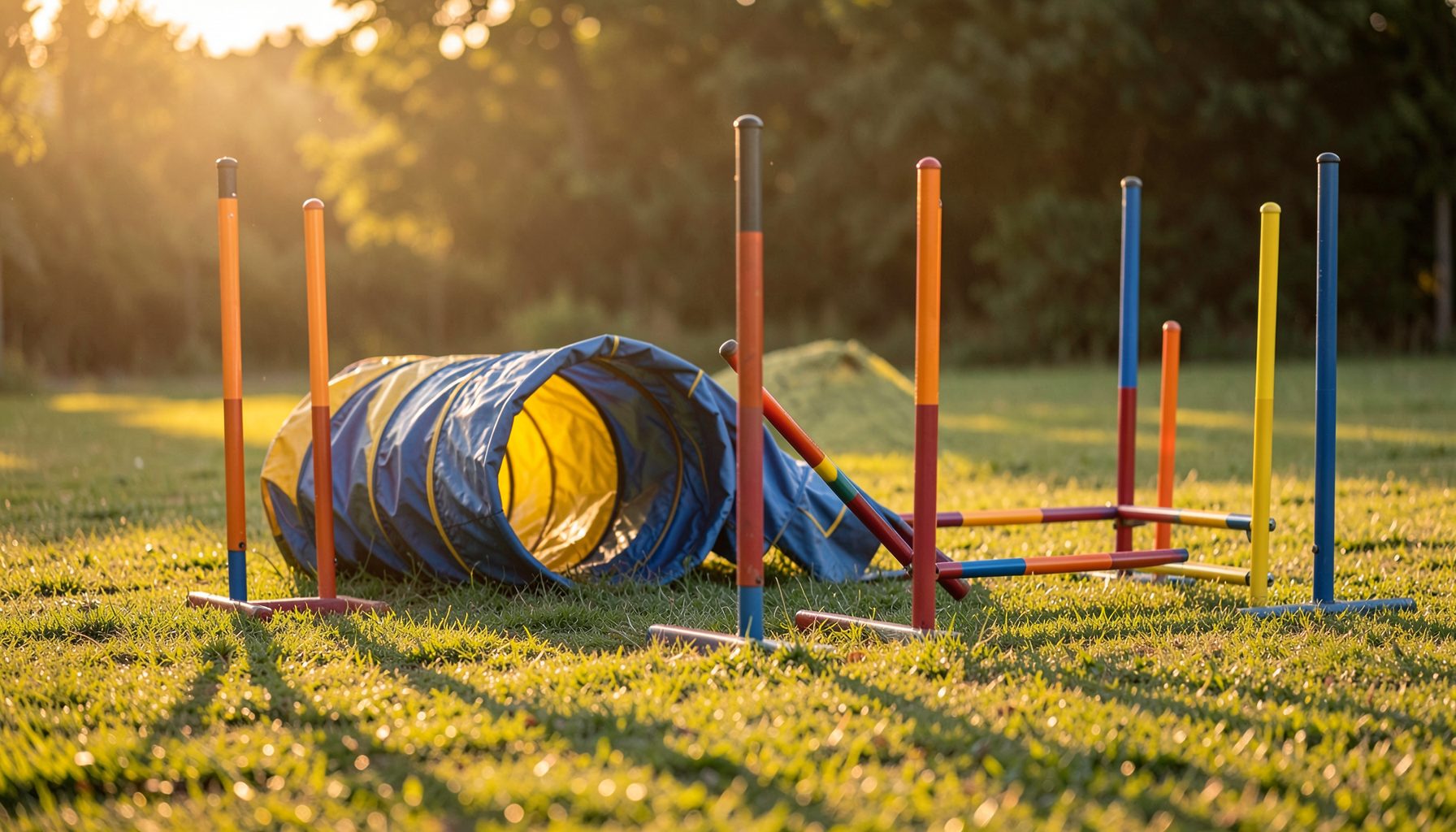
A Day in the Life of an Agility Photographer at a Trial
Before sunrise, an agility photographer is already thinking about motion, light, and logistics. While handlers walk courses and dogs stretch beside their crates, the photographer checks camera bodies, batteries, memory cards, lenses, monopods, and weather protection. A trial day can include hundreds of runs, several rings, changing schedules, and very little time to reset.
The work is part athletic event coverage, part storytelling, and part careful organization. A fast Sheltie launching over a jump requires a different approach from a steady veteran navigating contacts, yet every team deserves a sharp image that captures its partnership and personality.
For handlers, the best photographs often come from moments that pass in less than a second: a dog’s focused expression before the start line, the suspension over a bar, or the joyful release at the finish. Capturing those moments requires preparation long before the first shutter click.
Before the gates open
Arrival usually comes early enough to see the site before it fills with activity. The photographer studies the grounds, identifies ring entrances and exits, notes where the sun will move, and looks for safe positions that provide a clean view without interfering with competitors or ring crew.
A trial may have multiple rings running at once, so the day begins with a practical plan. Which classes are scheduled first? Where will the best background be during the morning? Will a ring move into harsh sunlight by midday? These decisions affect exposure settings, lens selection, and the likelihood of getting a clear view of each obstacle.
Equipment choices depend on the venue. A fast telephoto lens helps isolate a dog across a large outdoor ring, while a shorter zoom can be more useful in a compact indoor arena. Extra batteries and cards are essential because a missed opportunity cannot be recreated when a dog has only one official run.
Handlers can make their own mornings easier by arriving prepared, and Pawprint Pictures shares a useful trial-day checklist covering practical items that support a smoother competition experience.
Finding the photographic line
A photographer does not simply stand beside the ring and point a camera at every obstacle. Positioning is a continuous calculation. The ideal spot combines a clear view, a flattering angle, enough distance for the lens, and a safe relationship with the course and ring boundaries.
Some obstacles produce especially expressive images. A dog cresting an A-frame can show concentration and athleticism, while a tunnel exit often creates a burst of speed and surprise. Weaves reveal rhythm and focus. Jumps offer clean silhouettes, but they also demand precise timing because the dog may be visible for only a fraction of a second.
Anticipating the handler’s path is just as important as tracking the dog. Body language, course direction, and the next obstacle give clues about where the action will develop. The photographer must move between viewpoints without distracting the team, changing the background, or blocking the sightline of spectators and officials.
Reading the run through the lens
Once a run begins, camera settings and instinct work together. Continuous autofocus helps maintain focus as a dog approaches, but the photographer still has to choose the right focus area and shutter speed. A fast shutter can freeze flying ears and suspended paws, while thoughtful exposure compensation may be needed when a bright sky or pale sand affects the meter.
The first few dogs of a class often provide valuable information. They reveal how quickly competitors are moving, whether the course surface creates dust, and which obstacles offer the strongest angles. Conditions may change rapidly as clouds pass, indoor lighting flickers, or the ring becomes busier.
| Trial moment | Photographer’s priority | Details that make the image memorable |
|---|---|---|
| Start-line focus | Anticipate the release | Eye contact, poised posture, handler connection |
| Jump sequence | Maintain tracking | Extended stride, lifted paws, clean background |
| Contact obstacle | Hold position and timing | Athletic form, determination, obstacle detail |
| Tunnel exit | Predict the emergence point | Speed, expression, dramatic movement |
| Finish and reward | Stay ready after the last obstacle | Celebration, praise, and the bond between team members |
A strong gallery needs variety rather than dozens of nearly identical frames. The goal is to preserve the competitive action while also showing emotion, breed character, handler technique, and the small exchanges that make agility personal.
Between runs and rings
There is rarely a true break in a busy event. During brief pauses, the photographer reviews images for focus and exposure, changes cards, records class information, and checks the running order. This is also the time to move toward another ring or prepare for a different lighting setup.
Organization matters because photographs must later be connected to the correct event, club, handler, and dog. A single trial can include similarly named dogs, repeat competitors, and multiple classes. Notes, ring schedules, catalog information, and careful file handling reduce the risk of confusion when the images become customer galleries.
Weather adds another layer of difficulty. Wind can move backgrounds and dust, rain can threaten equipment, and bright midday sun can create deep shadows beneath a dog’s face. Indoor trials introduce their own issues, including mixed lighting, dark corners, and limited working space. Adaptability is part of the job from the first class to the final run.
The craft behind the final gallery
After the event, the work continues long after the rings are empty. Images are backed up, sorted, reviewed, and edited for exposure, color, crop, and distracting elements. The photographer must be selective without removing the energy of the day. A technically imperfect frame may still be meaningful, but a sharp image with expressive timing is more likely to become a favorite.
Sorting is especially important for customers searching by name. Pawprint Pictures organizes event photography into galleries that can be browsed by event, club, handler, and dog, helping competitors locate their runs without scanning an unstructured collection. Coverage may include recognized organizations such as AKC, USDAA, NADAC, CPE, and ASCA.
The final review also protects consistency. One image may be taken in shade and another under bright sun, yet the gallery should feel cohesive. Cropping must preserve the action, while editing should retain the natural appearance of the dog, handler, and venue.
Making photographs easy to find and order
A successful photography service considers the customer experience as carefully as the images themselves. Handlers may remember a class name, a dog’s call name, or the approximate time of a run rather than a file number. Searchable galleries and clear event categories turn that memory into a practical path toward the right photographs.
Once customers find their images, a secure shopping cart allows them to select prints and other photo products. Some people want a single competition portrait, while others prefer a sequence of action images or a collection that documents an entire weekend. Clear product information and reliable ordering support make those choices less complicated.
Privacy is also part of responsible event photography. Customers should be able to understand how information connected with browsing, purchasing, and support is handled, which is why reviewing the site’s privacy policy is a useful part of the ordering process.
Habits that improve trial coverage
The most dependable results come from repeatable routines rather than last-minute improvisation. A photographer who protects equipment, studies the schedule, and keeps accurate notes is better prepared to respond when a ring changes or an unexpected moment unfolds.
For handlers, a few simple habits can also increase the chance of finding useful images after the event:
- Keep the dog’s registered name, call name, and handler name consistent across entries and event records.
- Note the ring, class, and approximate run time when possible.
- Choose a visible but safe position that gives the photographer a clear view of the team.
- Allow room after the finish for a celebration or reward moment instead of leaving immediately.
- Search the event gallery by more than one detail if the first result does not appear.
These habits support the entire process, from field coverage to gallery organization. They also help preserve the story beyond the score sheet: the preparation, effort, speed, concentration, and joy that define a day at an agility trial.
Keep your best run in focus
By the end of the day, the cameras may be packed away, but the photographs continue working as a record of the event. They preserve a dog’s first successful contact, a difficult course completed with confidence, or a handler’s reaction after an especially meaningful run.
When the gallery is published, browse the event, club, handler, and dog categories to locate your team’s images. Select the moments that reflect your partnership, then order a print or photo product that gives those memories a lasting place beyond the ring.