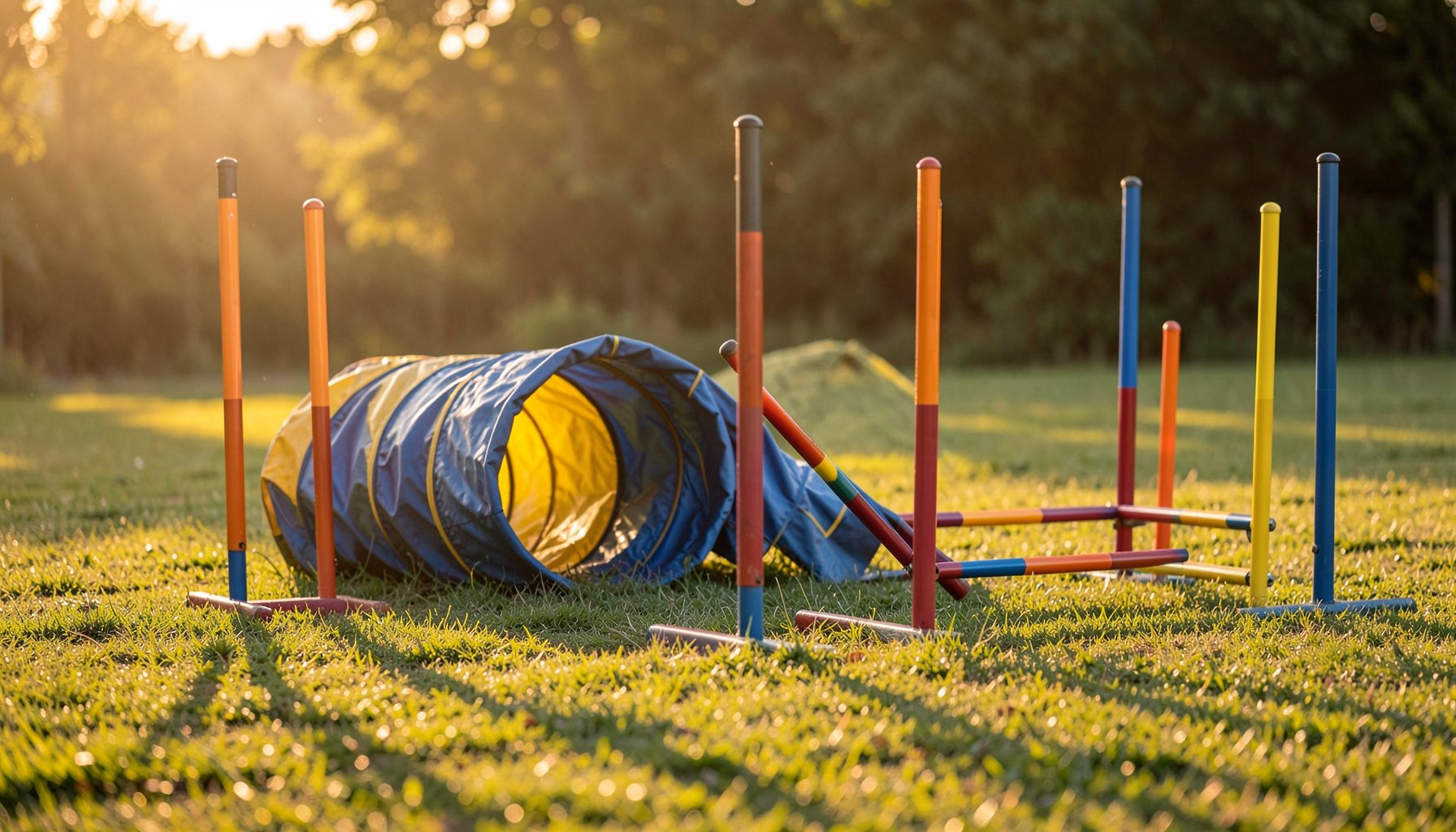
How to make a photo book dedicated to your dog's agility year
A full agility season creates a remarkable visual story: the first nervous start-line stay, the clean run that earned a title, the muddy trial weekend, and the quiet training sessions that built confidence. A photo book brings those moments together in a way that scattered phone pictures and social media posts cannot.
The strongest book is more than a collection of attractive action shots. It has a beginning, a sense of progress, and personal details that show who your dog is both on the course and at home. With thoughtful image selection and a little planning, you can create a lasting record of your dog's agility year.
Professional event photography is especially useful because it captures details that are difficult to see while handling, including focused expressions, extended jumps, tight turns, and the connection between dog and handler. Galleries organized by event, club, handler, or dog name can make it easier to locate the photographs that belong in your story.
Decide what your season is about
Before choosing pictures, define the central theme of the book. It might celebrate a first competition year, a championship title, recovery from an injury, a new dog-handler partnership, or the progress from beginner classes to advanced courses. This decision gives you a clear standard for including or removing images.
Write down the major milestones from the calendar. Include debut runs, personal-best performances, qualifying scores, new venues, memorable mistakes, and special relationships with training partners. A photo book feels more meaningful when it reflects the season as you experienced it rather than simply presenting the most polished photographs.
Consider making a simple timeline with one or two sentences for each event. Record the location, organization, class or jump height, result, and a detail you want to remember. These notes will later become captions and help you arrange the pages in a natural order.
Gather photographs with variety and purpose
Begin with a broad selection from every important event. Look for images that show different obstacles, running styles, weather conditions, and emotional moments. A jumping photograph may provide visual energy, while a pause at the start line or a post-run celebration can reveal personality.
Include more than competition action. Training images, crate-side portraits, warm-up exercises, ribbon ceremonies, travel scenes, and photographs with friends can connect the major events. A relaxed portrait at the beginning or end of each chapter gives the viewer a visual break from fast-moving course shots.
For technical inspiration, study the visual possibilities of specialized obstacles. The guide to NADAC tunnel runs explains why tunnel photographs can show speed, shape, and anticipation in distinctive ways. Similar variety can be found in weave poles, contacts, teeter-totters, and long jumps.
Build a clear page structure
A seasonal photo book usually works well when it follows the competition calendar. Open with a title page featuring your dog's name, the season or year, and a favorite portrait. Follow it with a short profile containing breed, age, team name, height class, and a few defining traits.
Give each major event its own chapter or spread. Start with a location or arrival photograph, move into warm-up and course action, and finish with the result, celebration, or a reflective image. This rhythm helps the book feel like a journey instead of a random gallery.
You can also organize the book around progress rather than dates. For example, early pages might show focus and handling foundations, middle pages could feature more difficult courses, and the final chapter might celebrate titles or confidence. Choose the arrangement that best represents your dog's development.
| Photo book element | Useful content | Suggested placement |
|---|---|---|
| Opening page | Dog's name, season, and favorite portrait | First page |
| Event chapter | Venue, date, organization, and course images | Main section |
| Training spread | Exercises, coaching, and behind-the-scenes moments | Between events |
| Milestone page | Titles, qualifying scores, or personal achievements | After the relevant event |
| Closing spread | Resting portrait, team image, and season reflection | Final pages |
Pair images with meaningful captions
Captions should add information that the photograph cannot communicate by itself. Instead of writing only “Jumping at the spring trial,” mention the achievement, challenge, or feeling connected to the moment. A brief line such as “Our first clean run in the advanced class after months of contact work” gives the image a lasting context.
Keep the writing consistent throughout the book. You might use a factual style with dates and results, or a more personal voice that records funny observations and emotional highlights. Both approaches work when the captions are specific and concise.
Remember that small details often become the most valued memories. Note the name of the judge, a sudden rainstorm, a favorite reward, an unexpected qualifying score, or the friend who helped with ring crew duties. These details turn an event album into a personal archive.
Design pages for movement and balance
Action photographs need room around them. Avoid filling every page with tiny images, particularly when the dog is airborne or moving quickly through a tunnel. One large photograph can make a stronger impression than six crowded pictures competing for attention.
Use consistent margins, fonts, and caption placement so the book feels unified. A limited color palette based on your dog's collar, team colors, or favorite trial ribbon can add personality without distracting from the photographs. Neutral backgrounds are often effective for colorful equipment and outdoor venues.
Alternate energetic spreads with quieter pages. Follow a sequence of jumps with a close-up portrait, a handler-and-dog connection, or a simple page of results. If several images show the same run, select only the photographs that provide different viewpoints or stages of movement.
Select products that preserve the story
Choose a print size and paper finish that suit the way you expect to use the book. A larger format gives action photographs room to breathe, while a smaller album may be easier to carry to training or club gatherings. Lay-flat pages can be useful for panoramic course images and two-page spreads.
Before ordering, inspect every page at full size. Check that faces and paws are not cropped, captions are spelled correctly, dates are accurate, and photographs are sharp enough for print. Make sure the cover image represents the dog's personality and can still look appealing after years of handling.
If you are missing images from a particular trial, search by event, club, handler, or dog name in the customer galleries at Pawprint Pictures. The site's annual event calendar can also help you identify photographed competitions and revisit important dates when building a complete season record.
Plan the final details before ordering
A strong album benefits from a final editing pass. Remove duplicates, images with distracting expressions, and photographs that repeat the same visual information. Keep a few imperfect but emotionally important pictures if they capture a milestone or a distinctive part of your dog's character.
Use these final checks before placing the order:
- Confirm that every major event or meaningful training period has representation.
- Balance close portraits, full-course action, handler images, and candid moments.
- Verify names, dates, titles, organizations, and competition results.
- Leave enough white space for captions and visual breathing room.
- Save a digital copy of the layout, captions, and final image list for future reprints.
A seasonal agility book can become an annual tradition. Each new volume may document a different stage of your partnership, from puppy foundations and first starts to veteran runs and retirement celebrations. Together, the books create a visual history of the work, trust, and joy behind every course.
Begin by gathering your event notes and marking the photographs that immediately bring back a memory. Browse the relevant Pawprint Pictures galleries, choose the images that tell the fullest story, and turn your dog's next collection of runs into a keepsake worth revisiting.