How to pose your dog for a winning portrait at a club show
A strong dog show portrait captures more than a well-groomed coat. It shows the dog’s structure, expression, confidence, and connection with the handler. Whether the image is taken ringside, outdoors after judging, or during a club event, thoughtful positioning helps create a photograph that feels polished and true to the breed.
The best pose is usually simple: the dog is balanced, alert, comfortable, and presented at an angle that reveals its strongest features. Small adjustments to the feet, head, tail, and handler’s position can make a significant difference without making the setup look stiff.
Good preparation also matters. A clean coat, a suitable lead, a few high-value treats, and a calm plan allow you to spend less time correcting the pose and more time preserving a natural expression. These techniques work for formal conformation portraits as well as relaxed photographs from agility trials and training days.
Start with comfort and preparation
Before asking your dog to stand still, give it time to settle in the show environment. Crowds, loudspeakers, unfamiliar dogs, and changing weather can affect posture and concentration. A short walk, a drink of water, and a quiet moment away from the busiest area may produce a better portrait than immediate posing.
Check the coat, collar, lead, and feet before the camera comes out. Remove loose hairs, grass, mud, or distracting tags. Use a lead that complements the dog and is easy to hide or edit later. If your dog is sensitive about handling, avoid repeatedly touching its ears, tail, or legs just to achieve a picture-perfect position.
Bring rewards that can be delivered quickly and safely. Small treats, a favorite toy, or a familiar verbal cue can hold attention without creating frantic movement. The goal is an attentive dog with relaxed eyes and a natural mouth, rather than an animal staring tensely at something above the lens.
Build a balanced standing pose
For a classic conformation portrait, begin with the dog standing squarely on a level surface. The front legs should appear straight beneath the shoulders, while the rear legs should show the dog’s natural angulation. Avoid pulling the front feet too far forward or placing the hind feet so far back that the body looks stretched.
Move one foot at a time and pause between adjustments. This keeps the dog aware of what you are doing and reduces the chance of losing its focus. View the pose from the camera’s height rather than only from above. A position that looks correct to the handler may appear uneven from the photographer’s angle.
The dog does not always need to face directly toward the camera. A slight three-quarter angle can show the head, topline, chest, and rear assembly more clearly. For long-bodied breeds, a modest side angle may emphasize proportions. For compact or heavily coated dogs, a front-quarter view can reveal expression and substance without making the body look shortened.
Shape the expression without forcing it
A winning portrait depends heavily on the dog’s face. Ask for attention with a quiet sound, a familiar word, or a treat held just beside the lens. Keep the reward close enough to guide the eyes but not so high that the dog lifts its chin excessively or loses the natural outline of the neck.
Watch for the moment when the ears are forward, the eyes are bright, and the mouth looks comfortable. That moment may last only a second. A skilled dog photographer will often take several frames in quick succession, so the handler should be ready to release the cue and reward immediately afterward.
Avoid using a toy that causes intense jumping, vocalizing, or a fixed, strained stare. Some dogs look their best after a brief play break, while others need stillness. Learn which approach produces your dog’s most confident expression and communicate that preference to the photographer before the session begins.
Use the setting to support the subject
The background should make the dog easy to see. Look for an uncluttered area away from crates, parked vehicles, grooming tables, signage, and groups of spectators. A shaded patch can provide softer light, while open shade near the edge of a ring often gives a clean background and even exposure.
Pay attention to the direction of the sun. Direct overhead light can create dark eye sockets, harsh shadows, and bright patches on the coat. If you must work in sunlight, turn the dog slightly so the light falls across the face and body instead of shining straight into the eyes. Early or late event light can add warmth, but the dog’s comfort remains the priority.
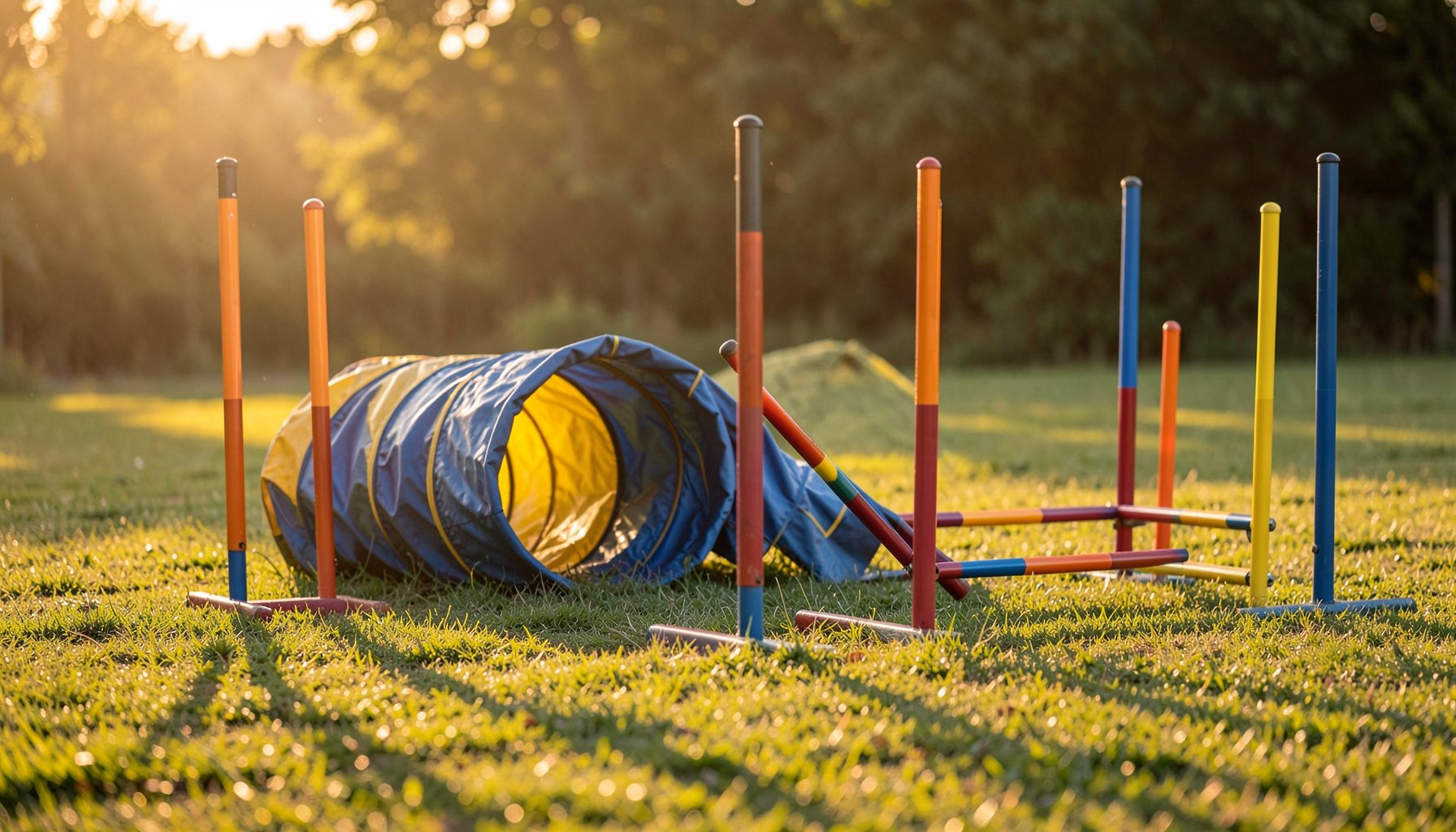
At agility events, a few environmental details can make the image meaningful without overwhelming it. A blurred ring, jump standard, or club banner may provide context. Pawprint Pictures organizes agility event galleries so handlers can locate action and portrait images by the event or organization, making it easier to compare formal poses with candid performance photographs.
| Portrait goal | Dog position | Handler’s focus | Common issue |
|---|---|---|---|
| Traditional conformation view | Balanced side or three-quarter stance | Feet, topline, tail | Body looks stretched or cramped |
| Head-and-shoulders portrait | Chest facing camera, head slightly turned | Ears and eye contact | Treat held too high |
| Relaxed club-show image | Natural stand or sit | Calm expression | Dog appears distracted |
| Athletic agility portrait | Alert stance with visible muscle and outline | Energy without tension | Excessive jumping or motion blur |
Coordinate smoothly with the photographer
Decide in advance where the handler will stand. Usually, the handler is beside or just behind the camera, using a treat or cue to direct the dog’s gaze. If the handler stands too far to one side, the dog may twist its neck or shift its feet. A small change in the handler’s position can improve both expression and body alignment.
Keep the lead loose unless safety requires otherwise. Tight pressure can flatten the neck, pull the ears back, and make the dog look uneasy. For an off-lead portrait, choose a secure location and follow the event’s rules. A retouched lead is preferable to an unsafe setup, especially around unfamiliar dogs and busy walkways.
Communication should stay brief and consistent. Tell the photographer which side is your dog’s stronger side, whether the dog dislikes direct eye contact, and which cue produces the best ears. If you are searching for photographs from a past trial or show, the customer gallery search can help you find images by handler, dog, club, or event.
Adjust the pose for the dog in front of you
Breed presentation guidelines can influence the ideal stance, but individual structure should guide the final adjustments. A dog with a prominent front assembly may benefit from a slightly angled view, while a dog with a beautiful topline may look strongest in profile. The portrait should present the dog honestly rather than force it into an uncomfortable position.
Puppies, seniors, and energetic working dogs need different pacing. A puppy may give its best expression while sitting briefly between attempts. A senior dog may need a softer surface, shorter sessions, and fewer repositioning requests. An agility dog may require a short run or play period before it can settle into a focused stand.
Use these practical reminders during the session:
- Choose a level, safe surface with enough room for the dog to move.
- Set the feet first, then refine the head, ears, tail, and lead.
- Keep rewards small and close to the camera lens.
- Take breaks before the dog becomes tired, frustrated, or overheated.
- Review a few images for balance, eye contact, and background distractions.
A polished portrait does not require perfect stillness in every frame. A slight ear movement, lifted tail, or attentive glance can give the image personality. The strongest photograph is often the one that combines correct presentation with the dog’s recognizable character.
Before leaving the show, check the gallery details, event name, organization, and handler information so the images can be located later. Browse Pawprint Pictures to find your dog’s portrait or action photographs, then select the image that best reflects its confidence, structure, and spirit. A carefully posed show portrait can become a lasting record of the partnership behind every ribbon, run, and training milestone.