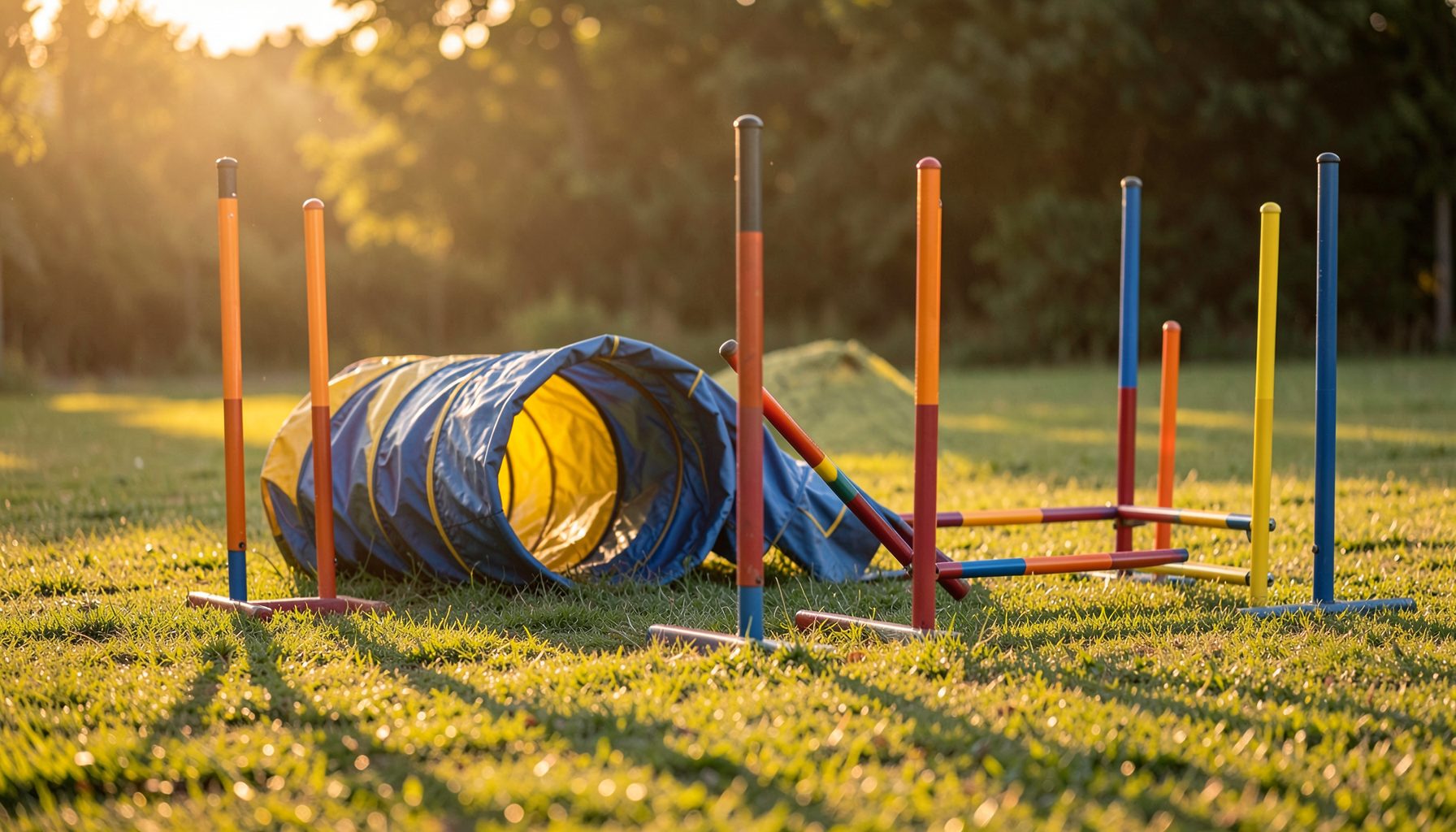
How to prepare your dog for a first agility trial
A first agility trial is an exciting milestone, but the goal is not to produce a flawless performance immediately. Your dog’s first competition should build confidence, create positive routines, and help both of you understand how the event environment feels.
Preparation involves more than practicing jumps and tunnels. Your dog needs to respond reliably around distractions, wait calmly between runs, travel comfortably, and recover from the stimulation of a busy venue. You also need a simple plan for check-in, warm-ups, equipment, and ring-side logistics.
A thoughtful approach keeps pressure low while giving your canine teammate the skills needed to make good decisions. With steady training and realistic expectations, the trial can become an enjoyable extension of the work you already do together.
Build reliable foundation skills
Before entering a competition, make sure your dog understands basic handling cues and can perform familiar obstacles safely. Contacts, weave poles, tunnels, jumps, and start-line routines should be practiced regularly, but repetition should not replace accuracy. A dog that rushes through an obstacle or misses a contact in training may feel even less certain in a crowded trial environment.
Practice short sequences rather than running full courses every time. Two or three obstacles linked with a clear cue can improve your timing and your dog’s focus. Reward correct choices quickly, especially when your dog checks in with you, maintains position, or continues working after a minor mistake.
Your dog should also be comfortable with basic behaviors outside the course. A dependable sit, down, stay, recall, and loose-leash walk will make it easier to move through parking areas, staging zones, and crowded walkways. These skills create calm transitions before and after each run.
Choose the right first competition
Select an event that matches your dog’s experience and temperament. A small local trial may be less overwhelming than a large championship-style gathering with many rings, vendors, loud announcements, and long periods of waiting. Ask your instructor which organization, class level, and venue would provide a manageable first experience.
Read the premium list carefully before entering. Check eligibility rules, jump heights, measuring requirements, running order, check-in procedures, and permitted equipment. Organizations such as AKC, USDAA, NADAC, CPE, and ASCA can differ in class structure and terminology, so understanding the rules prevents avoidable surprises.
Consider whether your dog is ready emotionally as well as technically. If they struggle to eat, settle, or respond to cues in unfamiliar places, spend more time visiting training clubs, parks, or other dog-friendly locations. A trial entry should support progress rather than force a dog into an environment they cannot yet handle.
Rehearse the event experience
Training in new locations is one of the most useful forms of trial preparation. Practice at different clubs, outdoor fields, and indoor facilities so your dog learns that the same cues apply in changing surroundings. Include distractions such as barking dogs, spectators, ring gates, and nearby activity when possible.
Create a mock trial at home or during a club practice. Arrive early, walk your dog briefly, wait near a ring, and perform a short warm-up before running a small sequence. Add realistic pauses between exercises. This teaches your dog that work may happen after waiting, rather than immediately after stepping out of the car.
Use a consistent pre-run routine. A few minutes of sniffing, gentle movement, focus exercises, and rewards can help your dog shift from excitement into working mode. Keep the routine short enough to preserve enthusiasm. Excessive drilling before a run can leave a dog mentally tired before entering the ring.
Prepare your travel and ringside kit
Pack for comfort, safety, and convenience. Bring a secure collar or harness, leash, water, food, treats, waste bags, a crate or exercise pen, shade or weather protection, towels, and familiar bedding. Include any medications, first-aid supplies, vaccination records, and measuring documentation required by the event.
A portable mat can teach your dog where to relax while waiting. Reward calm behavior on the mat, then gradually increase the time between treats. If your dog is comfortable resting in a crate, cover part of it to reduce visual stimulation while maintaining good airflow.
| Preparation area | What to practice | Signs your dog is ready |
|---|---|---|
| Ring skills | Short sequences, contacts, weaves, and handling cues | Works accurately without constant luring |
| Distractions | New places, barking dogs, spectators, and waiting | Can eat, respond, and recover after excitement |
| Travel | Car rides, crate time, and unfamiliar routines | Settles comfortably and exits calmly |
| Recovery | Water breaks, rest, and gentle cool-downs | Returns to a relaxed state after exercise |
| Handler planning | Course walk, entry routine, and equipment checks | You can focus on cues instead of logistics |
Reviewing agility event galleries can also help you picture the atmosphere of a trial. Photographs often show ring layouts, surface conditions, handler movement, and the kinds of moments that happen between obstacles. That visual familiarity may help you plan clothing, equipment, and positioning.
Support focus without adding pressure
Your dog does not need to perform every skill perfectly in a distracting environment before entering a trial, but they should be able to reconnect with you. Teach a simple attention cue that means “check in,” then reward it generously in different locations. This gives your dog a clear way to return to work when something interesting happens nearby.
Avoid punishing refusals, missed contacts, or accidental course errors. A correction may make the ring feel unsafe and can damage the enthusiasm that makes agility effective. Instead, calmly move on when allowed, reward the next correct response, and treat the first event as valuable information.
Manage your own emotions as well. Dogs notice rushed movements, tense leash handling, and frustrated voices. Walk the course carefully, decide on your handling plan, and keep your verbal cues familiar. If the run goes poorly, leave the ring calmly and give your dog a chance to decompress.
Make trial day predictable
Arrive with enough time to park, check in, walk your dog, locate the rings, and observe the schedule. Avoid exhausting your dog before their class. A short potty walk and light warm-up are usually more useful than repeated course practice.
Attend the handler briefing and course walk whenever required. During the walk, identify the start line, finish area, obstacle numbers, likely turning points, and places where your dog may need extra support. Choose a simple plan that matches your training rather than copying an advanced team’s strategy.
Keep meals and water intake appropriate for your dog’s normal routine. Offer small amounts of water regularly and use familiar treats. Watch for overheating, stress, soreness, or unusual behavior, and be willing to skip a run if your dog is unwell. Safety and trust matter more than a qualifying score.
Use the first trial as a learning experience
After the event, record what went well and what needs practice while the details are fresh. Note how your dog handled travel, waiting, ring gates, surface changes, noise, food, and recovery. Also write down which cues felt clear and where your timing became uncertain.
Celebrate useful moments, including a calm wait, a confident entry, a good recovery after a mistake, or a joyful finish. These small successes are the foundation for future competition. Your dog may remember the atmosphere of the event more strongly than the final score, so make the overall experience rewarding.
Professional photographs can preserve those early milestones, from a focused approach to an expressive finish-line celebration. When you are ready to locate images by event, club, handler, or dog, browse Pawprint Pictures for galleries and ordering support.
Practical reminders for a successful first trial
- Visit the venue or similar locations before competition day when possible.
- Practice settling on a mat and working after short periods of waiting.
- Pack familiar food, water, bedding, cleaning supplies, and weather protection.
- Walk the course with a simple handling plan based on your current training.
- Reward calmness, teamwork, and recovery rather than focusing only on results.
Give your dog time to discover that the trial environment is safe, understandable, and fun. With consistent preparation, patient handling, and realistic goals, the first event can become the beginning of a rewarding agility journey—and a collection of memories worth revisiting.