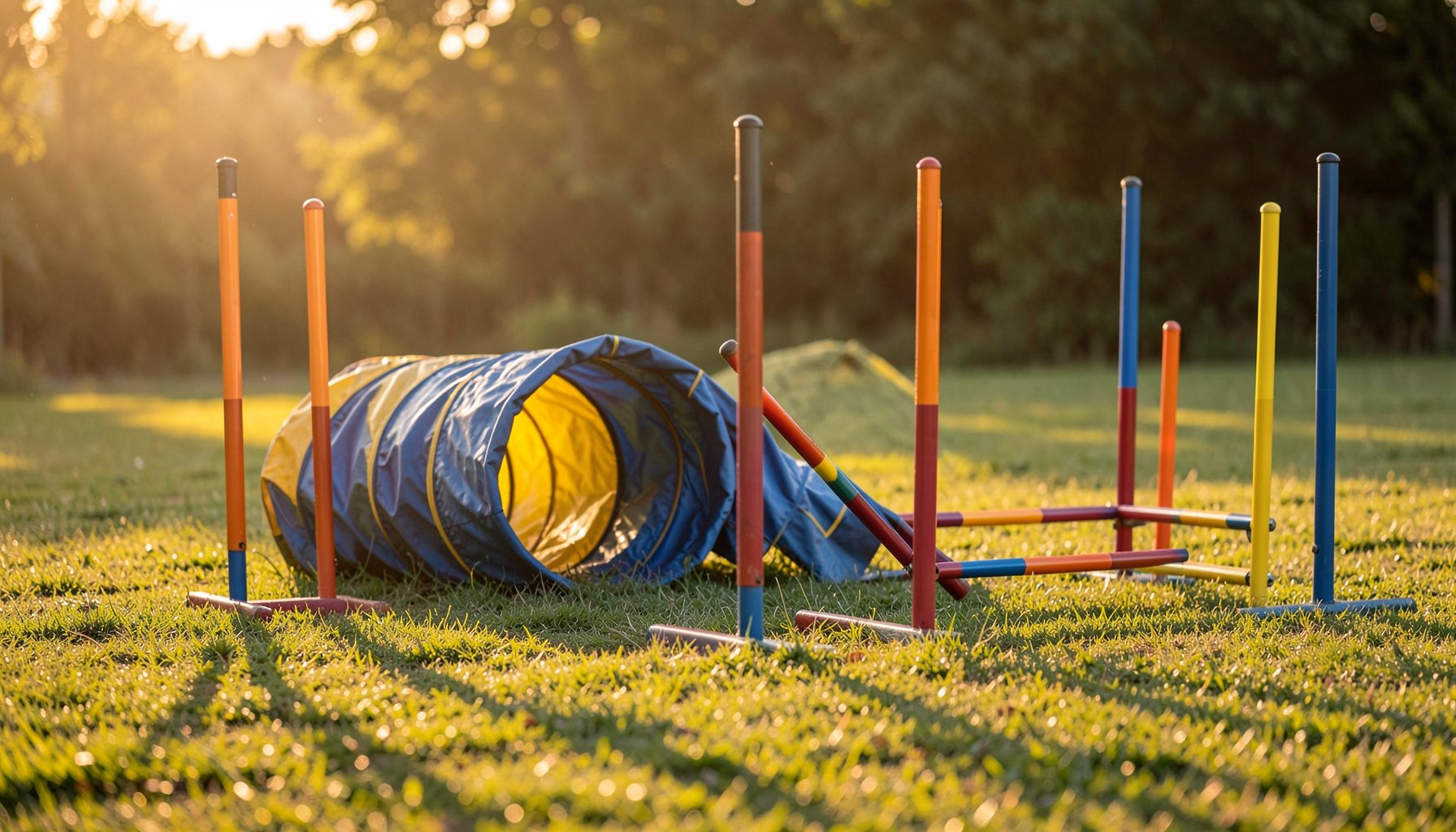
Capturing the bond between handler and dog during a run
How to select a photo that captures the bond between handler and dog during a run comes down to reading shared intention, rather than simply spotting the biggest jump. A memorable agility image should show that the handler has directed the course and the dog trusts the plan. That connection may appear in a turn, launch, moment of eye contact or coordinated recovery.
A technically sharp photograph can still lack emotional impact. The strongest pictures give the handler and dog equal visual importance, preserve the context of the obstacle and make the partnership understandable without additional explanation. Reviewing several frames from the same run helps you compare expression, timing and body language before choosing one.
Read the partnership in motion
Look for a shared direction of attention. The handler’s eyes may be fixed on the next obstacle, while the dog’s ears, muzzle and stride point towards the same destination. A slight lean towards the dog, a hand held just above its head or a moment of eye contact can reveal trust and communication.
The best bond photograph does not require a broad smile. Working dogs communicate through concentration, hesitation, drive and response to a handler’s cues. A tense frame might capture excitement but obscure trust, while a relaxed-looking frame may not belong to the most committed part of the sequence.
When browsing the online event galleries, compare images from the same course rather than judging each in isolation. Pawprint Pictures organises photographs by event, club, handler name and dog name, making it possible to follow one partnership through training sessions, club shows and trials.
Let the course explain the moment
Obstacles provide visual evidence of what the pair achieved together. In a weave, parallel poles can emphasise the dog’s line and the handler’s guiding position. At a jump, the handler’s timing and the dog’s gathering stride may tell a clearer story than either subject would tell alone. Frames through a tunnel or around a teeter can also create depth and anticipation.
Australian club grounds often have open grass, fencing, shade trees and equipment spread across a broad field. Sydney’s hard coastal light, Melbourne’s changeable skies and Brisbane’s strong summer sun can all affect a photograph’s atmosphere. Early-morning training sessions are common, with owners commonly bringing water and settling dogs in the shade before their runs.
Broader annual agility galleries can place the picture within a wider sporting story, including different venues, judges, courses and weather conditions. Australian handlers commonly participate through Dogs Australia, state affiliates and local clubs, while the collection also covers organisations such as AKC, USDAA, NADAC, CPE and ASCA.
Find the decisive instant
The peak of a jump is memorable, but it is not always the most revealing instant. A turn immediately before the dog commits, a handler shaping the route, or both partners converging towards a tunnel can communicate more about teamwork. The frame should show cause and effect: the handler’s plan influencing the dog’s response.
Timing also separates a convincing action photograph from an accidental blur. Some motion blur can add energy, particularly around paws or the tail, but the eyes and outline should remain sufficiently clear to identify the dog’s expression and direction. Check whether the crop feels intentional and whether an obstacle or handler has been awkwardly cut in half.
If the dog is still a puppy, excitement should not outpace safe development. Current new puppy veterinary advice can help owners understand age-appropriate care before adding agility work. This is especially relevant during Australian summer, when heat, hydration and rest can determine whether a young dog is ready to repeat a run safely.
Verify the story behind the frame
Check the event name, date, class, club and dog before ordering. Confirm that the image shows the intended handler and animal, particularly when several similar-looking dogs or one handler competing with multiple dogs are present. Matching the photograph with your notes prevents an emotional image from being attached to the wrong achievement.
Inspect the composition at full size. Look for distracting leads, objects near the dog’s head, a bib covering an expressive facial detail or a crop that removes the handler from the relationship. A technically imperfect picture can still be strong, but accidental obstruction usually becomes more noticeable in a large print.
The customer feedback examples page can also help you assess print quality, colour reproduction and the service experience before choosing a product. Keep commercial use in mind if you intend to reproduce an image for merchandise or promotion, as consent may be needed from identifiable people.
Organised events do not automatically grant unrestricted commercial photography rights. Follow the organiser’s rules, venue directions and any required permissions. State and territory animal-welfare laws differ across Australia, and local councils may set separate access or conduct rules, including requirements for organised activities involving dogs and their handlers.
Match the product to its purpose
Start with where the photograph will live. A smaller print suits a hallway, office or memorial collection, while a larger framed image can carry the scale of an agility venue. Canvas, metal and photographic paper create different visual effects, and a digital download is useful for sharing while a tangible print becomes part of the home.
Compare the final cost in Australian dollars, including GST, framing and postage, rather than judging products by their headline price alone. The local market offers many online printing options, but delivery to regional Australia or an outer urban area can change the value of a larger format. Confirm dimensions, border details and cropping before payment.
Keep the search and order precise
Use the gallery filters methodically: begin with the event, narrow to the club or class, then search by the dog’s name and the handler’s name. Using both registered and call names can be helpful. Save a shortlist of one action image, one close partnership image and one environmental frame, then compare how each works at different sizes.
Pawprint Pictures provides customer-gallery search and support for locating event photographs, including images organised around a particular dog or handler. Once the selection is confirmed, use the secure shopping cart, check the event details and product specification, and retain the order confirmation for delivery or reprint enquiries.
Make the final choice as a keepsake
Return to the shortlisted pictures after a break. View them without relying on the event memory, and notice which one still communicates trust, timing and shared purpose. The most popular frame may contain the clearest jump, but the most meaningful frame often lies just before or after it, where the partnership is easiest to see.
Choose one strong image as the principal keepsake, then select a format that suits its role rather than its status as a favourite. The practical takeaway is to choose the frame in which the handler’s intent and the dog’s trust are visible together, confirm the identifying details, and order it in a format you will still value years later.