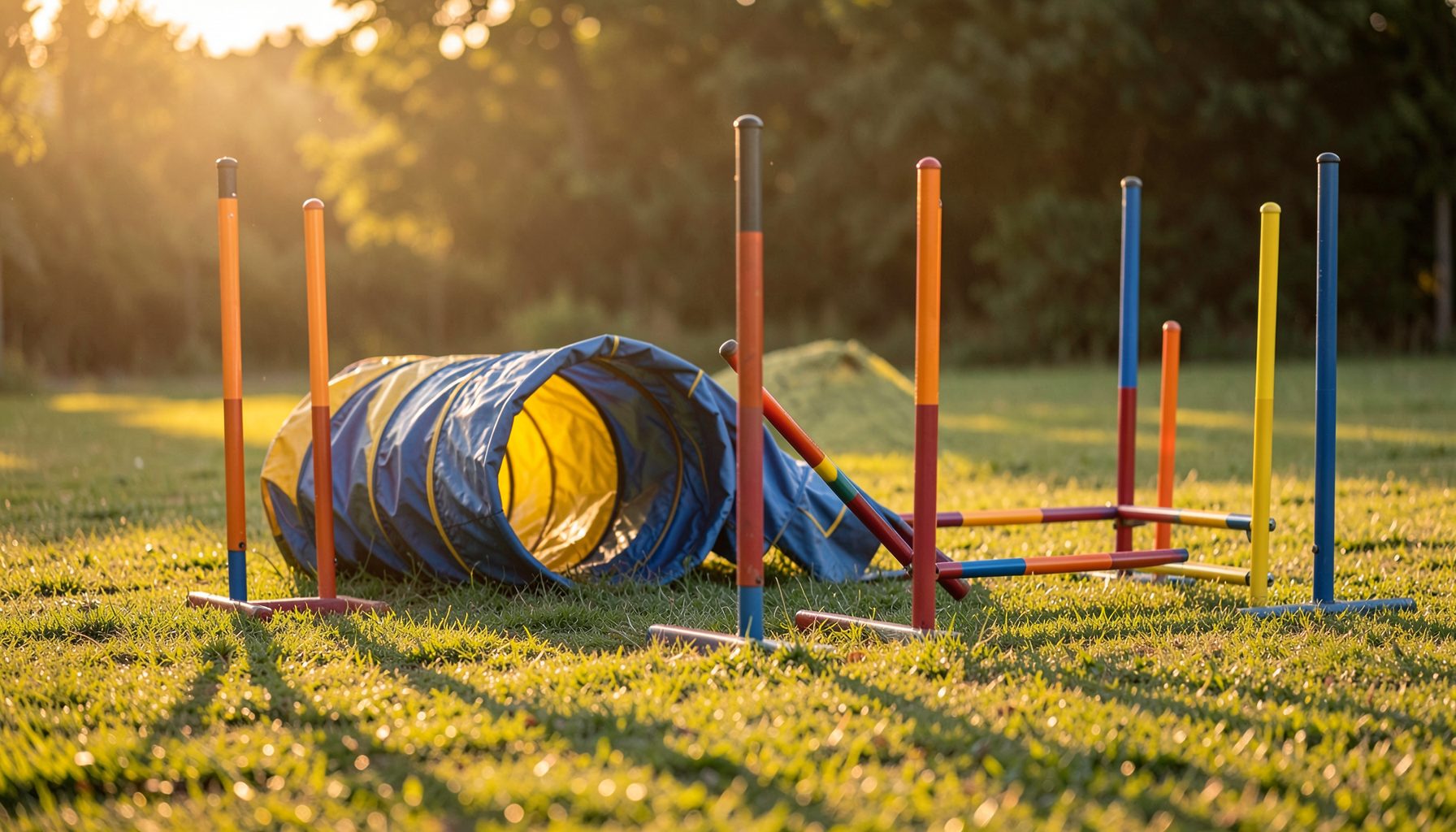
Capturing a Dog’s Reflection in a Rain-Soaked Agility Course
Rain can turn an ordinary agility run into a striking visual story. A shallow puddle beside the dog walk, a glint of winter light and a sharply focused face can place the athlete and its reflection in the same frame. At Pawprint Pictures, capturing the dog’s reflection in a puddle on the course after rain depends on timing, positioning and careful attention to safety.
For Australian handlers, wet-weather photography often comes with changing conditions. A trial near Melbourne may begin under grey skies and finish in bright sunshine, while a coastal Queensland ground can stay humid long after the shower has passed. The aim is to preserve the speed, character and teamwork of the run while using the water as a natural mirror rather than a distraction.
| Approach | Best use | Visual result | Main consideration |
|---|---|---|---|
| Low, ground-level angle | Dog walk, tunnel exit or jump | Large reflection and dramatic perspective | Keep equipment clear of the running line |
| Side-on position | Fast sequences and broad puddles | Dog, handler and reflected movement | Reflection may break if the surface ripples |
| Three-quarter angle | Face and obstacle together | Balanced action portrait | Requires precise focus timing |
| Tight crop | Expression and water detail | Intimate, graphic image | May lose the sense of the course |
| Wider frame | Handler-dog partnership | Full story of the run | Reflection becomes a smaller design element |
How Rain Transforms The Agility Ground
A puddle is most useful when its surface is relatively calm. Water that is too deep, churned by running feet or filled with mud will produce broken shapes rather than a recognisable mirror image. We look for a thin sheet of water near an obstacle, where the dog’s outline can appear beneath the real subject without placing the camera or photographer in the team’s path.
The Australian climate creates varied opportunities. A cool winter trial in Victoria may offer soft, even light, whereas a storm-cleared afternoon in New South Wales can create harsh highlights on wet equipment. In tropical areas, a brief downpour may leave reflective patches before the ground dries quickly. These shifts make scouting the course before the class especially important.
The colours of the venue also matter. Bright contact zones, coloured tunnels, sponsor banners and the green of a local oval can all appear in the puddle. Reflections are strongest when the photographer avoids standing directly into the sun and finds an angle where the water receives a clean, open section of sky.
Finding The Right Camera Position
A low viewpoint gives the puddle more space in the frame and makes the reflected dog appear almost equal in importance to the real one. It can be especially effective at the dog walk, where the raised plank, descending ramp and waterline create strong shapes. Pawprint Pictures explores this perspective in low-angle dog walk photography, including how the obstacle can frame the action.
The photographer must still leave room for the handler and dog to work safely. Agility is quick, and a crouched person or camera bag near an obstacle can become a hazard. We choose a position approved by the event layout, keep well outside the running lane and use a longer lens when distance is needed. A low camera does not have to mean a risky camera.
A three-quarter position often offers the best compromise. From there, the dog’s eyes, body line and reflected shape may all be visible, while the puddle leads the viewer towards the obstacle. The camera angle changes by only a few centimetres, yet that small adjustment can turn a dull patch of water into a clear visual echo.
Timing The Reflection With The Run
The ideal frame usually arrives for a fraction of a second. A dog landing beside the puddle may send out a ripple, while a dog crossing the edge can create a pleasing splash that still leaves enough reflection to identify the subject. We watch the dog’s approach, predict the stride and begin a short burst before the key position.
Fast shutter speeds help freeze ears, paws and droplets, but the settings need to suit the available light. On an overcast morning, raising ISO may be preferable to lowering shutter speed and losing the dog’s expression. Continuous autofocus, a suitable focus area and a lens that can isolate the subject from busy spectators all support reliable results.
The handler’s movement is part of the composition too. A reflection can show the connection between dog and person, especially when the handler’s gesture mirrors the dog’s direction. At a club trial, where competitors may run several classes across the day, familiar course lines and repeated attempts help us anticipate the best opportunity without interrupting the team’s concentration.
Protecting Detail In Wet Conditions
Rain photography requires practical discipline. Weather-sealed equipment, lens cloths and a cover for the camera help manage sudden showers, while a towel keeps water from being carried between lenses or onto the camera body. We avoid wiping the front element with a sleeve because fine grit from a damp ground can cause marks and reduce clarity.
The dog’s comfort comes first. A wet coat can make a black dog blend into a dark background, while a pale dog may lose detail against a bright reflection. We look for clean separation, readable eyes and natural movement rather than forcing a shot simply because there is water on the ground. Dogs that are nervous around cameras also benefit from a calm, non-invasive approach; these camera comfort tips explain why distance and patience can make a real difference.
Australian events often run on practical club routines: competitors may be changing shoes, drying dogs between classes or checking whether a ring has reopened after rain. We stay alert to announcements, judge instructions and ground conditions. A beautiful puddle is never more important than the safe operation of the trial.
Shaping The Image During Editing
Post-processing should clarify the story rather than invent a reflection that was not present. We adjust exposure so the dog’s eyes remain visible, recover highlights from wet grass and control distracting colour casts in brown or grey water. A modest increase in contrast can separate the real dog from its reflected outline.
Cropping is another important decision. A horizontal frame may show the complete relationship between the obstacle, dog and puddle, while a tighter crop can make the reflection feel graphic and deliberate. We retain enough context for handlers to recognise the course and enough detail for the dog’s expression to remain personal.
The strongest image is not always the one with the largest reflection. Sometimes the water only catches the paws, tail or a bright patch of coat, adding movement without competing with the face. A ripple, splash or small distorted shape can communicate speed more effectively than a perfectly symmetrical mirror image.
Practical Choices For A Stronger Rainy-Day Image
Several small choices consistently improve the chance of finding a memorable wet-course photograph:
- Scout puddles before the class and identify safe shooting positions.
- Look for shallow, calm water with an uncluttered background.
- Use a fast shutter speed for paws, spray and facial expression.
- Keep the dog’s eyes visible, even when the reflection is the main design feature.
- Check the light from several angles as clouds and sun move across the venue.
- Protect camera equipment and carry dry cloths, covers and spare batteries.
- Follow the club’s directions and never stand in a handler’s running line.
These choices apply across local competitions, training days and larger events recorded under organisations such as Dogs Australia affiliates, AKC, USDAA, NADAC, CPE and ASCA. The finished photograph should feel authentic to the run: muddy when the ground is muddy, energetic when the dog is flying and quietly expressive when the reflection is the focal point.
Finding And Ordering The Finished Photograph
Once the galleries are uploaded, Pawprint Pictures organises images by event, club, handler and dog name, making it easier to browse a busy trial. Australian owners can search for a particular run rather than scrolling through every competitor, which is useful when a weekend includes multiple rings, heights or classes.
The event photo gallery shows how action images can be presented for browsing and selection. Owners can compare frames, check expressions and choose products through the secure shopping cart. A reflection image may work beautifully as a print because the water, dog and course create a complete story without needing a caption.
For a wet-weather search, start with the event name, then narrow by club, handler or dog. If the run is difficult to locate, customer-gallery support can help identify the correct collection. The next step is to search the relevant Pawprint Pictures event gallery by your dog’s name and review the frames from the rain-affected class.