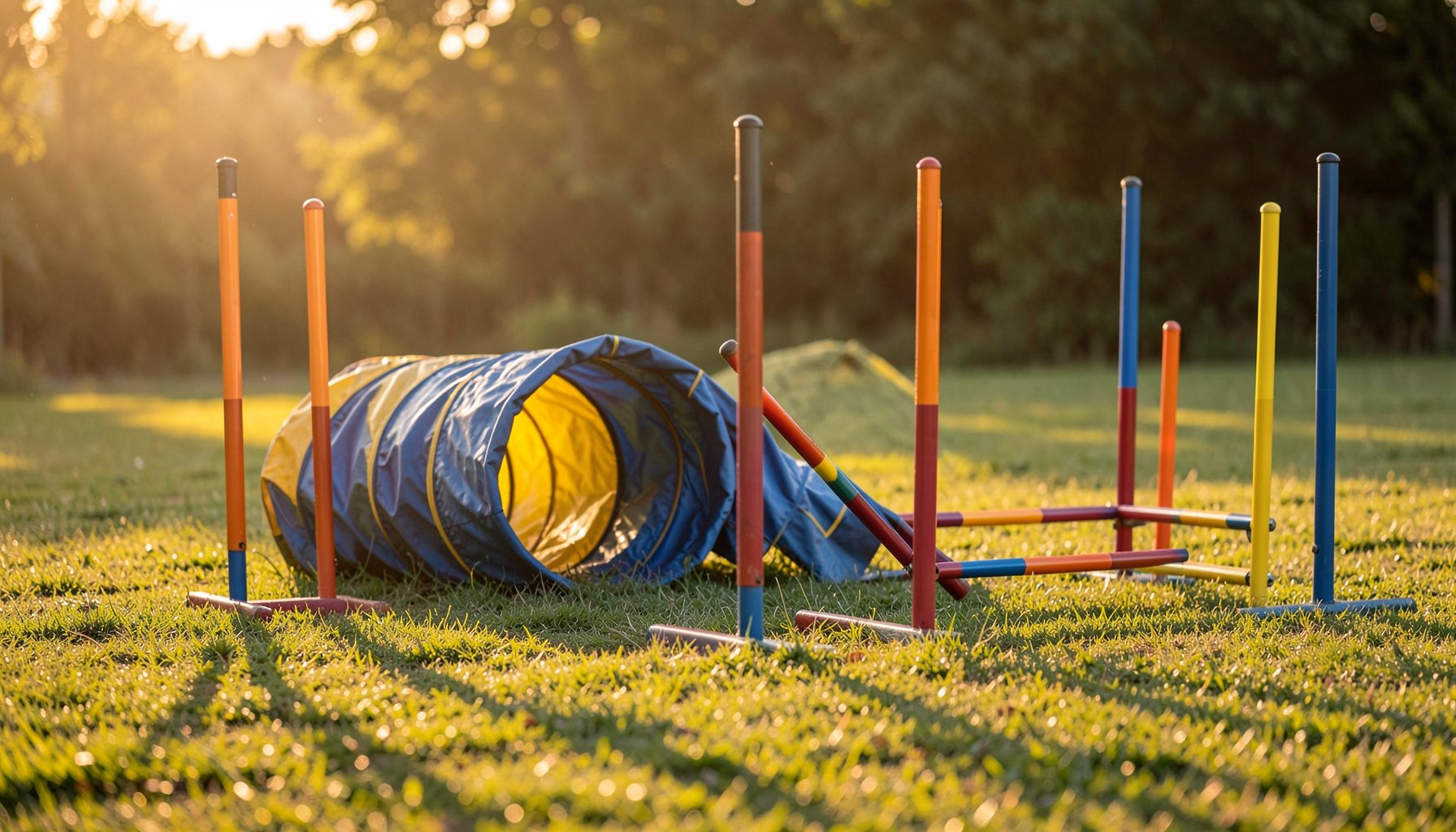
Capturing the full airborne extension
A dog clearing a jump compresses several actions into one fraction of a second. The split-second moment a dog’s body is fully extended over a jump can show power, but it can also reveal hesitation, a tight stride or an awkward landing. The photograph must separate those details.
At Pawprint Pictures, we plan for that frame before the run. We study the obstacle, forecast the dog’s line, choose a camera position and set exposure for the venue’s light. The aim is not simply to press the shutter, but to be ready when the stride, ears, tail and airborne body form one readable shape.
The work also involves careful record-keeping. Images from agility events, club shows, trials and training sessions are organised by event, club, handler and dog, including AKC, USDAA, NADAC, CPE and ASCA results. That structure turns a large day of photography into a collection competitors can actually navigate.
Australian conditions shape the method. Melbourne’s changeable weather, Brisbane humidity and Sydney’s intense summer light can alter speed, contrast and colour within hours, while indoor carpet changes the background and sound. We adapt the equipment and shooting rhythm to the course rather than applying one formula everywhere.
Finding the decisive instant
The most convincing jump photograph usually falls between take-off and landing. We watch the hindquarters leave the ground, the spine lengthen and the rear feet pass the bar. Catching too early produces a compressed body; waiting too long catches the drop after the peak.
We also read the approach. A straight line, tight turn or angled jump produces a different arc, and the handler’s release can change the final stride. Familiarity with each dog’s rhythm helps us anticipate where the airborne extension will occur.
Short, controlled bursts give us options without filling the card with near-identical frames. We review the sequence later, compare the stride positions and select the frame that looks natural while still preserving the athletic shape.
Choosing the angle and background
A side-on view displays the full arc from nose to tail. A three-quarter angle can add depth and expression, but it may hide one hind leg. We move several metres between runs when the venue permits, using the dog’s probable path to keep the body unobstructed.
Backgrounds need equal attention. Bright barriers, advertising boards and waiting handlers compete with the dog’s outline. From a low viewpoint we look for clean negative space, then check that the obstacle and jump standards frame the action without hiding the feet.
That patience is shared by wildlife photographers. Observers studying Andaman raptor watching also wait for a brief, balanced form rather than photographing every movement. In both cases, anticipation and a clear background matter more than volume.
Keeping motion sharp and exposed
For most runs, shutter speeds around 1/1600 to 1/2500 second freeze paws and facial detail. Smaller, quicker dogs may need 1/3200 second. We use continuous autofocus, high-speed burst mode and a tracking point placed on the eye or upper chest.
A long lens lets us work from outside the ring, but distance requires careful communication with handlers and marshals. We never block an approach or ask a dog to repeat a jump. Where electronic shutters are available, we check for curved limbs under fast movement and use a tested mechanical mode when needed.
We shoot RAW files for colour and cropping flexibility. Exposure is set to retain detail in white coats and sunlit dust, while aperture choices keep the face and body readable. Bright Australian sun can clip highlights, so highlight warnings guide each adjustment.
Adapting to Australian event conditions
Many Australian handlers arrive early, settle dogs in shade or air-conditioned rooms, and walk them before a first run. Those routines favour a photographer who works quietly and does not demand another energetic attempt in hot weather. Water, shade and a clear recovery area remain priorities.
Wind can move jump poles or banners and change the timing of a run. Dust, glitter and club décor can also distract, so we watch previous runs for recurring backgrounds. Venue rules govern where we may stand, and we follow them to protect competitors, animals and spectators.
Care extends beyond the camera. Older dogs need appropriate meals, hydration and rest, and veterinary advice on senior dog nutrition can guide adjustments at long trials. A beautiful photograph is never worth pushing an athlete beyond a safe routine.
Organising images for quick retrieval
Galleries are built around how competitors look for themselves: event, club, handler and dog name. Clear naming, consistent thumbnails and sensible galleries help someone locate a run after checking several classes. Our team can also assist customers who remember only the venue, class or obstacle.
A current example can be viewed in this agility gallery. The presentation gives buyers a chance to identify the right photograph before choosing a format, while keeping the wider event collection available for browsing.
Consumer protection matters in this process. Under the Australian Consumer Law, products sold to Australian customers must be accurately described and of acceptable quality. We also limit access to personal information and seek consent before publishing identifiable images, particularly where the Privacy Act applies.
Turning a frame into a keepsake
Prints remain the core of our service, and the Australian pet-photography market includes framed images, calendars, wall portraits and personalised gifts. Digital buyers can compare the benefits of high-resolution trial photos, especially when they plan a large print or detailed crop.
The shopping cart keeps the selected size, finish and quantity together, and supports secure checkout for event photographs and other photo products. We explain file resolution, paper choices and delivery details so the customer can judge the result before paying.
The strongest image is often one that still feels familiar at home. That is why we consider colour, background and cropping as carefully as the airborne instant itself.
A practical routine for each trial
Before competition, we confirm the run order, obstacle layout, expected light and our permitted shooting position. During the class, we prioritise the clean approach, protect the camera against dust and keep settings consistent until the light changes.
- Scout the take-off point and choose a clear side-on or three-quarter position.
- Check shutter speed, autofocus tracking and burst settings before the first run.
- Follow the approach, release and hindquarter lift-off rather than reacting late.
- Use a short burst, then inspect the sequence for the strongest extension.
- Keep lenses, clothing and bags clear of the ring and dog lines.
- Save and verify images promptly, recording event, class, handler and dog details.
After the class, we back up files, review exposure and crop consistency, and upload organised galleries. We also note lighting and background issues for the next event, turning each course into a more efficient shooting position.
The rule we carry between events is straightforward: position early, anticipate the take-off, use a controlled burst and choose the frame that shows the whole body in balance. That disciplined routine gives every dog the best chance of appearing powerful, natural and unmistakably itself.