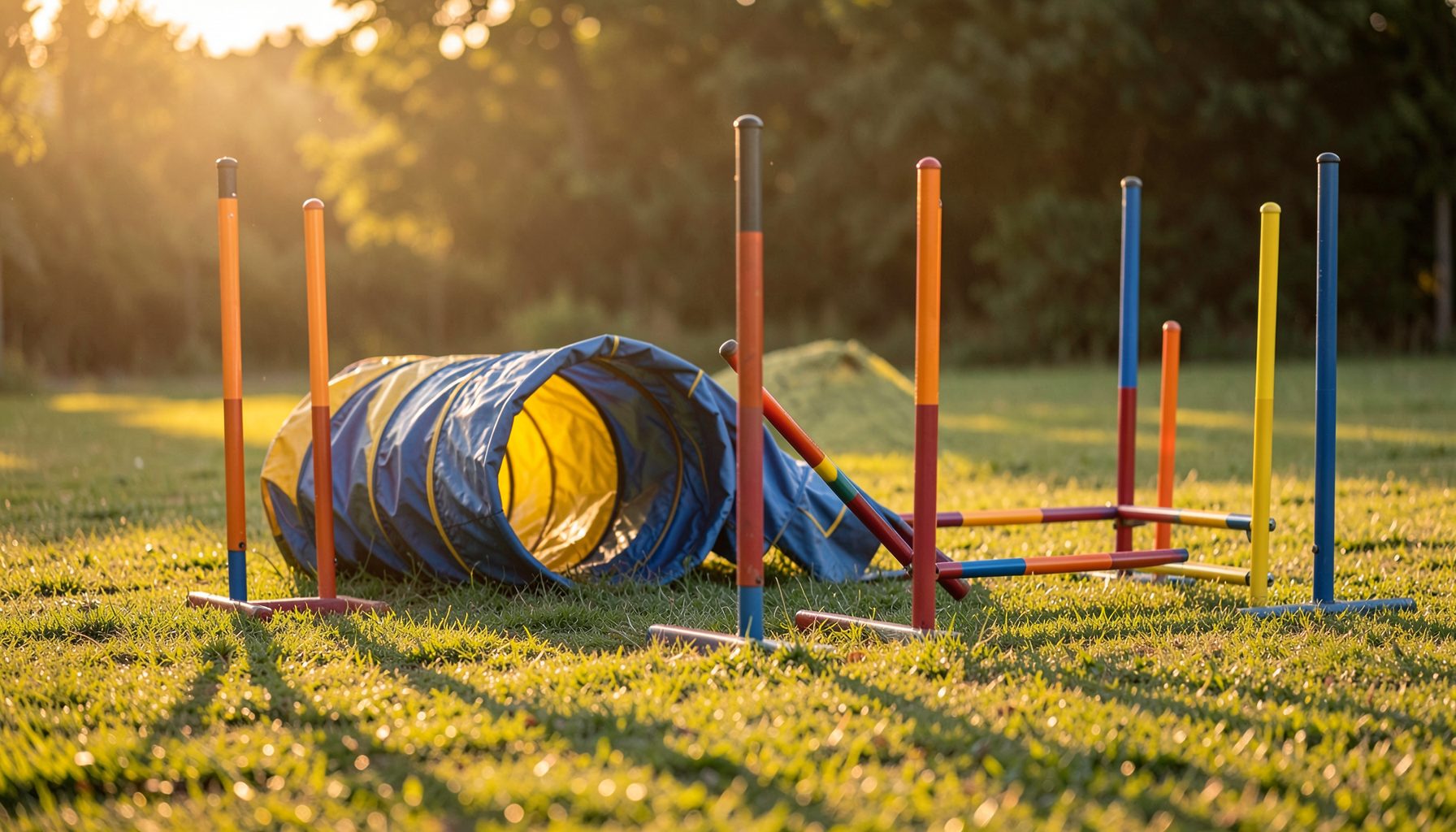
How Club Gallery Banners Bring Agility Events to Life
A gallery banner is often the first image a handler sees when browsing photographs from a club show, trial or training day. It needs to communicate the character of the event quickly: the speed of an agility run, the concentration before a start, the connection between dog and handler, and the atmosphere created by the club and its volunteers.
At Pawprint Pictures, selecting that lead image involves more than choosing a sharp photograph. We consider the event setting, the club’s identity, the variety of competitors represented and the way the image will work across a website gallery, mobile screen or promotional material. The aim is to create an inviting visual doorway into a complete collection of event photographs.
Reading The Event Before Selecting Images
Every competition has its own rhythm. A fast-paced indoor trial may produce crisp action frames with tunnels, jumps and weave poles filling the background, while an outdoor training day may be defined by warm light, open grass and relaxed interaction between dogs and handlers. We review the full event gallery before choosing a banner so the image reflects the day rather than a single isolated moment.
The club’s location and conditions also matter. A trial in Melbourne may have changing winter light, while a Brisbane event can involve bright sun, humidity and strong shadows. Sydney venues may present busy backgrounds or compact rings, whereas a regional Australian club might have a broad oval and a more informal feel. These details help determine whether an image feels authentic to the event.
We also look at the event name, discipline and organisation involved, including AKC, USDAA, NADAC, CPE and ASCA collections. When browsing a club events gallery, visitors should be able to recognise the occasion immediately, even before filtering by handler or dog name.
Choosing A Picture With A Clear Story
The strongest banner images usually contain a simple, readable story. A dog caught at the peak of a jump can show athletic ability, while a focused start-line pose can convey anticipation. A frame of a handler giving direction, with the dog responding naturally, can say more about teamwork than an image that is technically perfect but emotionally flat.
We consider composition carefully. The dog should be visible and expressive, with enough surrounding space for the banner layout and any event information that may appear beside it. A photograph can be excellent in the gallery yet unsuitable as a header if the subject is too close to the edge, partly hidden by equipment or lost among several similar colours.
Expression is important as well. Alert ears, bright eyes, a confident stride or a joyful reunion after a run can make an image feel welcoming. Prize presentations and ribbon photographs may be especially meaningful for club members, and handlers looking for ideas can use these prize ribbon poses when planning their own keepsake images.
Balancing Action, People And Place
A club banner should represent more than one standout dog. We look for photographs that suggest the wider experience of the event, including the partnership between handlers and dogs, the effort of volunteers and the distinctive venue. A strong action image may be the final choice, but a quieter frame can sometimes represent a club’s welcoming culture more effectively.
We also avoid selecting an image that could make the event feel exclusive. If the same highly experienced competitors dominate every visual, newer handlers and casual participants may not see themselves reflected in the gallery. The banner is therefore assessed alongside the available collection, helping us present a balanced impression of the club and its competitors.
This approach is particularly useful for Australian clubs, where a single event may bring together competitors travelling from nearby suburbs, interstate teams and regional communities. Travel, weather and weekend schedules influence participation, so the gallery should preserve the sense of occasion for people who drove several hours to compete or spent the day helping beside the ring.
Making Images Work Across The Website
A gallery banner has to perform well at different sizes. The image may appear on a desktop monitor, a phone held outdoors at a trial, or a tablet used while comparing dog and handler galleries. We check sharpness, subject placement, contrast and the amount of visual detail before approving the image.
Colour and exposure receive close attention. Australian sunlight can be harsh, particularly at midday on an exposed oval, and a bright white dog can lose detail against a pale background. We favour photographs with clear separation between the subject and surroundings, while retaining natural colour and the atmosphere of the venue.
The chosen photograph also needs to sit comfortably beside gallery navigation and purchasing information. Visitors may be searching by club, event, handler or dog name before adding prints and other products to the secure shopping cart. A banner that is attractive but visually crowded can distract from that journey, so clarity remains as important as drama.
Practical Choices That Guide Selection
Several consistent checks help us make a final decision for each club. The process combines photographic quality with the needs of the people who will use the gallery, share images and order products in Australian dollars.
- Event identity: The photograph should feel connected to the specific club, venue, discipline and date.
- Visible emotion: Expression, movement and handler-dog connection should be easy to read at a glance.
- Useful composition: The subject needs room for responsive website layouts without awkward cropping.
- Fair representation: The wider gallery should include different dogs, handlers, experience levels and moments.
- Technical reliability: Focus, exposure, colour and background separation must remain strong on mobile and desktop screens.
- Commercial flexibility: The image should suit digital viewing, prints and other photo products without losing important detail.
We also consider how the banner may be used after the event. Clubs often create newsletters, social posts, awards displays or seasonal gifts from their photographs. A thoughtful visual style can support those projects, including a photo gift design that brings together memorable competitors and club milestones.
Privacy and consumer expectations are part of the wider process too. Clubs and photographers should handle personal information responsibly under Australia’s Privacy Act where applicable, while sales and product descriptions should align with the Australian Consumer Law. Clear event labelling, accurate ordering details and reliable customer support help make the gallery experience as dependable as the photography.
A gallery banner succeeds when it feels representative before it feels decorative. It should make a handler recognise the atmosphere of the day, encourage visitors to explore the complete collection and give the club a visual record that remains useful after the ribbons have been packed away. The practical test is simple: choose the image that tells the clearest, most welcoming story of the event while remaining sharp, adaptable and true to the dogs and people who made it memorable.