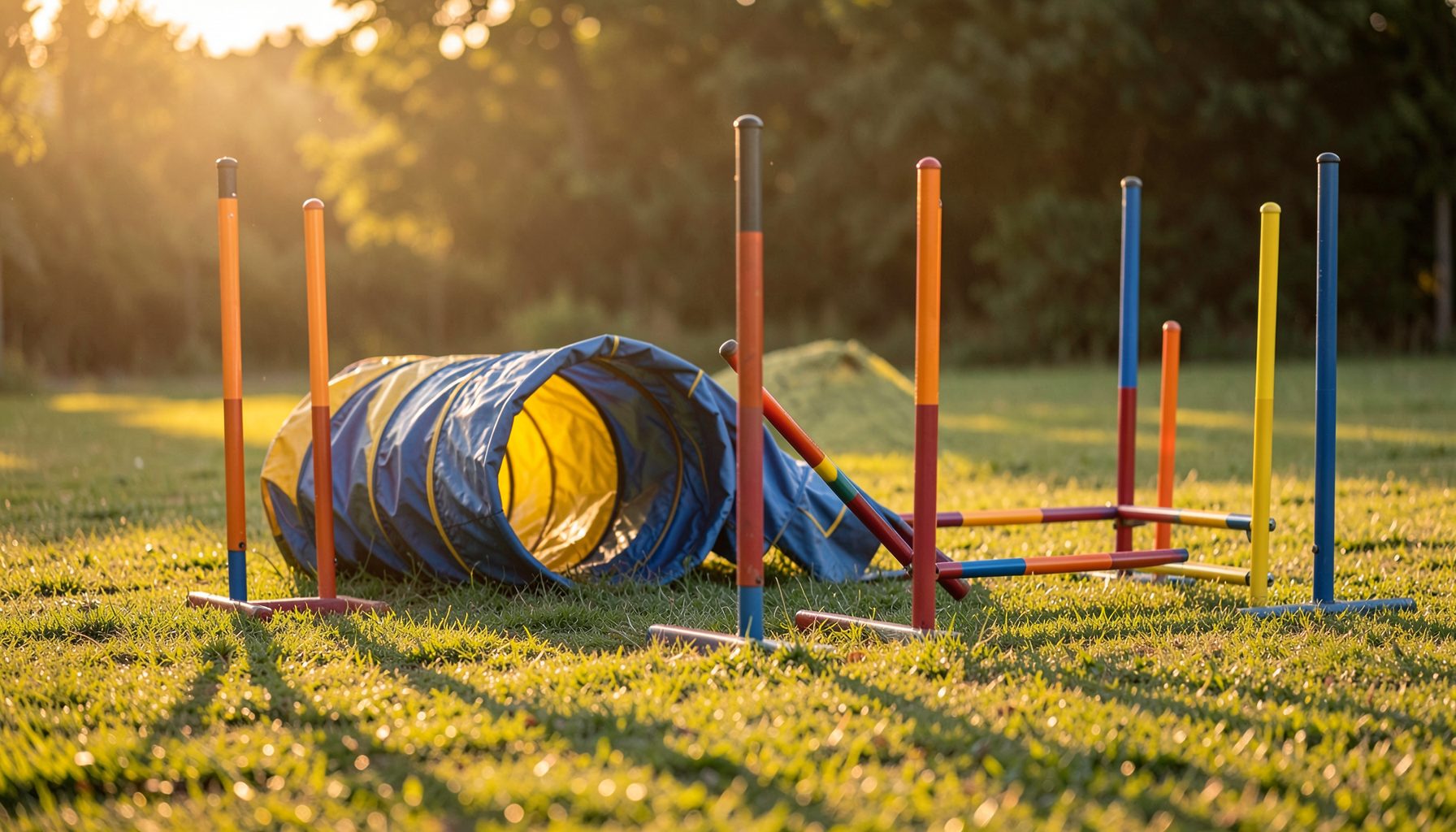
Cropping dog agility photos to show focus and intent
The best way to crop a photo to highlight your dog's focus on the next obstacle is to preserve the visual relationship between the dog, its line of travel and the obstacle ahead. A tight portrait may show expression beautifully, yet it can remove the information that makes an agility photograph exciting: the split-second decision, the handler’s cue and the next challenge in the course.
A useful crop should make the viewer’s eye move in the same direction as the dog. Leave room in front of the muzzle, shoulders or body rather than trimming tightly around the animal. This forward space suggests motion and gives the dog somewhere to look, even when the obstacle is just outside the original frame.
That approach works for photographs from a weekend club meet in Melbourne, a trial near Brisbane or a training session outside Sydney. Pawprint Pictures organises event images into galleries by event, club, handler and dog name, making it easier to find a frame worth refining and order a print through a secure shopping cart.
Find the moment before commitment
The strongest image is often captured just before the dog commits to the next obstacle. Look for a frame where the eyes, nose and chest point towards the jump, tunnel, contact obstacle or weave entry. The dog does not need to be perfectly centred; its intention is more important than symmetry.
When reviewing an agility gallery, compare several frames around the same action. One may show a spectacular leap, while another reveals sharper concentration as the dog locks onto the obstacle. The second image can communicate more about partnership and handling, especially when the handler’s body position supports the direction of travel.
Avoid choosing a photograph solely because the dog’s legs form a dramatic shape. If the head is turned away or the next obstacle is hidden by an awkward crop, the image may feel static. Focused eyes, forward ears and a clear line through the shoulders usually provide stronger visual evidence of what happens next.
Create space for the intended line
Start by identifying the dog’s direction of travel. If it is moving left to right, place the dog slightly left of the finished frame and retain more space on the right. For a dog turning sharply towards a tunnel or jump, the crop can include extra room in the direction of the turn, even if that produces an off-centre composition.
A horizontal crop is often effective for a jump sequence or a fast run across open ground. A vertical crop can suit a tall A-frame, a dog climbing a contact obstacle or a portrait where the handler’s pointing arm leads the eye upwards. Keep enough of the obstacle to identify the target, since a small section of coloured bar or tunnel may be essential to the story.
Do not crop so closely that paws, tail or ears are cut at distracting points. Deliberate edge cropping can work in an editorial-style image, but accidental trimming at a joint tends to look uncomfortable. Check the dog’s expression at 100 per cent before finalising, particularly when the original file contains subtle eye direction that may disappear at smaller sizes.
Match the crop to the finished image
| Intended use | Suitable crop | What to preserve | Common mistake |
|---|---|---|---|
| Social media post | Square or 4:5 vertical | Eyes, head direction and a hint of the obstacle | Enlarging until the action feels cramped |
| Framed wall print | Original ratio or moderate horizontal crop | Dog, obstacle and clean background | Removing the space that suggests movement |
| Sequence display | Consistent landscape crops | Similar scale and direction across images | Giving every frame a different visual rhythm |
| Greeting card or small product | Tight vertical or square crop | Expression and recognisable markings | Including too much distracting arena detail |
| Club or event album | Balanced crop with context | Course layout and handler relationship | Making every photograph look like a headshot |
The final purpose should guide the crop from the beginning. A photograph intended for a phone screen can tolerate a stronger crop than one being printed at A3 size. Large prints reveal softness, noise and small distractions, so inspect the original resolution before committing to a dramatic enlargement.
For a series of images, consistency matters more than forcing every frame into the same exact shape. Similar head size, comparable eye-line and a shared direction of movement will make several photographs feel connected. If you are planning a display of a single dog in different phases of a run, these display ideas can help determine whether matching crops or varied formats will work best.
Work with Australian light and backgrounds
Australian agility photography often involves strong sunlight, pale grass and hard shadows. At an outdoor event in Perth or Adelaide, a bright patch of ground can pull attention away from a dog’s face after cropping. Reduce the crop slightly or adjust exposure and highlights so the brightest area does not compete with the next obstacle.
In Brisbane and other warm regions, early starts are common because summer conditions can become uncomfortable for dogs and handlers later in the day. Morning light may be softer, but it can also create long shadows across a course. Check that a dark shadow has not swallowed the eyes before selecting the frame, and avoid using heavy contrast that makes the dog’s gaze disappear.
Melbourne’s changeable weather brings a different issue. Overcast light can produce gentle colour and even detail, while a sudden break in the cloud may create a bright background behind the obstacle. Crop to simplify the background, then retain enough environmental context to show the dog’s route. A clean Australian club ground can add atmosphere without becoming the subject.
Colour also deserves care. Many clubs use vivid ring barriers, numbered signs and branded equipment. These details help identify the obstacle, but saturated reds, yellows and blues can dominate a small crop. Reduce distracting colour selectively rather than applying a global filter that changes the dog’s coat.
Respect privacy and presentation details
Before sharing a cropped image online, check whether other handlers, spectators or identifying signage remain visible. A tighter composition can remove people from the background, which is useful for social posts and personal albums. Where individuals are recognisable, consider permission, club policies and the expectations attached to event photography.
Australian buyers also benefit from checking the product description and delivered price carefully. Businesses selling photographic products to Australian customers generally need to present prices clearly, including GST where applicable, and comply with Australian Consumer Law. Delivery costs, production times and return conditions may differ between digital files, prints and framed products.
A reputable gallery should also provide clear support for locating images by event, handler and dog. This is especially helpful after a large Sydney, Canberra or regional New South Wales trial where several rings operate at once. If an image is difficult to find, support staff may be able to identify the correct gallery using the club, class or dog details.
Privacy and payment security matter when ordering. Use the official gallery and checkout rather than downloading from an unofficial repost, and keep order records for prints or photo products. Pawprint Pictures’ customer accolades offer additional context about the service experience behind its event galleries.
Refine the crop before ordering
Make the first crop generous, then refine it in stages. Begin with the dog’s gaze and the next obstacle, remove empty areas that add no meaning, and finally check the edges for clipped ears, paws, bars or handler cues. This sequence prevents you from zooming in too early and losing the sense of motion.
Use these practical checks before selecting a final file:
- Leave visual space in the direction of the dog’s gaze and travel.
- Keep enough of the next obstacle to make the intended line clear.
- Avoid cutting through joints unless the close crop is deliberately stylised.
- Compare the crop at screen size and at the expected print size.
- Check bright Australian backgrounds, shadows and saturated equipment colours.
- Keep a consistent scale and direction when preparing a multi-image display.
A well-cropped agility photograph should feel as though the action continues beyond the frame. The dog’s eyes lead forward, the obstacle gives that focus a destination and the remaining space creates momentum. The key detail to remember is simple: crop around the dog’s intention, not merely around the dog’s body.