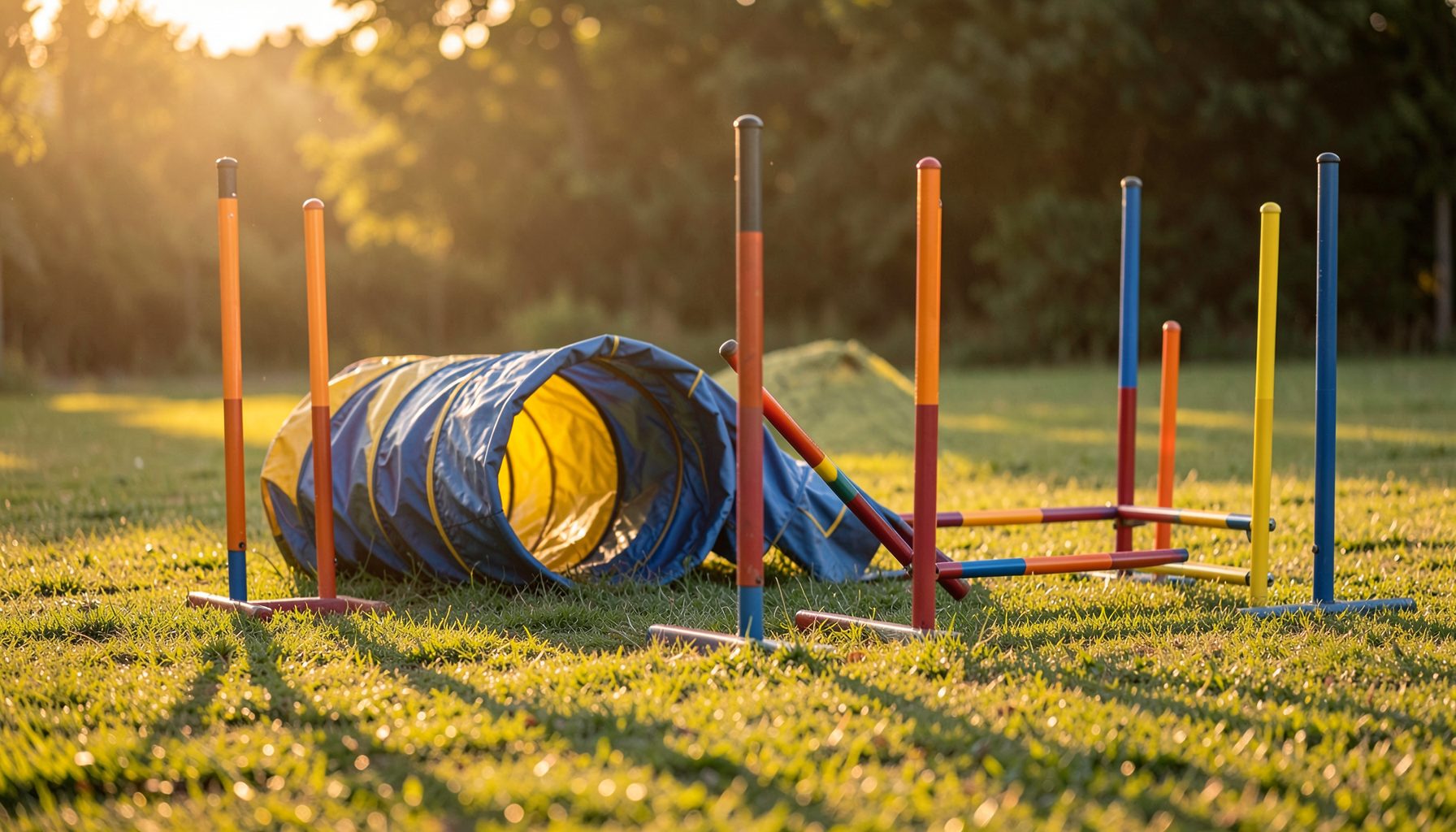
Honouring your dog's best obstacle moments with a custom photo collage
Every handler knows that one split second when everything clicks. The dog launches off the A-frame, the handler pivots, and the timer stops in your favour. Capturing that fraction of a second is half the fun. Turning a folder full of brilliant obstacle shots into a finished collage on the wall is the other half, and it is the bit most people quietly put off for months.
The trick is treating your images the way you would treat a small exhibition. A few practical decisions about subject, medium, layout, and lighting will carry the whole piece. Whether you are a weekend warrior at a club trial in regional Victoria or a regular at the Sydney Royal Easter Show, the same rules apply once you bring the photographs home and start looking for a hammer.
Picking the right shots for the wall
Start by sorting your collection into three piles: keepers, maybes, and out. Do not trust yourself to do this at midnight after a long day. Make yourself a long black, sit down with a decent monitor, and only move images into the keepers pile when you would happily show them to a mate at the pub.
A balanced collage usually needs a hero shot, two or three supporting angles, and a couple of detail crops. The hero is your dog at full extension, ideally mid-jump or hitting the top of the dog walk. Supporting angles might include the contacts, the weaves, or a candid moment between obstacles that tells a story about your partnership. Detail crops work brilliantly for things like paw placement on a teeter or a focused eye at the start line.
If you are working from event photography rather than your own camera roll, an agility gallery indexed by event, club, handler, and dog name makes it much easier to pull a clean, consistent set of images from a chaotic weekend. That kind of structure saves hours when you are trying to balance lighting, jersey colours, and background fences across a final selection.
Choosing print materials that survive the Aussie sun
The harsh Australian light is both a gift and a curse for photographers, and it does not get gentler on a printed photo sitting in a hallway or lounge room. Direct sun through a west-facing window will bleach unprotected paper inside months, so think carefully about where the collage will live before you choose a finish.
For most Aussie homes, a lustre or satin paper with archival pigment-based inks is the safest middle ground. Glossy finishes look great on the day but pick up reflections and fingerprints. Canvas wraps handle humidity and the occasional knock from a tail-wagging border collie, and they do not need glass. Metal prints are becoming more popular at Australian print shops because they resist fading well, though they cost a fair bit more per panel.
If you prefer to frame under glass, look for low-reflective or museum-grade acrylic rather than standard glass. A standard frame will turn a weave entry shot into a mirror every time the afternoon sun comes through. Match your frame finish to your home rather than to the photograph, because the photo should be the loudest thing on the wall.
Layouts that work in real Aussie homes
Most walls in Australian homes are not the towering double-height spaces you see in display homes. They are standard stud walls, often with a doorway on one side and a light switch on the other. Plan your layout around those realities rather than fighting them.
The simplest, most reliable arrangement is a clean grid, three across and two down, with consistent spacing. It looks tidy in a hallway and is forgiving when you swap one image out for a better one later. If you want something more dynamic, try a centred hero with two angled diagonals underneath, but measure everything and stick blu-tack templates to the wall first. A trip to Bunnings for hooks and a level is almost always worthwhile.
Theme-driven collages also work well. You could group everything around one favourite event, or build a season-by-season story from the local club trials you attended. Plenty of handlers in Queensland and New South Wales do this with the state-level titles, then add fresh shots each year as the dog progresses through the grades.
Lighting and placement tricks
Light is what separates a collage that sings from one that just hangs there. Aim to hang the finished piece where it gets even, indirect light for most of the day. Direct sunlight is the enemy. If the only free wall catches the afternoon glare, consider a sheer curtain or a piece of UV-filtering film on the window, both available from any large hardware chain.
Picture lights or small LED strips add drama without the heat of old halogen fittings. Warm white, around 3000K, tends to flatter tongue-out colour shots better than cool daylight tones. If you would rather show off far more obstacle runs than any wall could physically fit, a rotating smart frame on a sideboard is a good compromise and a talking point when friends come over for a barbie.
If you would rather tweak colour and contrast before you commit to print, the home editing tips walk through straightforward adjustments that match what professional labs expect. Even ten minutes in a basic editor can rescue a slightly hazy weave entry or sharpen a teeter moment that was just out of focus.
Getting the job done without the headaches
- Decide on a final size and paper finish before ordering, so all prints share the same look and feel.
- Lay the chosen images on the floor and photograph the arrangement before you lift a hammer.
- Use a level, not your eye. Every single time.
- Leave a gap of at least 5 cm between frames so the eye reads them as a series rather than one busy block.
- Order one small test print if you are trying a new lab, especially when shipping across state borders.
- Keep digital copies of every framed image in a folder named with the dog's call name and the year.
Here is a realistic starting point that does not require a weekend off work. Pick your top eight obstacle shots, send them to your preferred print lab in a standard 8x10, and grab six matching matt-black frames from your local framer or a chain like Big W or Kmart. Spend a Saturday morning laying them out on the lounge floor, blu-tack paper templates to the wall, and commit to the nail positions before lunch. By arvo you will have something that genuinely looks like a finished piece rather than a mood board.
For trial and show shots where you would rather skip the camera altogether, Pawprint Pictures organises galleries by event, club, handler, and dog name across AKC, USDAA, NADAC, CPE, and ASCA, so finding the right frame takes minutes rather than hours. That leaves you with the real fun part: standing back, coffee in hand, watching your dog's best work finally look as good as it felt in the ring.