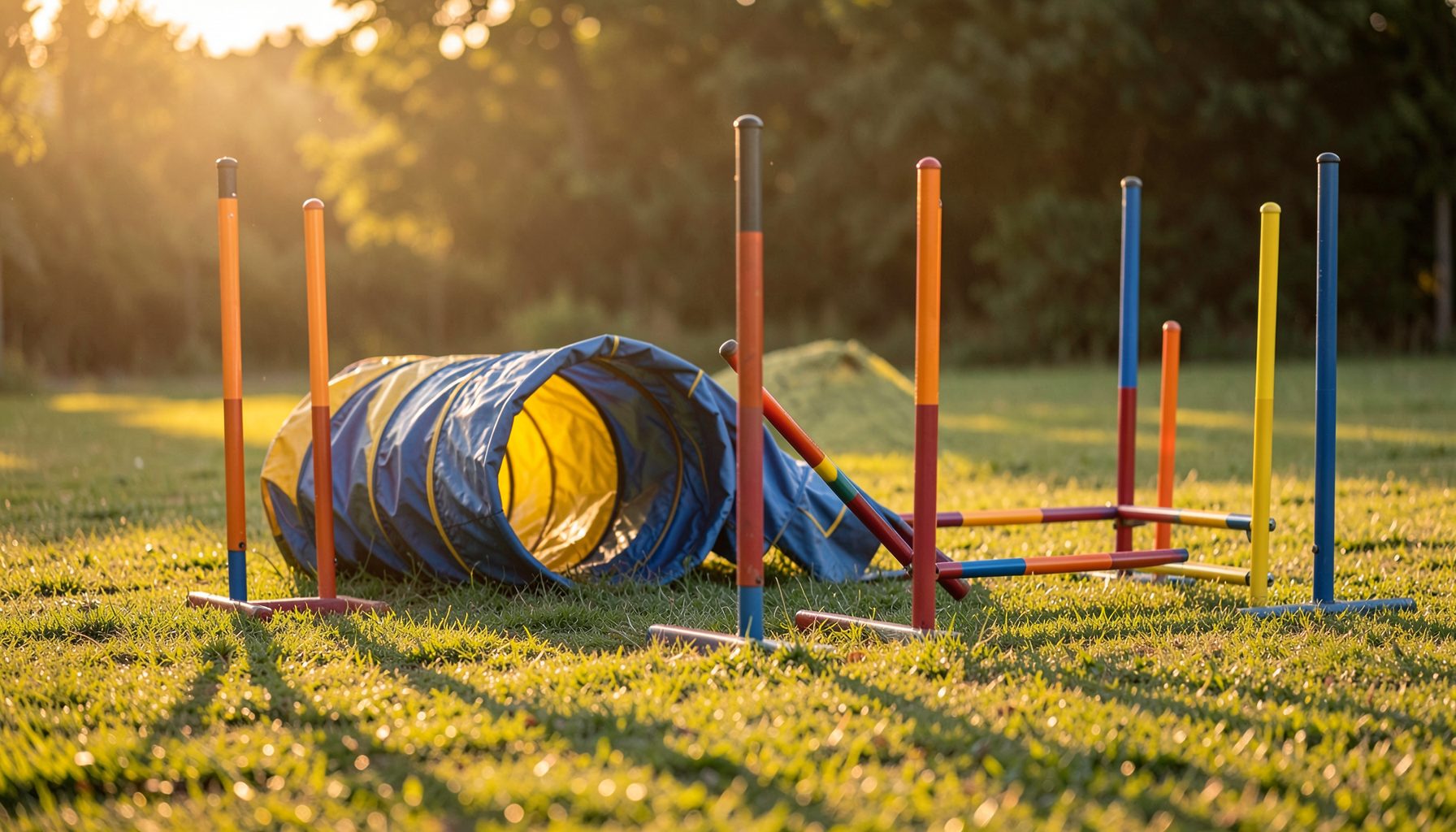
Framing the Perfect Mid-Run Photo of You and Your Dog
A great agility photograph captures more than a jump or weave pole. It records the split second when your dog commits to an obstacle and you guide the run with posture, timing and focus. When both of you appear in the frame, the image can tell the whole story of teamwork rather than showing the dog in isolation.
The best way to frame a photo that includes both you and your dog mid-run is to preserve the direction, energy and relationship between you. A thoughtful crop, suitable print size and carefully chosen frame can turn an action photograph from a simple event souvenir into a meaningful piece of wall art.
Start With The Story Inside The Image
Look for a photograph in which both dog and handler have clear roles. Your dog should be showing movement, concentration or take-off, while your body position, hand signal or eye line helps explain what is happening. A frame that includes the relevant obstacle can provide useful context, especially when the dog is approaching a jump, tunnel or contact equipment.
Avoid selecting an image solely because the dog’s face is sharp. A technically crisp photograph may still feel incomplete if your arm is cut off, your body is hidden behind equipment or the dog is running towards the edge of the image. The strongest handler-and-dog action shots usually leave enough space in front of the movement for the viewer to imagine the next stride.
Pay attention to the connection between you. A glance across the ring, a matching direction of movement or an extended arm can make the photograph feel intentional. Even if neither face is visible, the shapes of your bodies may communicate speed, trust and precise communication.
Protect Movement With A Balanced Crop
The crop should support the run rather than squeeze it. Leave breathing room ahead of the dog, particularly when your dog is accelerating towards an obstacle or turning sharply. Space behind the pair can be tighter because the action has already travelled through that area.
A horizontal image often works well when you and your dog are moving across the course. It gives room for the line of travel and can include an obstacle without making either subject appear cramped. A vertical crop may be better when the action rises through a jump, or when your body and the dog form a strong upward composition.
Keep key body language intact. Cropping at a natural joint is generally more comfortable than cutting directly through a wrist, ankle or elbow. If your hand is directing the dog, include it whenever possible. Likewise, retain the dog’s paws when they show take-off or landing, since those details reinforce the sense of motion.
Match The Frame To The Finished Print
Before ordering, consider where the photograph will be displayed and the proportions of that space. A wide print may suit a hallway or shelf, while a portrait-oriented image can work above a narrow desk or beside a trophy cabinet. The available image ratio matters because an extreme crop can remove the very details that make a mid-run photograph special.
For an Australian home, a clean frame in black, white or natural timber can complement both contemporary interiors and traditional club memorabilia. Matte paper reduces reflections near bright windows, while a lustre finish can retain colour and detail without the strong glare of glossy paper. Strong daylight in rooms facing north or west is worth considering when choosing where to hang the finished image.
Useful display choices include:
- A landscape frame for a side-on run with clear space in front of the dog
- A portrait frame for a jump, rear-cross or upright handler-and-dog composition
- A larger mount when the photograph contains small course details worth preserving
- A simple border when colourful ring equipment already dominates the image
If you are displaying several photographs together, keep the frame style consistent rather than matching every image to a different colour. A sequence from one trial can look especially effective when the prints share the same outer dimensions, even if the photographs use different orientations.
Prepare The Image For Printing
Digital files can look bright and detailed on a phone while appearing darker or softer in print. Review the photograph at a useful size before choosing a product. Check the dog’s eyes, your hand signal, obstacle edges and any important details in the background. A modest amount of sharpening may help, but excessive editing can make fur and grass look harsh.
Colour also deserves attention. Agility images often contain vivid yellow jumps, blue tunnels and green grass, so an oversaturated edit can become distracting. Aim for skin, coat and outdoor colours that look believable. If the gallery offers professionally prepared products, use the supplied preview as a guide to how the image may translate to paper.
The final dimensions should suit the amount of detail in the composition. A photo showing both of you clearly can handle a larger print, while a distant image may be better kept at a moderate size. If you are unsure which event images have enough resolution or visual impact for enlargement, reviewing a gallery before and after a competition can help you make a more informed choice through this gallery review guide.
Use The Gallery Details To Find The Right Moment
Agility photographers often organise images by event, club, handler and dog name. That structure is useful when you remember the trial but not the exact run number, or when several dogs competed under the same handler. Browse beyond the first few images because the most expressive photograph may occur during a less obvious obstacle or a later class.
Australian competitors may be searching for photographs from a weekend trial in Melbourne, a club show around Sydney or a training session in Brisbane. Weather and light can vary considerably between venues, from sharp summer sun to overcast winter conditions, so compare images for exposure and background clarity before choosing a print.
When you locate a promising gallery, inspect the surrounding sequence. The adjacent frames may show a cleaner stride, a better view of your face or a more complete line through the obstacle. Use the site’s customer gallery search to locate images by the details associated with your event, handler profile or dog.
Make The Display Feel Personal
The finished photograph should reflect the partnership, not just the sport. A frame containing both of you can sit beside a ribbon, catalogue page or small plaque with the event date. This creates a display with context while keeping the photograph as the visual focus. For a family room, choose a finish that is easy to dust and resistant to fingerprints around the glazing.
A few presentation options work particularly well:
- A single large print for a defining run, such as a clear jump or fast tunnel exit
- A three-frame arrangement showing approach, obstacle commitment and recovery
- A print with a small caption containing the dog’s name, class and trial location
- Matching frames for photographs taken at different Australian clubs or events
Avoid placing the frame where direct sunlight falls on it for much of the day. This is especially important in bright Australian interiors, where UV exposure can gradually affect paper and colour. Keep photographs away from damp areas, and use proper hanging hardware if the frame is large or mounted above a busy walkway.
The most successful arrangement is usually the one that gives the image enough space to breathe. A crowded wall, oversized mat or decorative frame can compete with the movement. Let the dog’s direction guide the placement: if the pair are running to the right, leaving a little more open wall space on that side can make the display feel balanced.
When selecting your final image, prioritise the frame that shows a complete piece of communication: your body directing, your dog responding and the course giving the moment a clear setting. Preserve the direction of travel, choose a print proportion that respects the original composition, and use a restrained frame that keeps attention on the run. That practical approach will help turn a fleeting trial moment into a photograph you can enjoy for years.