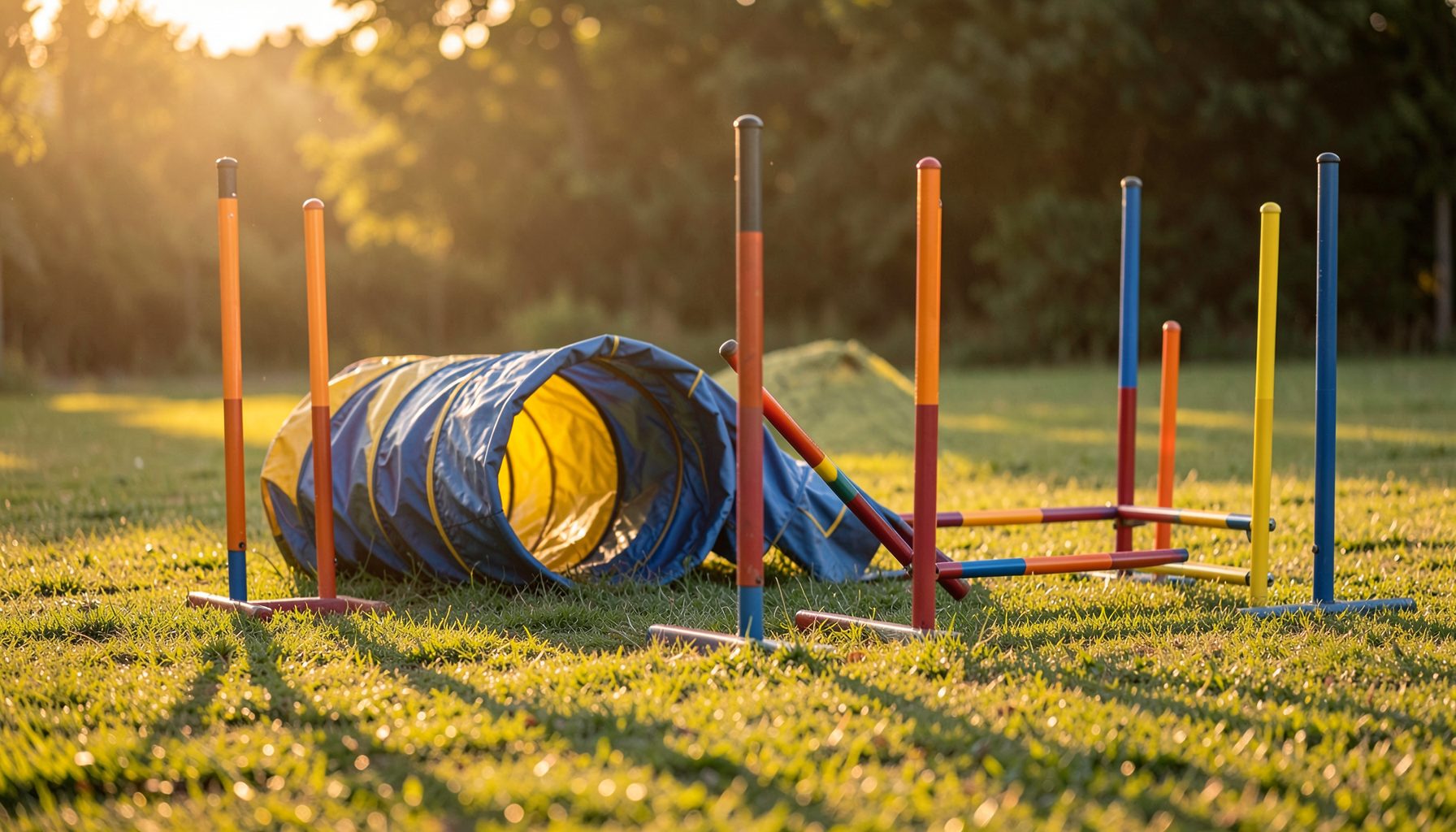
Choosing a Finish-Line Photo That Shows Your Dog's Happy Face
That final stride at the end of a course carries more emotion than any other part of an agility run. Whether your dog has just nailed a clean contacts performance at a Royal Melbourne Show qualifier or breezed through a Saturday morning trial at a Brisbane club, that split-second of triumph deserves to be remembered properly. Photographers at trials around the country capture thousands of frames per dog, and knowing what to look for helps narrow down the one that captures real joy.
Finish-line shots are popular with handlers because they combine motion, success, and your dog looking directly at the camera, often with eyes soft, mouth slightly open, and ears pricked forward. The trick is telling those candid moments apart from the slightly forced or awkward takes that can sneak into a gallery. With a few clear things in mind, your dog's personality can shine through the chosen print and end up on the wall for the right reasons.
Recognising a Genuinely Happy Expression
A truly happy dog in a finish-line image usually shows it through small physical cues rather than dramatic grins. Look for soft, almond-shaped eyes with no visible whites, a relaxed lower jaw, and ears angled slightly forward without being pinned back. A loose, slightly open mouth, sometimes with the tongue resting against the front teeth, suggests contentment rather than stress.
Compare this with tense features: tight lips pulled back, hard stares, ears flattened, or a wide-eyed look with the sclera clearly visible. Even a dog caught mid-air can look uncomfortable if the muscles around the eyes are strained. In a calm, well-timed shot, the face reads almost like a portrait, even though the body is in motion.
A useful habit when scanning a gallery is to pause on the first frame that grabs you and ask what caught your eye. Often it is a small tell, a slight tilt of the head, a relaxed pant, or a moment where the dog seems to be looking right at the photographer with curiosity rather than alarm. That instinctive click of recognition usually holds up best later on.
Body Language That Signals Pure Joy
The face tells part of the story, but the body carries the rest. A joyful finish-line shot typically shows a loose, balanced posture rather than a braced or overly stiff one. Tail position is often the easiest give-away: a soft, mid-height wag captured as a slight blur indicates pleasure, while a high, rigid flag can mean over-arousal.
Feet and shoulders also matter. A confident dog will often have a slight self-carry off the line, with weight shifting forward but the back end still tracking. Watch for the moment when the front paws have just left the ground or are still in soft contact rather than planted hard. A frame where the paws tuck neatly and the topline is gently curved reads as relaxed even at full speed.
Handlers often worry that a slightly blurry body means a ruined shot, but a touch of motion in legs and tail adds life. The clearest images of full-body celebration are usually those where the head and shoulders are crisp while the paws and tail show movement. This balance is a hallmark of event photographers familiar with the rhythm of Australian agility circuits.
Timing and Frame Composition
The finish line is rarely a single moment. Most dogs run a course in well under a minute, so the photographer captures a burst of frames around the final obstacle and the exit. Two compositional patterns tend to produce the best results: a head-on view of the dog just past the line, or a three-quarter side view where the eyes, mouth, and path of motion are all visible.
In head-on shots, the risk is the mouth being closed mid-pant, which can look blank. In side views, the eyes may be obscured by turn speed. A useful trick is to flip between near-duplicates taken a fraction of a second apart. The frame where the mouth is just opening, the eyes are at their softest, and the dog's weight has settled forward is almost always the keeper.
Lighting also changes the result. Outdoor trials at grounds like those in Adelaide often have bright overhead sun through the warmer months, while indoor venues around Sydney tend to rely on overhead fluoro. Photographers who know the sport usually set up against the sun, so pay attention to shots taken near fences, ramps, and tunnels, where colour and shadow tend to be most flattering.
Locating and Narrowing Down the Right Frame
Most well-run event libraries store images by club, handler name, dog name, organisation, and individual trial, which makes filtering easier. Because agility in Australia runs under bodies like ANKC, ANDA, and Dogs Australia, each event usually has separate galleries that do not always share the same naming system. Searching consistently with your dog's call name and handler surname catches results across every organisation on the same day.
A practical workflow is to start with your best moments first, then go back to read slower. Open every gallery from a trial, scan once quickly for any frame that prompts a pause, and save candidates into a separate folder. Reopen that folder the next day with fresh eyes, because tiredness narrows judgement during long scrolling sessions.
Help with finding your photos is available for anyone struggling to locate a specific run, especially when multiple handlers share the same surname or when a dog runs under different names across organisations. The support team can usually pull the right gallery within a couple of business hours, which saves a lot of trial-and-error scrolling on busy event weekends.
Printing and Sharing the Winning Shot
Once the right frame is locked in, the next choice is the print format. Wall portraits suit larger square or 8x10 formats where the dog's face fills the frame, while desk and shelf pieces work better in wide formats that capture the full course exit. For Australian homes with bright open-plan spaces common in Perth and Brisbane, matte finishes reduce glare, while satin works well in lower-light hallways.
Colours also matter. Many finish-line shots are taken on turf, sand, or rubber matting, and a brightly coloured collar can dominate the frame. Choosing a paper tone that complements rather than competes with the dog's main markings usually gives a calmer print. Canvas wraps soften busy backgrounds and suit handlers wanting something that survives a few years of family chaos without scuffing.
Finally, think about where the print will live. A photo meant to greet you after a long shift at the office probably deserves the most flattering frame of the weekend, even if it is not the absolute peak action shot. The whole point of the finish-line moment is the dog's personality, and the print you see every day should reflect that warmth more than the leaderboard result.
Helpful Local Details for Australian Buyers
- Prices are quoted in AUD and include GST, so the figure at checkout is the final amount.
- Most galleries run a print-and-download combo that ships flat-packed within Australia.
- Photo books and wall clusters often attract a small bulk discount once you exceed three items of the same run.
- E-gift cards work well for handlers wanting to share prints across family members spread from Cairns to Hobart.
- Some local clubs run group orders where shipping is split, lowering the per-item cost.
Formats Worth Considering for a Joyful Frame
- 8x10 satin print with a simple white border, ideal for a hallway gallery wall near a side table.
- Square canvas wrap, suited to compact living rooms common in newer Australian builds.
- A two-piece split print capturing the same run from two angles, hung side by side.
- A desk print in a slim magnetic frame for the home office or a locker at the local trial venue.
- A high-resolution digital file ready for sharing with fellow handlers across Australian agility Facebook groups.
Pawprint Pictures hosts a wide range of galleries for events covered around the country, from weekend club trials through to larger multi-day shows. The site's search tools let you look up your dog by registered name, call name, or handler surname across the organisations you compete in, and most galleries open for ordering within a week of the event finishing. A solid print of that joyful finish-line moment becomes the marker of a run that came together exactly how you had hoped.