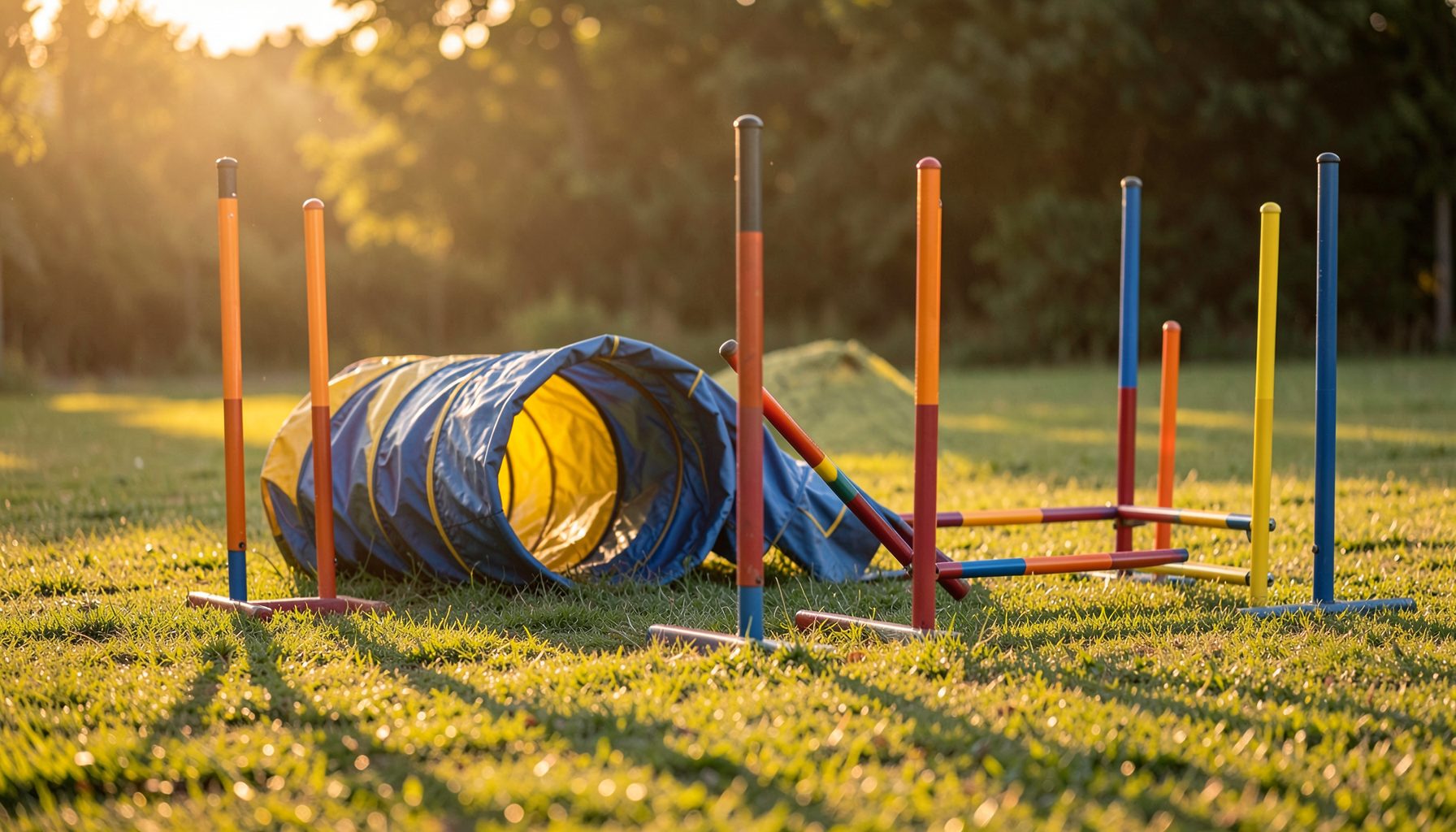
How to find dog agility photos when the club name is missing
Finding photographs from a past dog agility event can feel difficult when the club name has slipped your mind. The event may have been held months or years ago, and memories often preserve the run, the weather or the ribbons more clearly than the organiser’s name. Fortunately, event galleries are usually indexed by several details, so one missing piece does not prevent a successful search.
Pawprint Pictures covers dog agility events, club shows, trials and training sessions across organisations including AKC, USDAA, NADAC, CPE and ASCA. A little information about the venue, date, dog, handler or competition class can often narrow the possibilities enough to locate the right gallery.
Start with the details you do remember
Write down every clue before searching. An approximate month, the dog’s registered name, your own name, the suburb or town, the type of event and even the colour of the venue can help. Consider whether it was a weekend trial, a club championship, a training day or a larger multi-club gathering.
Australian handlers often travel between neighbouring regions, so the place you remember may be the accommodation town rather than the actual venue. An event described as being near Sydney might have taken place in western suburbs or across the Blue Mountains, while a Brisbane competitor may have travelled to the Gold Coast, Ipswich or the Sunshine Coast. Searching both the town and the broader region gives better coverage.
Also check old messages, calendar entries, dog-sport Facebook posts and accommodation bookings. A receipt for fuel, a motel reservation or a note about a judging seminar may reveal the weekend more accurately than memory alone.
Build a search from location and timing
Dates are particularly useful because photography galleries are commonly grouped by event weekend. If you cannot remember the exact day, start with a season and year. Remember that daylight saving applies in New South Wales, Victoria, Tasmania, South Australia and the Australian Capital Territory, but not Queensland, Western Australia or the Northern Territory. That difference can affect how old posts, messages and digital calendar entries appear.
Use a short list of location clues rather than relying on the forgotten club name:
- State, city, suburb or nearby regional town
- Approximate month, season and year
- Indoor arena, showground, sports reserve or training centre
- Organisation, class type or trial format
- Names of judges, sponsors or fellow competitors
Once you have a likely date, browse the relevant event categories on the club show galleries. The gallery title may use a venue, event name or host organisation that looks familiar even when the club itself does not.
Search with the dog and handler’s names
A dog’s name can be a stronger identifier than the event title, especially when several clubs use the same venue. Try the dog’s registered name, call name and any spelling variation you may have used when entering the trial. If the dog competed under a prefix, include that as well. A search for “Ruby” may be too broad, while a registered name such as “Southern Sky Ruby Tuesday” is much more distinctive.
Handler names can help confirm that a promising gallery is yours. Check both the name used on the entry form and any shortened version used in club posts. Some competitors enter under a household name, kennel name or initials. If a partner, junior handler or family member ran the dog, search those details too.
The dog may have competed in more than one class during the weekend, so do not stop after finding a single image. Look for sequences from agility, jumping, games or relay runs. Distinctive details such as a coloured lead, numbered vest, coat pattern or handler’s clothing can confirm that an image belongs to the correct combination.
Match the event type to the gallery
Think about what happened at the event rather than what it was called. A formal trial may have included qualifying runs, while a club show could have involved demonstrations, open-height classes or a fun ring. Training photographs may be filed separately from competition images, even when they were taken at the same grounds.
This checklist can narrow the gallery type:
- Qualifying trial, championship or state-level competition
- Club show, fun day or demonstration
- Training workshop, seminar or assessment
- Relay, team event or multi-ring weekend
- Indoor winter meeting or outdoor summer trial
Australian event calendars often list the controlling organisation rather than the local host club. For example, an entry may mention an ANKC state body, while competitors remember only the local obedience or agility club. It is worth checking both descriptions, along with familiar abbreviations such as AKC, USDAA, NADAC, CPE and ASCA.
Confirm the gallery before ordering
When a likely gallery appears, compare several images before adding products to the cart. Check the dog’s markings, equipment, running direction and your own clothing. A correct gallery should usually show the same venue features, ring layout or weather conditions that you remember. This is especially helpful after a large event where several photographers may have covered different rings.
The Pawprint Pictures website organises photographs by event, club, handler and dog name. If the event title is unfamiliar, browse through related names and dates rather than assuming the photos are missing. Customer-gallery search can also help when you have only a partial name or an approximate event detail.
Before purchasing, note the image number or gallery reference for each run you want. Some events produce several nearly identical action frames, so inspect the available views carefully. A clear landing, weave-pole sequence or finish-line image may be preferable to the first frame that appears in the results.
Keep ordering details clear and useful
Australian customers should check the total price, delivery information and product description before paying. Prices for consumer goods and services in Australia generally need to show the total payable amount, including GST where applicable. A secure shopping cart should also make it clear what is being purchased, whether the product is a print or another photo item, and where it will be delivered.
Choose an address that will remain accessible during delivery. This matters for handlers who travel frequently to trials, live on rural properties or use a workplace address in Melbourne, Sydney or another major city. A post office box may not suit every delivery method, so the available address fields and shipping terms deserve a quick check.
The ordering prints guide explains the practical steps involved in selecting and purchasing photographs. Keep the order email and gallery reference until the products arrive. Under Australian Consumer Law, products should match their description and be of acceptable quality, so records are useful if an order arrives damaged or differs from what was purchased.
Create a simple record for future searches
Once you have found the photographs, save more than the image itself. Record the event date, venue, host club, organisation, dog’s registered name and any gallery reference. A note in your phone can prevent the same search problem next season. Screenshots of the gallery title and order confirmation may also be useful if the website later reorganises its event pages.
For future trials, take a quick photo of the event sign, catalogue cover or running-order board. These ordinary details capture the spelling of the club, the venue and the date in one place. Australian competitors who travel long distances to rural grounds may also want to record the nearest town, since venue names can be difficult to recall after a busy weekend.
The most reliable approach is to combine several small clues: approximate date, location, event type, dog name and handler name. You do not need to remember the club perfectly. What matters is building enough identifying detail to connect your memory with the correct event gallery, then checking the images carefully before ordering.