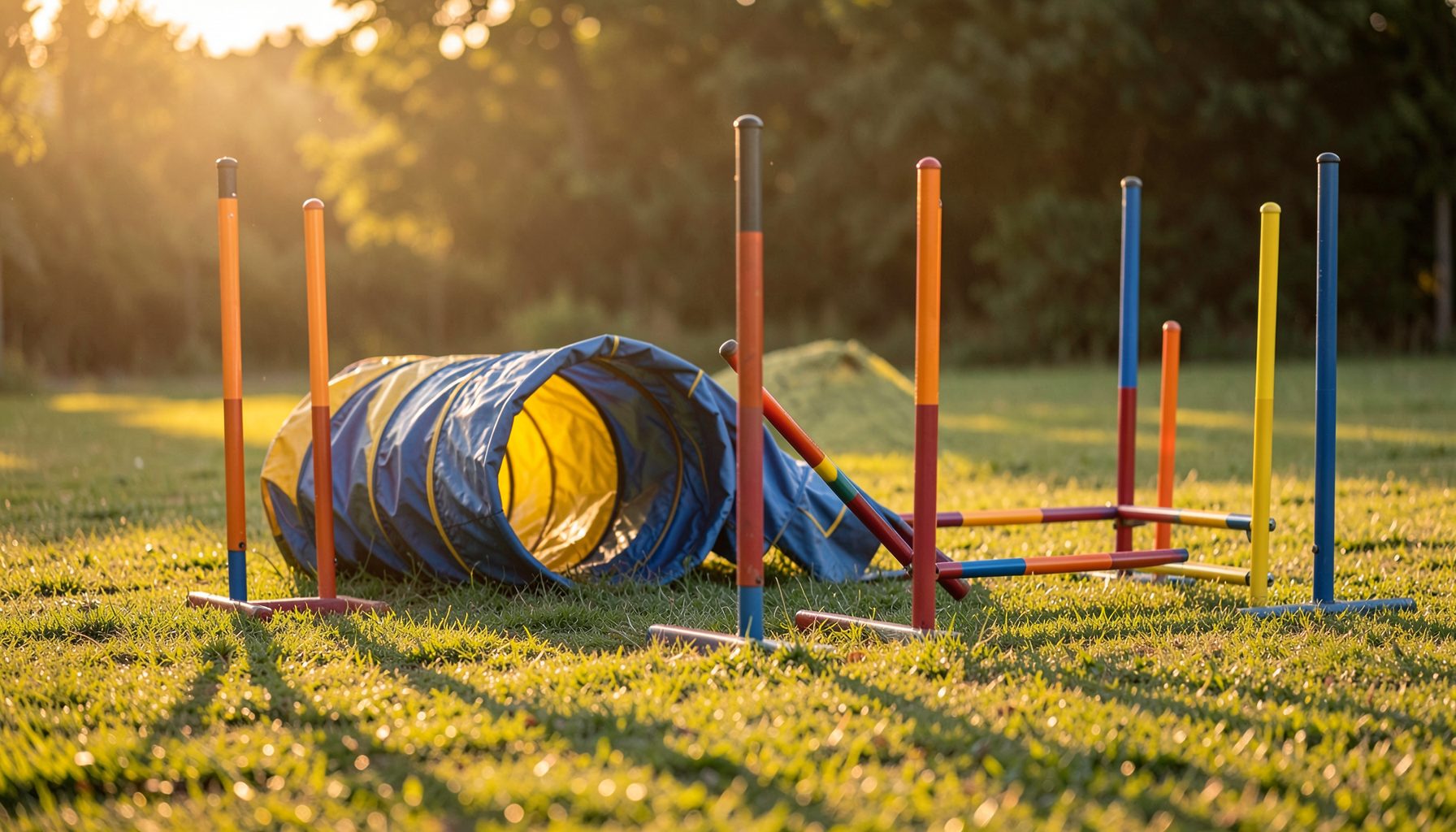
Ordering a canvas wrap of a panoramic agility course overview
A well-timed panoramic shot captures the sweep of an entire agility course in a single frame, from the start line through every weave, tunnel, and final jump. For handlers who train at clubs across Sydney, Melbourne, Brisbane, and Perth, these wide images often become the most cherished record of a season. Turning one into a canvas wrap lets you relive the layout, the footing, and the energy of the ring every time you walk past it on the wall.
Canvas wraps suit panoramic formats particularly well because the stretched fabric over a wooden frame absorbs the slight cropping that comes with wrapping edges. Unlike a traditional framed print, there is no glass to create glare under the harsh lighting of an indoor arena or the bright sun of an outdoor trial held somewhere like the grounds around KCC Park in Melbourne or the Willows Sports Complex in Brisbane.
What makes a panoramic course overview shot special
A panoramic course overview is typically shot from an elevated position behind the start line or from a grandstand if the venue offers one. The photographer pans across the ring to capture the full flow of obstacles, which often stretches 30 metres or more for a standard course. The aspect ratio can run from a modest 2:1 to a dramatic 4:1, depending on the course length and the photographer's vantage point.
These images work especially well at events held on spacious grounds, and the open layouts of ASCA trial photography often give photographers the room to set up for a true panorama. Because ASCA courses frequently use wider spacing and stockier obstacles, a panoramic view shows off the handling challenges in a way a tight portrait never could.
When working with more than one dog in the same trial, keeping multiple dogs photo-ready helps the photographer capture each handler's run without retakes, since a calm dog between attempts means more keepers per course.
Sizing your canvas wrap for the right impact
Most print labs offer panoramic canvas wraps in standard sizes such as 20x40, 30x60, and 40x80 inches. A 30x60 wrap looks balanced in a room with a ceiling height of 2.4 to 2.7 metres, typical of many Australian homes built in the last twenty years.
The wrap depth matters too. A 1.75-inch edge gives a more substantial gallery feel, while a 1.5-inch edge keeps the overall footprint lighter and suits stud walls in older weatherboard cottages. A deeper wrap reads better from a distance, which matters in open-plan living areas common in newer Australian builds.
Aspect ratio influences cropping. A 3:1 file mapped to a 2:1 canvas will lose the edges of the course, which is why checking the lab's preview tool before you commit is worth the extra minute. Many Australian labs display measurements in both centimetres and inches, and converting between the two takes only a moment with a phone calculator. Thinking through vertical vs horizontal framing before you upload saves a refund request later.
Preparing your file for print quality
A canvas wrap hides small imperfections, but it cannot rescue a soft image. Aim for a file that delivers roughly 150 to 200 pixels per inch at the final print size. For a 30x60 inch wrap, that means an image around 4,500 by 9,000 pixels, which most modern full-frame cameras achieve comfortably when shooting in raw.
Save your file as a high-quality TIFF or a maximum-quality JPEG with minimal compression. Keep the colour space as Adobe RGB or ProPhoto RGB if your editing software supports it, because the wider gamut renders the green of artificial turf and the rust of dirt surfaces more accurately. Local Australian printers typically convert to sRGB at the production stage, but starting from a wider space preserves headroom.
Before uploading, check the histogram for clipped highlights in the bright ring lights and shadow detail in the shaded corners. A slight contrast lift and a touch of clarity helps a panoramic shot pop on canvas without looking overprocessed.
Customising borders, edges, and finishes
Canvas wraps come with a few border styles. A mirrored edge reflects the outer pixels around the stretcher bars, which works well for symmetrical courses. A solid colour border in black, white, or a club colour gives a cleaner look, and a blurred edge softens busy showground backgrounds.
Most labs offer protective coatings. A UV-resistant laminate guards against fading in north-facing rooms or sun-drenched walls in coastal homes around places like Noosa or Byron Bay. A satin finish reduces glare without flattening colour, while a gloss finish boosts saturation but can catch reflections from skylights.
If you are ordering from a local Australian printer rather than an overseas lab, expect turnaround times of five to ten business days, plus Australia Post delivery. Domestic production also avoids the surprise customs charges that sometimes appear with international shipping, and you can usually inspect a digital proof before printing begins.
Pricing, consumer guarantees, and shipping in Australia
Canvas wraps in Australia generally range from around AUD $180 for a small piece to over AUD $600 for a large gallery-size piece, depending on the size, frame depth, and any upgrades such as UV coating or a floating frame. The advertised price includes the Goods and Services Tax, which sits at 10 percent and must be shown as a line item on every receipt under Australian Tax Office guidelines.
Under the Australian Consumer Law, your wrap comes with automatic guarantees of acceptable quality, accurate description, and fitness for purpose. If the canvas arrives with a manufacturing flaw or colour cast that the proof did not show, you are entitled to a repair, replacement, or refund, so keep your confirmation email handy.
Shipping within Australia is typically AUD $15 to $30 depending on the size, and remote-area surcharges may apply for postcodes outside the major networks. If you live in a regional area such as the outskirts of Cairns or a farm property in the Riverina, factor in an extra few days for delivery via Australia Post or StarTrack.
Caring for your wrap once it is on the wall
Canvas wraps tolerate the Australian climate better than paper prints, but a little care extends their life. Hang the piece away from direct afternoon sun, air conditioners, and bathroom steam, because canvas can warp slightly with repeated humidity swings. In coastal homes where sea air carries salt, an occasional gentle dusting with a soft microfibre cloth keeps the surface clean.
Use the hanging hardware recommended by the lab rather than improvising with picture wire, because canvas wraps are heavier than they appear and a single stud can hold more weight than a drywall anchor. Check the level twice a year, especially after the seasonal humidity shifts common across the eastern seaboard from autumn into spring.
If you ever need to store the wrap, wrap it in acid-free tissue rather than plastic and stand it on its edge in a climate-controlled room. This protects both the print and the stretcher bars from bowing or mould.
Quick checks before you click order
- Confirm the aspect ratio of your file matches the canvas wrap you have selected.
- Check that the resolution clears 150 pixels per inch at the final print size.
- Approve the digital proof on a calibrated screen, ideally in natural light.
- Verify the GST line item and total in Australian dollars on the invoice.
- Review the lab's returns policy against the Australian Consumer Law guarantees.
Common mistakes that ruin a panoramic wrap
- Choosing a wrap size that is too small for the wall, leaving the piece looking lost.
- Uploading a JPEG that has been compressed multiple times through messaging apps.
- Skipping the mirrored or blurred edge option and getting a hard crop on a busy border.
- Forgetting to convert measurements when ordering from a lab that uses imperial sizes.
- Hanging the wrap in direct sunlight without a UV laminate, leading to early fading.
| Format | Best for | Look and feel | Care needs |
|---|---|---|---|
| Canvas wrap | Wide course overviews, rustic or relaxed interiors | Soft texture, matte finish, gallery feel | Dust occasionally, avoid humidity swings |
| Metal print | High-contrast action shots, modern interiors | Vibrant, glossy, very durable | Wipe with a soft cloth, fingerprints show |
| Acrylic face mount | Hero portraits, sponsor walls | Glassy depth, sharp colour | Clean with a microfibre cloth, scratches easily |
| Traditional framed print | Formal displays, clubs and offices | Classic, archival, customisable | Glass cleaning, frame dusting |
A panoramic course overview wrap is more than a keepsake. It is a working record of how your dog reads a course, which lines worked, and where the footing changed. Order the largest piece your wall and budget allow, prepare your file carefully, and choose a domestic printer that backs their work with the guarantees you already have under Australian law.