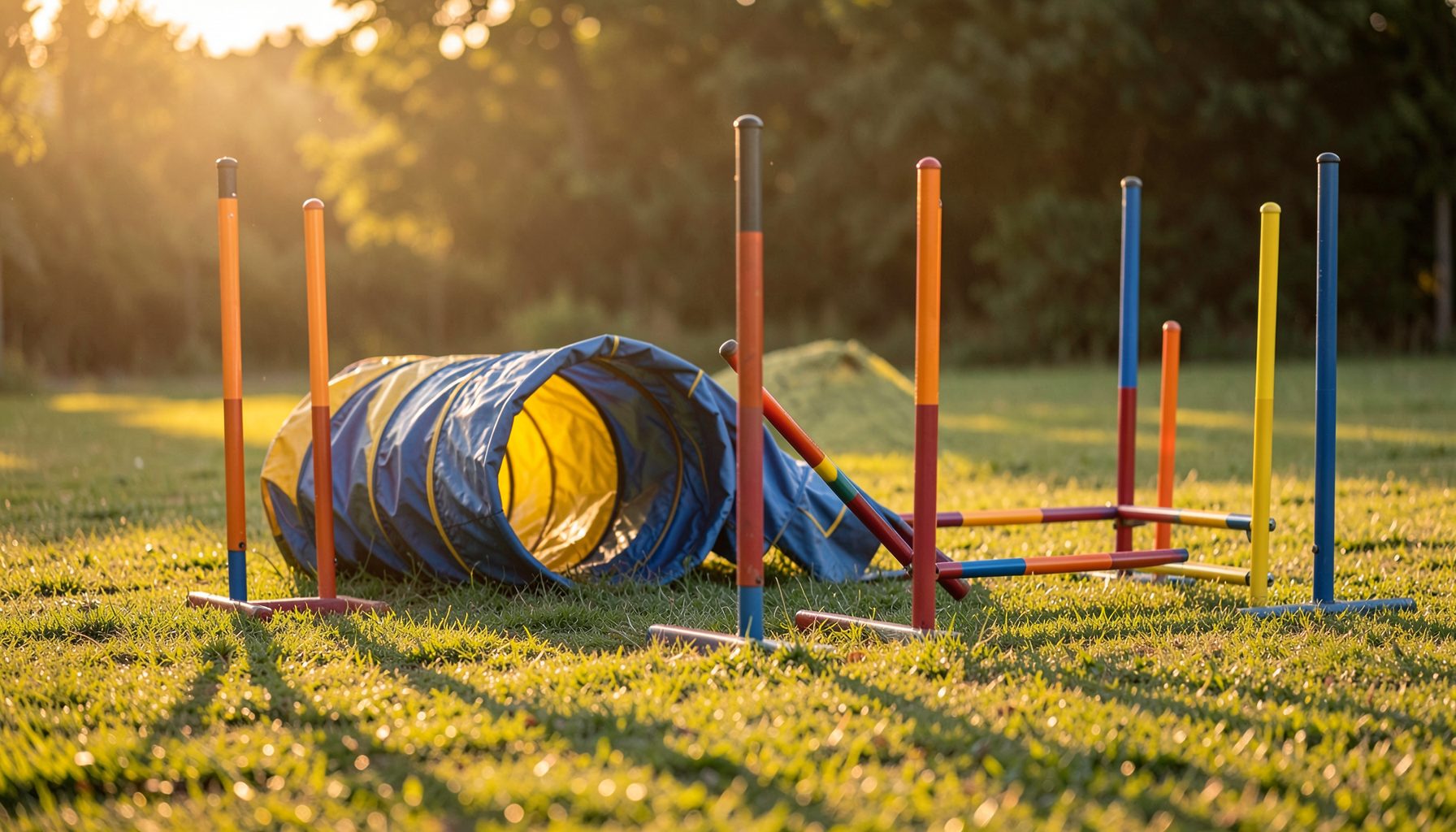
Training your dog to focus on the handler during a run
In dog agility, speed is exciting, but reliable focus is what turns speed into a controlled performance. A dog that watches the handler can respond to changes in direction, recover from mistakes, and move confidently through a course. Handler attention also helps prevent missed contacts, incorrect obstacle choices, and hesitation when the environment becomes distracting.
Focus does not mean forcing constant eye contact. During a run, your dog needs to understand body language, verbal cues, obstacle commitments, and changes in your line. The goal is a connected partnership in which the dog checks in when needed while still driving independently toward the correct obstacle.
Training should begin away from competition pressure. Short exercises at home, in the yard, or during a quiet class can establish the habits that later carry into trials and club shows. When you review event photographs, you may also notice useful details about your timing, posture, and the moments when your dog looks toward you for information.
Build attention before adding obstacles
Start by teaching your dog that choosing to look at or move toward you is rewarding. Stand in a quiet space and wait for a glance, head turn, or step in your direction. Mark the behavior with a click or verbal marker, then deliver a small, valuable treat. Repeat frequently, keeping the exercise easy enough that your dog succeeds several times in a row.
Next, add movement. Walk backward, sideways, or in a gentle arc and reward your dog for staying connected to your shoulder or hand. Change speed gradually so your dog learns that your movement carries useful information. Avoid waving treats constantly, since the long-term objective is attention to your body rather than dependence on food in your hand.
Introduce a release cue to create balance. Your dog should learn when to engage with you and when to leave for a toy, food bowl, or obstacle. A clear release such as “go” or “okay” makes handler focus feel like communication rather than restraint.
Teach a strong start-line routine
A consistent start-line routine gives your dog a predictable first task. Decide whether your dog will hold a stay, offer a hand target, or begin from a specific position. Practice the sequence in the same order: settle, orient toward the handler, receive the release cue, and drive forward. Keep the routine brief and upbeat.
Reward calm attention before the release, but do not repeatedly call your dog’s name once the start is established. Too many words can create uncertainty, especially for a dog that is eager to run. Use a single cue and pair it with clear forward motion from your shoulders and feet.
Practice around mild distractions before entering a busy trial environment. Set up cones, jumps, toys, or a few people at a distance. If your dog loses focus, reduce the difficulty instead of correcting harshly. The aim is to teach your dog that returning attention to the handler makes the next opportunity happen.
Connect handler cues to course skills
Dogs read the handler through a combination of verbal cues, arm position, shoulder direction, pace, and location. Train these signals separately before combining them on a full course. For example, reward a turn toward your left shoulder, then practice a right-side wrap, a front cross, or a rear cross with a single clear cue.
Use low jumps, flatwork, or cones when teaching a new handling pattern. This lets your dog concentrate on your movement without the physical and mental demands of a complete sequence. Reward correct choices immediately, especially when your dog responds to a subtle change in line.
Focus should support independent obstacle performance. Once you have directed your dog toward a jump or tunnel, allow the dog to commit instead of continuing to call. Many handlers accidentally pull a dog off an obstacle by turning too soon or repeating a cue. Good connection includes knowing when to communicate and when to let the dog work.
| Training situation | Handler goal | Useful exercise | Reward timing |
|---|---|---|---|
| Quiet room or yard | Encourage voluntary attention | Name response, offered eye contact, hand target | Immediately after orientation |
| Start line | Create a predictable launch | Settle, focus, release cue | Calm reward before release; play after launch |
| Simple obstacle sequence | Link body language to direction | Cone work, one jump, short tunnel line | As soon as the correct path is completed |
| Distracting class setting | Maintain connection under pressure | Short repetitions near activity | Reward before focus breaks down |
| Trial simulation | Transfer skills to competition | Full routine with ring-like distractions | Reinforce the best decision and calm recovery |
Reward the choices you want to repeat
Timing matters more than the size of the reward. If your dog glances at you and you wait several seconds before marking, the reward may reinforce sniffing, spinning, or looking at another dog. Mark the precise instant of engagement, then deliver food or begin a favorite game.
Use several types of reinforcement. Treats are useful for teaching precision, while tugging, chasing a toy, running together, or access to an obstacle can build enthusiasm. Some dogs value moving forward more than food, so releasing them to a tunnel or jump can be an especially powerful reward.
Photographs from agility runs can help you identify moments worth reinforcing in training. A captured frame may show that your dog was already turning toward your next line while you were still facing the previous obstacle. Browsing an event photo gallery can make these details easier to study and remember.
Handle distractions and lapses calmly
A dog may lose focus because of noise, unfamiliar footing, ring-gate activity, other dogs, fatigue, or unclear handling. Treat the lapse as information. If your dog cannot respond to a familiar cue, the current level of distraction is probably too high for successful learning.
Move farther away, shorten the sequence, or return to a simple attention game. Reward the first voluntary check-in instead of waiting for perfect eye contact. Over time, gradually reduce distance from distractions and increase the duration of work. This approach builds resilience without turning the ring into a place where mistakes produce conflict.
Record what happened after each practice or trial. Note the warm-up, the environment, your dog’s energy level, and which handling cues were difficult. Reviewing images from a competition can complement those notes; the Pawprint Pictures home site offers a way to revisit event photography and examine your partnership in motion.
Keep practice short and purposeful
Effective focus training does not require exhausting repetition. Several two- to five-minute sessions can produce better results than one long drill in which the dog becomes distracted or frustrated. End while your dog is still eager to engage, and vary the rewards so attention remains worthwhile.
Build from simple success to realistic complexity: quiet space, familiar training area, busier class, then a trial-like setup. Change only one major variable at a time when possible. If you add distance, speed, distractions, and a difficult sequence together, it becomes difficult to know what caused the breakdown.
Use these priorities when planning your next sessions:
- Reward voluntary check-ins before asking for longer periods of attention.
- Pair your verbal cues with consistent shoulders, feet, and arm movement.
- Practice start-line and release routines in several locations.
- Give your dog time to commit to an obstacle before changing direction.
- Finish each session with an easy behavior and a rewarding game.
Turn connection into confident teamwork
Handler focus grows through clarity, repetition, and trust. Your dog should learn that watching your movement leads to useful information, enjoyable rewards, and the chance to perform familiar skills. At the same time, your handling should give the dog enough independence to complete committed obstacles without constant reminders.
As training develops, use practice videos, trial notes, and professional event images to evaluate more than the final result. Look for posture, timing, line choice, and the instant your dog reconnects after a distraction. Customers can also use the customer gallery search to locate photographs by event, handler, or dog name.
Keep building small moments of attention into every run, then reward the teamwork that follows. With consistent practice, your dog will learn to stay mentally connected through starts, turns, distractions, and fast obstacle sequences—helping both of you run with greater confidence.