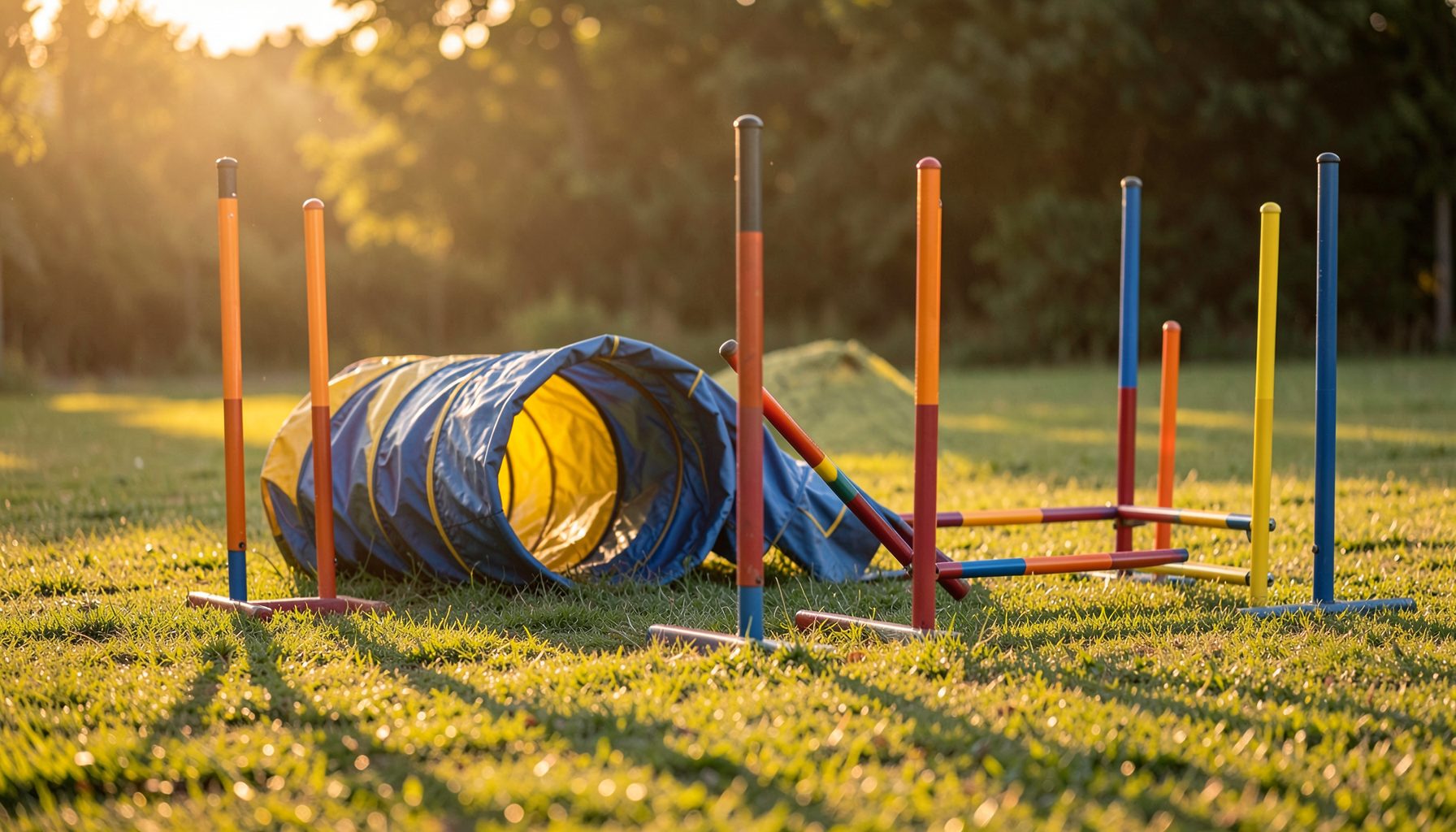
makes a lead-out photo worth studying for agility training review
In a sport measured in hundredths of a second, the lead-out is one of the few moments a handler and dog spend physically apart before the run. A still image captured at that instant reveals what the eye misses: the angle of the dog's shoulders, the weight on the handler's back foot. For Australian handlers across ANKC, ASCA, and state-based clubs, those frozen seconds are increasingly used as training notes.
The shift from video to still photography for review has been gradual. High-frame-rate cameras flooded sessions with hours of footage that rarely gets rewatched, while a single well-timed photograph can be studied for thirty seconds and remembered for a season. That is the value behind galleries of agility photography organised by event, club, handler, and dog.
Start-line photos also level the playing field between handlers who train weekly with a coach and those who prepare alone. A handler in Perth or Hobart can study images from a Sydney Royal Easter Show run, compare handling across the same height class, and bring observations to the next group lesson.
The anatomy of a lead-out moment
A lead-out happens when the handler runs ahead of the dog to set up a blind cross, a backside, or a distance challenge. Photographers at trials anticipate this because the dog's body language changes in the final steps before release. Ears forward, weight dropped into the hindquarters, and visible focus on the first obstacle tell a reviewer that the dog understood the send.
A useful training image shows the handler's full body, not a cropped version above the waist. Coaches in Brisbane and Melbourne ask for photographs where the back foot, hip angle, and arm extension are visible, because those elements decide whether the lead-out rewarded the dog. Without the feet in frame, the photo is decorative; with them, it becomes a coaching tool.
The background matters more than most handlers realise. A cluttered background hides footwork, while an empty patch of turf in front of the first jump gives the reviewer room to read the dog's line. Experienced photographers often shoot from the obstacle side of the start line, capturing both intent and commitment in one composition.
How a single frame beats slow-motion video
Slow-motion video captures motion but loses the still hierarchy of the moment. A photograph freezes the relationship between handler, dog, and course at one instant, letting the eye wander without the distraction of movement. When a handler in Adelaide reviews a run from the Royal Adelaide Show, the still often teaches more about release timing than the video does.
There is also a practical reason. Most Australian handlers store review material on phones with limited storage, and a folder of high-resolution stills from a single trial weighs less than one full HD video. Modern cameras at major events deliver images sharp enough to read paw placement from the other side of the ring.
A still photograph can be cropped, annotated, printed, and pinned to a clipboard. That tactile quality keeps the lesson in front of the handler between sessions, which a video buried in a phone gallery rarely does.
What different sanctioning bodies reveal in the frame
Photography at agility events varies depending on the sanctioning organisation, ring layout, and photographer access. Australian handlers cross between ANKC, ASCA, and imported programs like AKC and USDAA, so it helps to know what to expect from each.
| Organisation | Typical start-line access | Lead-out visibility | Common image use |
|---|---|---|---|
| ANKC / Dogs Australia | Good at state-run events | Full handler and dog visible | Training review and keepsake |
| ASCA | Strong at breed-specialty weekends | Often includes full backdrop | Cross-organisation comparison |
| AKC (US tours) | Variable by venue | Photographer usually ringside | Comparison study |
| USDAA | High at national events | Excellent footing visible | Strategy review |
| NADAC | Distance-friendly layouts | Lead-outs are emphasised | Distance-handling study |
| CPE | Family-oriented layouts | Handler often in frame | Family and keepsake use |
Different bodies encourage different handling styles, and the lead-out photo shows those styles clearly. A NADAC distance lead-out looks different from an ANKC tight-rope send, and the still captures that difference in a way generic video rarely does. Reviewing images across organisations also lets handlers benchmark against international styles without leaving home.
Pricing for prints and digital packages varies by sanctioning body and event, which is why handlers compare notes before ordering. The pricing and packages comparison is a useful starting point for anyone weighing a bulk order against a per-image purchase.
Handler mechanics visible from the start line
A lead-out photo tells two stories at once: the dog's preparation and the handler's. Handlers often focus on what their dog is doing and miss what they themselves revealed. A still image pulls the focus back to the human, which can be uncomfortable as well as useful.
Key visual elements to look for in the frame:
- Back foot position relative to the dog's path
- Hip angle and shoulder openness
- Lead tension or slack at release
- Eyes: dog on obstacle, handler on dog or course
- Distance between handler's lead hand and collar
- Background geometry that hints at the planned line
For Australian handlers training through summer, the lead-out photo also captures heat management cues that video glosses over. A handler crouched low in 38-degree heat at a Brisbane summer trial makes a different physical commitment than one standing tall in a Melbourne spring, and the photograph documents that without commentary.
Course geometry clues hidden in the background
Beyond the handler and dog, the rest of the frame often contains information that becomes valuable once the handler is no longer in the moment. The angle of surrounding obstacles, the timer position, the weave pole entry, and the judge's stance all sit in the background of a well-composed shot.
Reviewers learn to read those background cues almost like a map. A photo taken at the Dogs Queensland grounds shows fixed landmarks that recur from trial to trial, so a handler studying their image bank can compare runs across months. That longitudinal view is one of the quiet advantages of organised galleries.
Photographers who shoot at the same venues every season build a visual library of those locations, and the ASCA agility guide offers useful context on how breed-based agility events differ in layout from all-breed weekends.
Sharing the image with your training group
A lead-out photo becomes most useful when it leaves the handler's phone and reaches a coach or training partner. Group chats filled with still images, each annotated with one observation, often drive faster improvement than long video reviews. The format forces specificity: one image, one moment, one lesson.
Australian agility clubs are increasingly using shared galleries to support remote coaching. A handler in regional South Australia can send a photo to a coach in Sydney, receive feedback by the next morning, and apply it at the following weekend's trial. The image becomes the lingua franca of that exchange.
Practical ways to fold lead-out photos into your training cycle:
- Pin a printed copy to your training crate as a visual cue
- Annotate the digital file with one note per session
- Compare the same lead-out across two consecutive trials
- Use it as the opening slide in a video review session
- Share it with your coach before a lesson, not after
- Build a height-class folder with peers for mutual feedback
Building a personal reference library over time
The real payoff of collecting lead-out photos arrives after a season or two. A handler with fifty well-captured lead-outs from the past eighteen months has a personal textbook written in their own dog's body language. That archive beats any coaching manual because it shows the handler's actual patterns.
To build that archive well, Australian handlers should order early and order by event. Galleries organised by club, handler, and dog make the search painless, and a single annual purchase often covers a full competition year. Browsing the Pawprint Pictures event archive is a practical starting point for anyone who has not yet built a collection.
The next step is to choose one lead-out image from your most recent trial, print it, and bring it to your next training session for a five-minute coach review, so the lesson lands before the next run.