What to Expect at an AKC Agility Trial as a Spectator
An AKC agility trial is a lively sporting event where dogs and handlers work together through a timed obstacle course. You may see fast Border Collies, determined mixed-breed dogs, young beginners, experienced teams, and everything in between. Each run combines speed, accuracy, communication, and careful training.
For a first-time visitor, the event can seem busy. There may be several rings, loud announcements, crates and exercise pens, vendors, score displays, and handlers studying course maps. A little preparation will help you enjoy the competition without interrupting the teams preparing to run.
Spectators are welcome, but an agility trial is also a focused working environment. The best viewing experience comes from learning the basic rhythm of the day, recognizing common obstacles, and giving dogs and handlers enough room to concentrate.
Before You Arrive
Check the event details before leaving home. Confirm the venue, opening time, parking arrangements, admission rules, and whether spectators may bring their own dogs. Some trials take place at fairgrounds or indoor arenas, while others use outdoor fields. Conditions may affect what you need to bring, especially comfortable footwear, sun protection, rain gear, or a folding chair.
It also helps to review the class schedule when one is available. AKC agility includes different skill levels, such as Novice, Open, and Excellent, along with divisions based on jump height and sometimes preferred performance options. The schedule can change during the day, so treat it as a guide rather than a guarantee.
You do not need to understand every regulation to enjoy the sport. A basic familiarity with terms such as “course time,” “standard course time,” “refusal,” and “fault” will make the announcer’s comments easier to follow. Event programs, posted notices, and volunteers can explain details when you need them.
At The Venue
When you arrive, look for the check-in area, information board, restrooms, concessions, ring entrances, and designated spectator seating. Agility trials often have several activity zones, but the competition ring itself is reserved for the judge, exhibitors, ring crew, and working dogs. Stay behind barriers or marked boundaries, and avoid standing near the entrance and exit gates.
Handlers may be walking courses before a class begins. During a walk-through, competitors inspect the sequence without their dogs and plan where to turn, accelerate, or change sides. This is an important concentration period, so avoid approaching a handler for conversation until they have clearly finished preparing.
Dogs at a trial may be excited, nervous, tired, or intensely focused. Never pet a dog, offer food, or allow children to approach without asking the handler first. Even friendly dogs can react differently in a crowded competition setting.
For event photos, organized galleries can be useful after the trial. Pawprint Pictures groups agility galleries by event and other identifying details, helping owners find action images from a particular ring or competition day.
How A Trial Unfolds
A class generally begins with a course briefing or posted information, followed by a walk-through for the handlers. The judge checks the course and explains any relevant instructions. Teams are then called to the ring in running order. The handler removes the dog’s leash before the start, and the team waits for the judge’s signal.
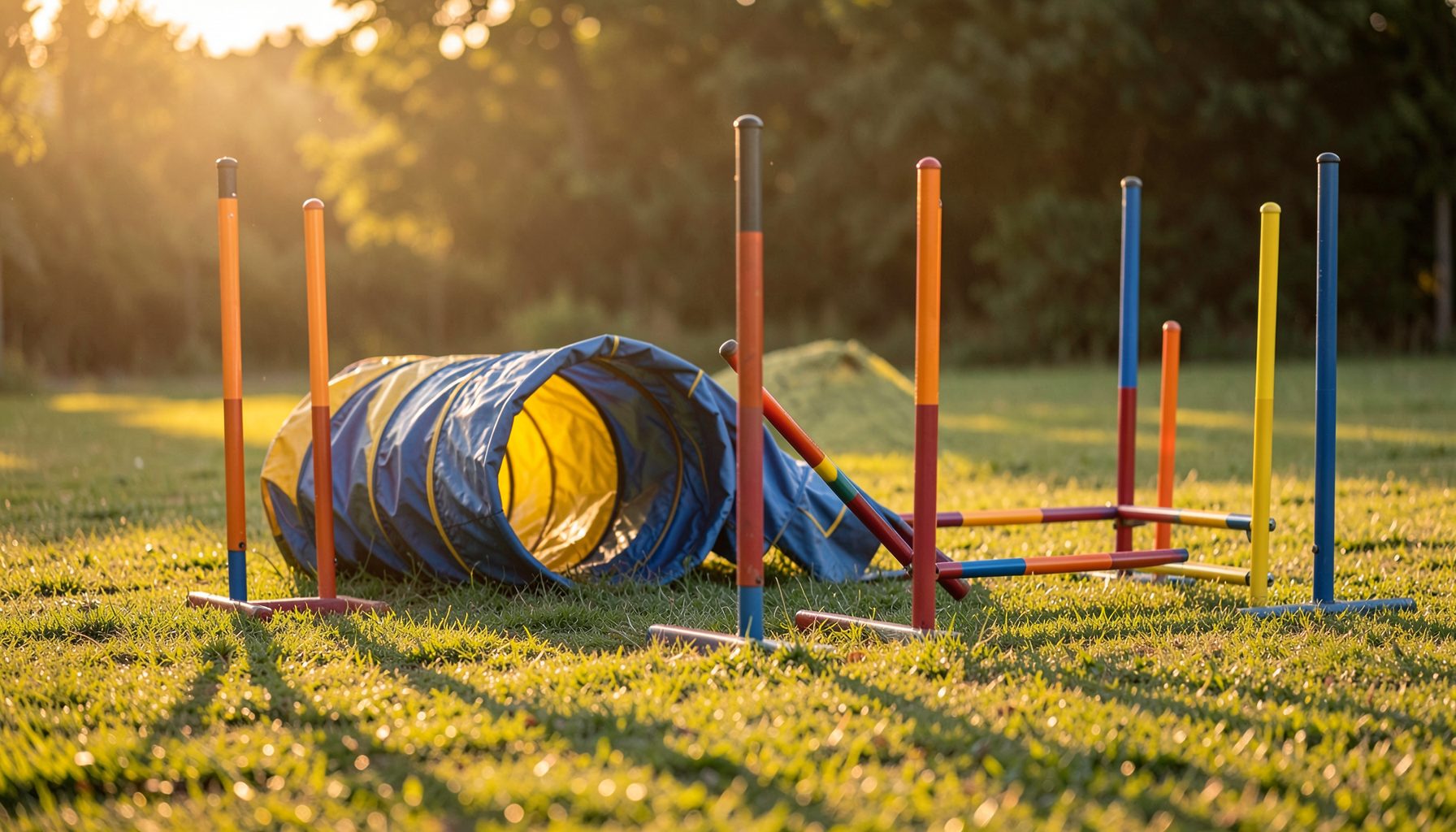
Once the timer begins, the dog must complete the obstacles in the correct sequence. The handler guides the dog using movement, body position, verbal cues, and timing. The dog may run through jumps, tunnels, contact obstacles, weave poles, and other equipment. A successful run can be over in less than a minute, yet every stride reflects extensive preparation.
After a run, the dog usually leaves the ring promptly so the next team can enter. Some handlers reward their dogs immediately with treats or toys away from the course. The running order may continue while score sheets are processed, and results are often posted later rather than announced after every individual performance.
Understanding The Action
The obstacle layout changes for each class, so teams must respond to the course in front of them rather than memorize a single routine. Jumps and tunnels test speed and direction changes. Weave poles demand rhythm and accuracy. Contact obstacles, such as the dog walk, A-frame, and seesaw, include marked contact zones that the dog must touch according to the rules.
A run may receive faults for actions such as knocking a bar, missing a contact zone, entering weave poles incorrectly, or refusing an obstacle. A wrong course can lead to an elimination from qualifying consideration, although the team may sometimes finish the run. Time faults can also occur when a team exceeds the permitted course time.
| What You See | What It Usually Means |
|---|---|
| The handler runs close to the dog | They are using body position and motion to direct the next obstacle |
| A bar falls | The team may receive a jump fault |
| The dog stops or turns away | This may be a refusal or a moment of confusion |
| The handler raises a hand after finishing | They may be praising the dog or acknowledging the run |
| A leash appears after the finish | The team is leaving the ring safely before the next competitor enters |
| A posted score changes later | Results may be reviewed or updated after the class |
Qualifying scores depend on the class rules, jump height, course performance, and time. Placements and qualifying results are separate ideas: a dog can perform well enough to qualify without placing first, while a fast run may still lose points because of errors.
Spectator Habits That Help
A few thoughtful choices make the event more comfortable for everyone:
- Keep voices low near the ring entrance, starting area, and walk-through space.
- Turn off flash photography unless the event specifically permits it.
- Keep children close and explain that working dogs should not be approached.
- Stay seated or behind the boundary while a team is running.
- Ask before taking close-up photos of handlers, volunteers, or dogs outside the ring.
Cell phones should be silent, and sudden movement along the ring edge can distract a dog. If you need to move between viewing areas, wait until a run has ended. Follow instructions from ring stewards and volunteers, who may need to keep pathways clear for equipment, judges, or competing teams.
If you photograph the event yourself, avoid blocking official photographers or standing in restricted areas. Action photography is often difficult because dogs move quickly and indoor arenas may have challenging light. Professional event galleries can provide a broader record of the day, including teams you may have missed while watching another ring.
Finding Photos And Enjoying The Day
Many handlers and owners search for photographs after the event using the trial name, club, handler name, or dog’s name. If you are looking for a particular team, record the date, venue, class, and approximate ring whenever possible. Those details can make gallery searches much faster.
A professional photo service may capture takeoff moments, weave-pole sequences, contact performances, and the handler’s connection with the dog. Before ordering, review the gallery information, product choices, and image details. Pawprint Pictures also provides customer support for locating event photographs and getting help with orders.
The most rewarding way to watch an AKC agility trial is to notice the teamwork behind each run. A clear round is exciting, but so is a handler calmly recovering after a missed obstacle or a dog gaining confidence in a new environment. Applaud appropriately, respect the competitors’ focus, and allow yourself time to explore the venue between classes.
Bring your event details, find a comfortable viewing position, and watch a few runs before moving around the grounds. Once you understand the flow of walk-throughs, starts, finishes, and scoring, the trial becomes easier to follow. Afterward, browse the event photography to preserve the speed, concentration, and personality that make agility memorable.