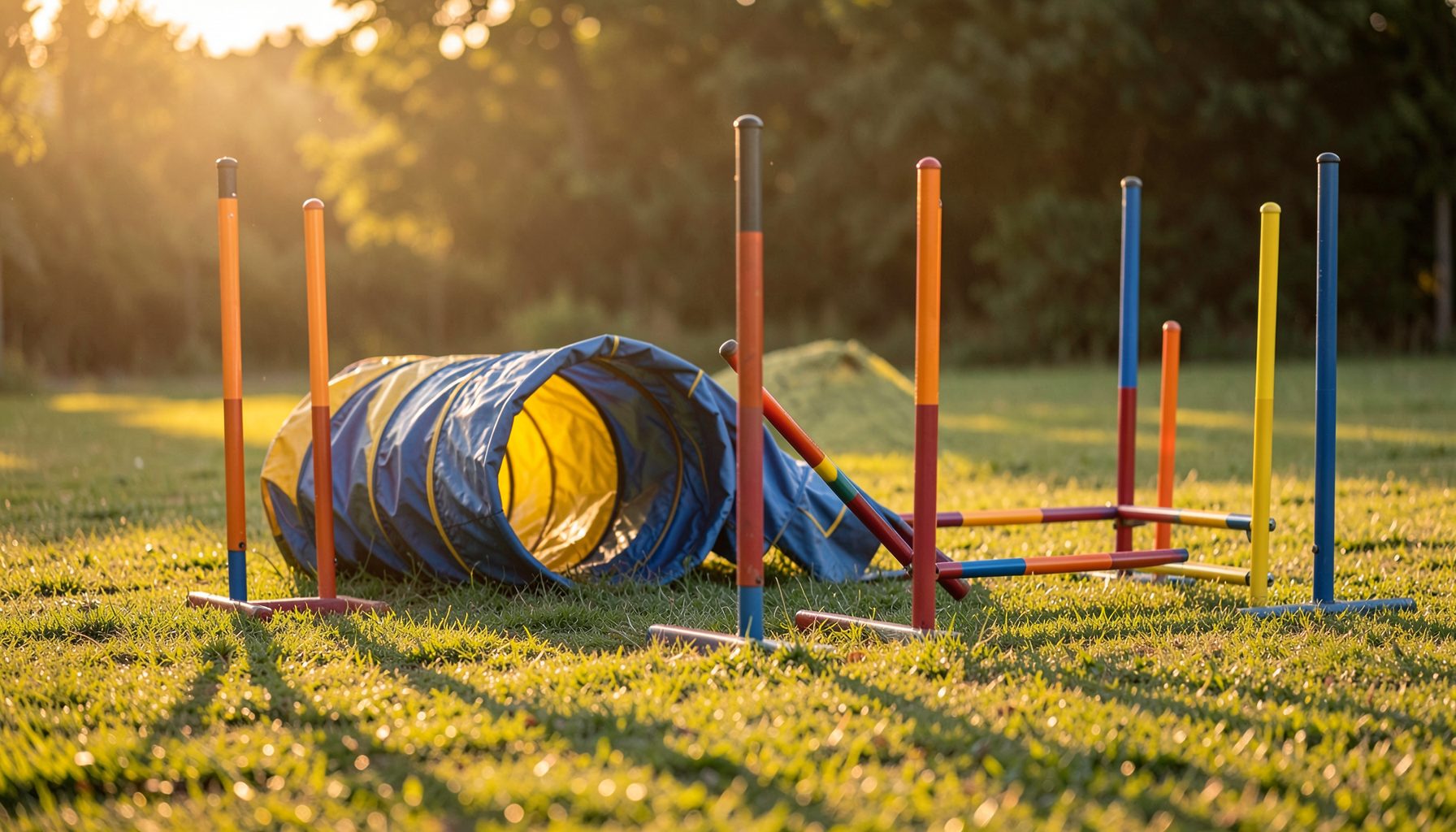
Capturing the moment when a dog crosses the start line early
At agility trials across Australia, from the weekend shows at the Dogs NSW grounds in Orchard Hills to the bustling events hosted by Dogs Victoria at KCC Park, photographers work in a world measured in fractions of seconds. The sport demands split-second timing, and nowhere is that more obvious than at the start line. When a handler lifts their hand and the dog explodes forward, the difference between a perfect sequence and a missed shot can be a matter of one stride.
Dogs anticipate their handlers. They read body language, they feel the tension in the lead, and some simply cannot contain their excitement when they see the course ahead. A premature start, when a dog barrels through the start line before the handler has given the release signal, is one of the most common reasons for a fault in a run and one of the trickiest moments to capture on camera. The photographer must decide in an instant whether to track the action, anticipate the cross, or simply document the handler's surprise.
This is the reality of working ringside at an agility event. The photographer is not just pressing a shutter; they are reading the dog, the handler, the judge, and the course all at once. Understanding how to respond to an early break is part technical skill, part animal behaviour knowledge, and part plain old-fashioned preparation.
Reading the body language before the whistle
Experienced agility photographers learn to watch the dog before the run begins. A dog that is straining at the collar, spinning, or vocalising is often a candidate for an early cross. We position ourselves at angles that allow us to see both the dog's eyes and the handler's hand signal. If the dog is already leaning forward, we know the start will be explosive, and we adjust our focus point to where the dog will be, not where it is.
At outdoor trials held in places like the Brisbane Exhibition Grounds or the Perth Royal Show venue, wind and crowd noise can add another layer of unpredictability. A dog distracted by a flag snapping in the breeze might break early, or hesitate at the line. We factor in these environmental cues well before the judge calls the team to the start.
Technical settings for the unpredictable start
When a dog breaks early, the burst rate and autofocus performance become critical. We typically shoot in high-speed continuous mode, pre-focusing on the start line area, and we use back-button focus to maintain control even if the dog surges forward unexpectedly. Shutter speed is locked at a minimum of 1/1000s to freeze the paws mid-stride, and we often push to 1/1600s when the light allows.
If you're curious about the specific exposure choices for outdoor Australian conditions, the best camera settings for a sunny day at an outdoor agility trial covers the trade-offs between ISO and aperture in detail. On a bright January morning at a trial in Adelaide, for example, we might drop to f/5.6 and keep ISO at 200 to avoid clipping highlights on the dog's white coat.
Working with the judge and the timing gate
Every sanctioned trial, whether run under the rules of the ANKC, the Agility Dog Club of Australia, or international affiliates, relies on electronic timing. When a dog crosses the start line sensors before the handler signals, the timing system flags it immediately. As photographers, we cannot change the outcome, but we can document it for the record and for the handler's personal archive.
We always keep an eye on the judge's body language and the timing display. If the judge raises a hand or calls a fault, we know the run is essentially over for scoring purposes, but the visual story is just beginning. A clean, sharp image of the early cross can help a handler understand exactly what went wrong and where.
Capturing both sides of the moment
A great early-start photograph tells two stories at once: the dog's enthusiasm and the handler's reaction. We try to frame wide enough to include the handler's face, even if the dog is the main subject. The look of surprise, the half-raised hand, the dropped lead, all of these add emotional weight to the image.
In galleries organised on the Pawprint Pictures website, handlers can search by dog name or by event to find these specific moments. Many competitors actually purchase prints of their early crosses because the expressions are so raw and unposed. It is, in a way, a more honest portrait than a perfect run.
Selecting the frame from the burst
A typical early start might generate fifteen to twenty-five frames per second over two or three seconds. That is a lot of images to cull. We look for the frame where all four paws are off the ground, where the ears are pinned back, and where the handler's body position is clearly visible. We avoid frames where motion blur obscures the face, even if the composition is strong.
Editing software lets us crop tightly to the action, but we rarely manipulate the moment itself. Agility photography is documentary in nature, and handlers expect to see exactly what happened. We might lift shadows slightly to reveal the dog's eyes, but we do not composite or alter the sequence of events.
Australian conditions and local agility culture
Dog agility in Australia follows the rules set by the Australian National Kennel Council, with state-based bodies like Dogs Queensland, Dogs Tasmania, and Dogs SA organising trials throughout the year. Many clubs also host events under the Agility Dog Club of Australia framework, and some competitors travel across state lines to chase qualifying runs in series like the Agility Dog of the Year.
Pricing structures for event photography often vary depending on which organisation sanctions the trial, since clubs set their own commission rates and package options. A pricing comparison across agility organizations helps handlers budget for prints and digital files no matter where they compete.
Outdoor venues are subject to Australian conditions, heat in summer, dust in rural areas, and the occasional sudden shower. At a trial in Mildura, for instance, the mercury can climb past forty degrees, which affects both the dogs and the camera equipment. We carry extra batteries, use lens hoods to reduce flare, and keep a white towel handy to wipe sweat from our hands before handling gear.
Animal welfare regulations also shape how events run. State legislation such as the Victorian Prevention of Cruelty to Animals Act or the NSW Animal Welfare Code of Practice requires that dogs are not worked in extreme heat, and many trials are scheduled for early morning to comply. As photographers, we appreciate these rules because they protect the dogs we love to capture.
Practical habits for handlers and photographers
- Keep the lead short and the dog focused until the handler gives the release word; a loose lead often invites an early break.
- Use a consistent start routine so the dog knows exactly when the run begins, because predictability reduces anticipation.
- Photographers should arrive early, walk the course, and identify the start line sight lines before the first competitor runs.
- Maintain a fast shutter speed and continuous focus mode to handle unexpected surges at the line.
- Discuss photo packages and delivery options with your event photographer in advance so expectations are clear if a re-run is granted.
The real takeaway from a dog that barrels through the start line early is that agility is a partnership built on trust and timing. Photographers who understand the sport can capture those unscripted moments with the same care they bring to a clean, flowing run. Whether the result is a fault or a perfect start, the images serve as a record of the bond between handler and dog, frozen forever in a fraction of a second.