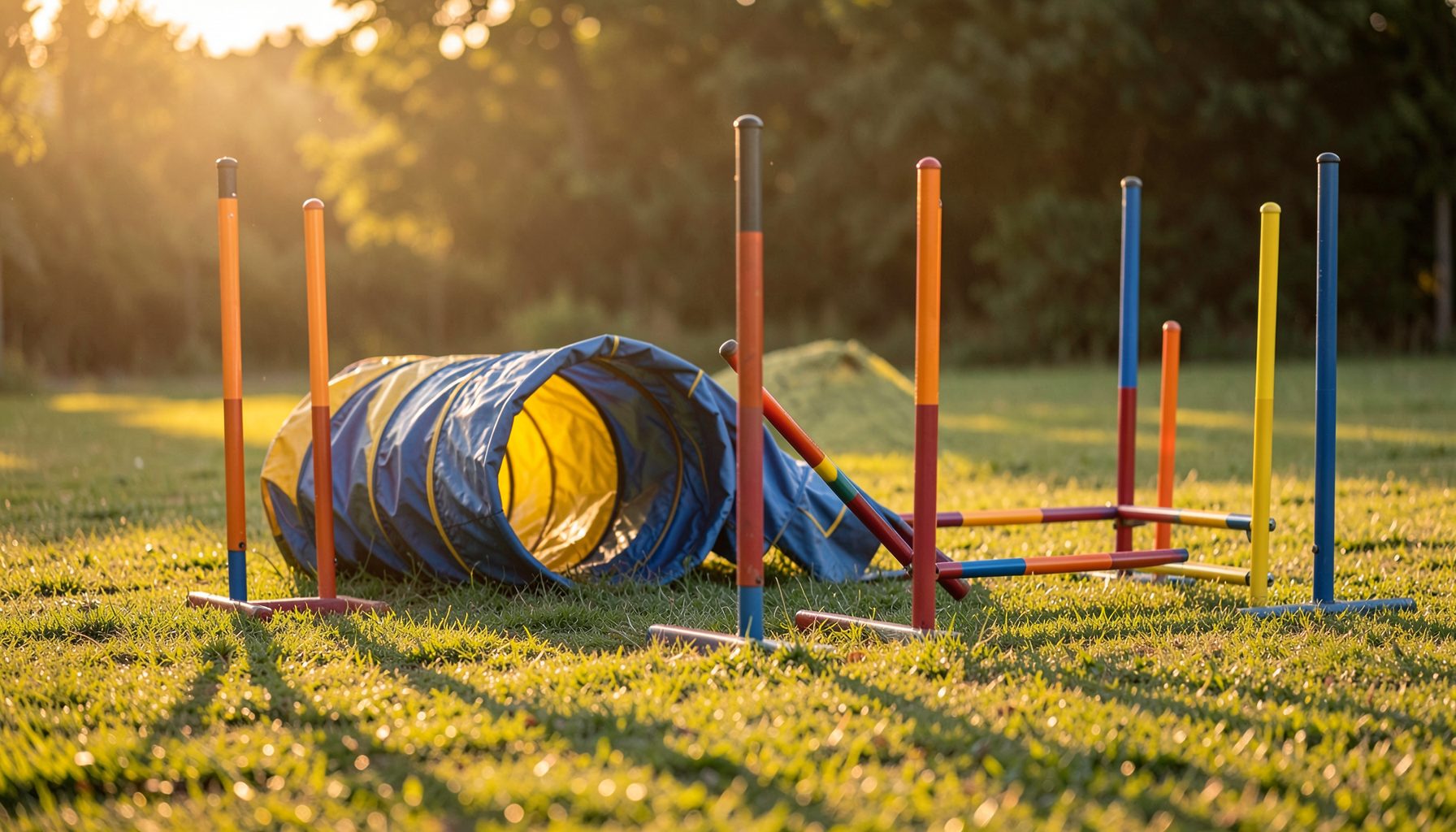
When a Dog Enters the Ring Before the Run Is Over
A dog running into the agility ring before the previous competitor has finished can turn a smooth trial into a tense few seconds. It may happen when a gate is opened early, a lead slips, a dog becomes excited by the action, or a handler misjudges the timing of the next entry. The priority is always safety, followed by restoring calm and keeping the event moving.
At Australian agility trials, this can occur in busy indoor centres, open grounds around Melbourne or Sydney, and country club events where everyone knows the ring crew and helps out. Whether the event is held under ANKC rules or through organisations such as USDAA, NADAC, CPE, or ASCA, the response depends on clear communication between the judge, steward, handler, and photographer.
The Steward Stops The Situation
The steward or gate marshal should alert the judge immediately and prevent another dog from being released. A clear instruction such as “hold” or “stay out” is more useful than several people calling at once. The handler of the dog that has entered should collect it calmly, using a lead if one is available, while the competing dog is given space to finish or be safely removed.
The judge decides whether the current run can continue, needs to be stopped, or should be restarted under the relevant rules. Nobody should chase a loose dog around the ring, crowd its path, or grab at its collar if that could cause a bite or a collision. A calm pause usually resolves the incident faster than excited voices and rushed movement.
How Early Ring Entries Happen
Many premature entries are caused by timing rather than disobedience. A dog may be released from the waiting area because its handler hears the wrong name, assumes the preceding run has ended, or cannot see the final obstacle. In a busy trial, barking, PA announcements, wind, and spectators moving behind the ring can make signals difficult to interpret.
Some dogs are simply highly motivated by agility. They see jumps, tunnels, running handlers, and another dog working and believe their turn has arrived. Young dogs, experienced dogs with strong ring drive, and dogs waiting close to the entry gate can all be affected. A separate waiting area, a covered crate, or extra distance from the ring may help reduce the trigger.
Protecting Dogs, Handlers, And Equipment
The immediate risks include a collision between dogs, a startled handler falling, and equipment being knocked out of position. The loose dog may also run towards a tunnel, contact obstacle, or ring boundary without understanding that the course is occupied. Keeping the ring clear is more important than preserving a perfect score sheet or uninterrupted video.
At hot Queensland or Western Australian venues, heat adds another concern, particularly when dogs are waiting on exposed grass or in parked cars. Water, shade, cooling breaks, and sensible spacing matter throughout the day. At winter trials in Victoria or Tasmania, wet surfaces and slippery grass can create a different set of hazards, so the judge may need to check equipment before the next run begins.
Handlers can practise calm exits and transitions away from the ring before trial day. Food rewards should be used thoughtfully, especially near other dogs; guidance on calm transition rewards can help owners build a quieter routine around movement and waiting.
What The Photographer Does
A photographer must keep working without becoming part of the incident. The safest choice is to remain outside the ring boundary, lower the camera if people or dogs move unpredictably, and avoid stepping into the course to get a better angle. A long lens can record the action from a safer position while preserving a clear view for officials.
The photographer may capture the early entry, the handler retrieving the dog, or the moment the judge pauses the class. These frames are not always discarded. They can document what happened, provide context for the event gallery, or show a memorable expression that the owner values even though it was not part of a scored run.
Burst shooting can be useful when an agility sequence changes suddenly, but it also creates many near-identical files and increases the chance of recording unwanted moments. Pawprint Pictures explains the practical trade-offs in its burst mode guide, including why timing and selective editing still matter.
What The Handler Should Do
The handler should focus first on getting control of the dog and listening to the judge or steward. Calling the dog in a familiar voice, moving away from the active course, and clipping on a lead are generally safer than attempting to restart the run without instruction. If the dog is nervous or overexcited, a brief pause outside the ring may be more effective than immediately returning to the start line.
Once the incident is settled, the handler can ask what will happen to the run. The result may depend on the class, the rules in use, whether the dog interfered with another competitor, and the judge’s decision. Arguing at the ring entrance rarely helps; a quiet conversation with the steward or trial secretary is more productive.
Australian competitors often travel several hours for a weekend trial, from suburban club grounds to regional venues outside Canberra, Adelaide, or Brisbane. That makes it tempting to rush back into competition after a disruption. A short reset, a drink, and a check of the lead or collar can prevent a second mistake.
How Images Are Organised Afterwards
Photographers usually sort images by event and then identify them through ring, running order, club, handler, or dog name. An early entry can complicate that process if the dog appears before its scheduled turn or if several dogs enter the frame together. Good editing and careful gallery notes help keep those photographs connected to the right competitor.
Pawprint Pictures provides a customer gallery search so owners and handlers can locate images by event details and names. This is particularly useful after a large Australian weekend where several rings operate at once and competitors may remember the club or date but not the exact class number.
A photograph from a disrupted moment may still be worth purchasing. It could show the dog’s personality, a funny look between runs, or the handler managing an unexpected situation. Owners should check the gallery carefully before deciding which images suit prints, digital files, or other photo products.
A Practical Ringside Checklist
Preparing for this possibility is easier when the team has a simple routine. Ring crews can brief volunteers before the first class, while handlers can practise waiting and entering without relying on guesswork.
Before a run, handlers should:
- Keep the dog well clear of the entry gate until the steward calls them forward.
- Confirm the previous dog has fully exited before unclipping or releasing.
- Use a secure lead, collar, or harness suited to the dog and the venue.
- Tell the steward if the dog is likely to react strongly to movement in the ring.
If an early entry occurs, the safest response is to:
- Stop moving towards the course and wait for the judge’s direction.
- Call the dog calmly and avoid chasing it around obstacles.
- Remove the dog from the working area before discussing the result.
- Check whether another competitor, person, or piece of equipment was affected.
A club may also mark a holding point on the grass or use a volunteer to manage the next two dogs. That small change can reduce confusion during a long arvo of competition, particularly when volunteers are rotating between gate duty, scoring, and leash running.
Turning A Disruption Into Useful Information
An early ring entry is worth reviewing without blaming the dog or handler. Look at where the dog was waiting, what cue released it, whether the gate was visible, and how much noise or movement surrounded the start area. The answers may reveal a simple adjustment, such as waiting farther back or using a covered crate.
Photographs can also help explain the sequence. A gallery may show the dog entering, the previous team still on course, and the handler’s response in separate frames. One example of an event gallery can be viewed here, illustrating how organised event photography preserves the wider story around competition.
For the next trial, write one clear ring-entry routine and rehearse it at training: wait behind the marked point, check with the steward, approach on lead, and release only when invited. At the next practice session, spend five minutes repeating that routine beside a busy ring entrance before attempting a full course.