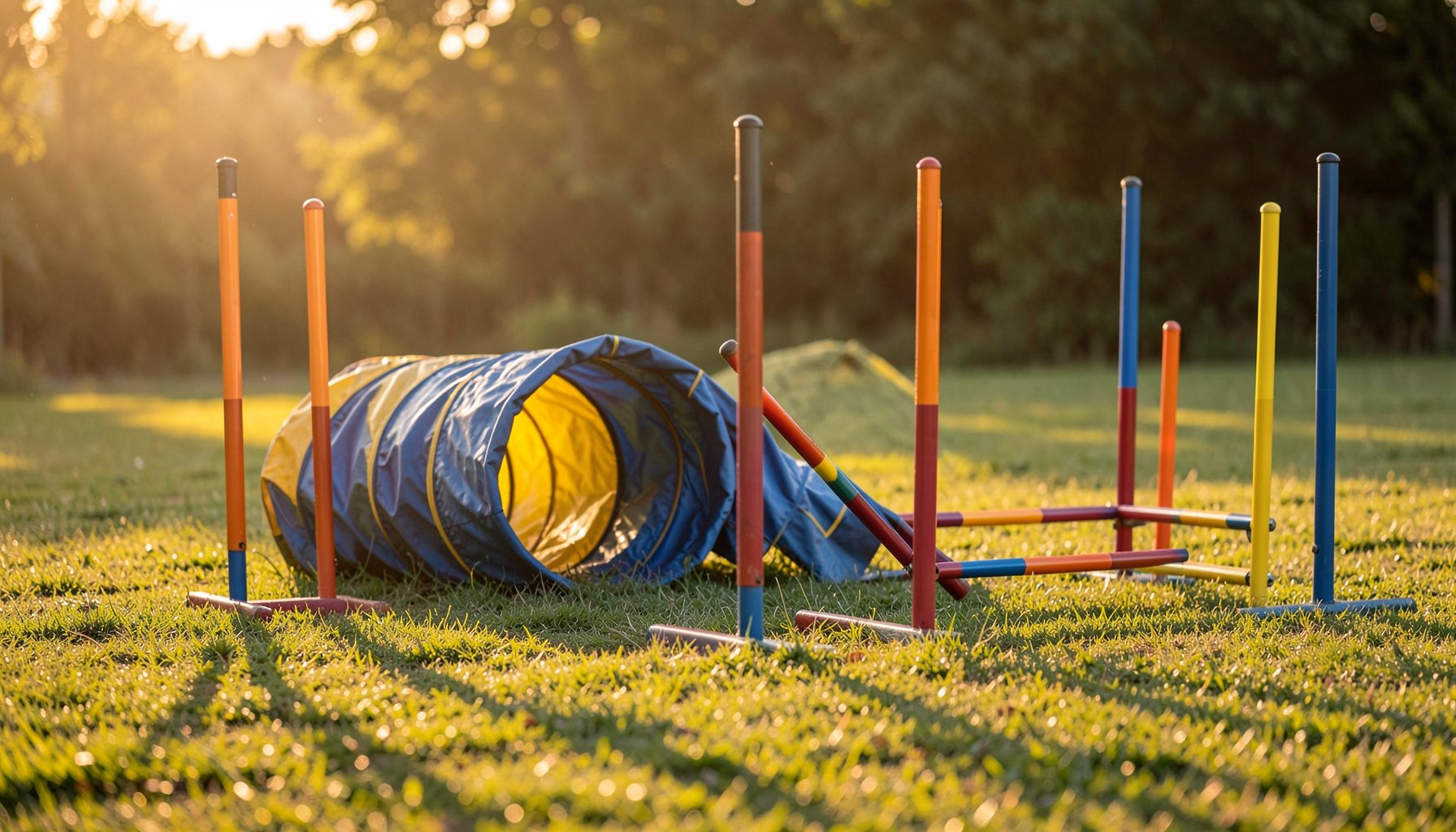
Why natural light elevates outdoor agility photography
Outdoor dog agility combines speed, precision, personality, and split-second decisions. A dog launches over a jump, threads a line of weave poles, or races toward the finish before a camera has much time to react. The quality of available light can determine whether that moment looks sharp and expressive or flat and difficult to read.
Natural daylight gives event photographers a flexible, realistic foundation. It can reveal the texture of a dog’s coat, the handler’s body language, and the shape of every obstacle without making the scene feel artificial. When used thoughtfully, sunlight helps turn a fast competition run into a memorable visual story.
For owners and handlers, this matters long after the last class ends. Well-lit images are easier to enjoy in a gallery, print, album, or wall display. They also preserve details that make each run personal: focused eyes, lifted paws, flying ears, and the unmistakable connection between dog and handler.
Daylight makes fast movement easier to read
Agility photography depends on shutter speed. A photographer may need to freeze a dog accelerating through a tunnel exit or clearing a broad jump, often at speeds of 1/1000 second or faster. Bright outdoor conditions provide the exposure needed for those settings while allowing the camera to maintain image quality.
When light is plentiful, the camera can use a faster shutter without forcing the photographer to rely heavily on a high ISO. That typically means cleaner files, better coat detail, and less visible noise in shadowed areas. The result is especially valuable for black, white, and richly colored dogs, whose fur can lose definition when exposure is limited.
Natural light also helps preserve the rhythm of a run. A crisp photograph can show whether a dog is collecting before a jump, stretching into a landing, or driving forward on a straightaway. These details give handlers useful memories of performance as well as attractive images to share.
Soft light brings out expression and form
Direct midday sun can be powerful, but soft daylight is often more flattering. Overcast skies act like a giant diffuser, reducing harsh shadows beneath a dog’s muzzle and body. This creates balanced exposure across the frame and makes facial expressions easier to see.
Cloud cover can be particularly helpful when dogs have glossy coats or pale markings. Strong sunlight may create bright highlights that lose texture, while soft light retains subtle transitions between fur, muscle, and background. A dog’s alert expression and focused gaze become central parts of the image rather than distractions from uneven exposure.
Morning and late-afternoon light offer another advantage. The lower angle of the sun can produce warm highlights along a dog’s outline and add depth to the course. Used carefully, this glow separates the subject from the grass without overpowering the action. It can make a routine training session feel just as vivid as a major trial.
Weather changes the character of a gallery
Outdoor events rarely provide identical conditions from one class to the next. Sun, cloud, wind, and light rain each influence color, contrast, and mood. A skilled photographer adapts to these changes instead of treating them as problems. Bright conditions may call for careful positioning and exposure control, while cloudy weather can support longer shooting sessions with consistent tones.
Backlighting is one example of natural light used creatively. When the sun sits behind a jumping dog, the fur may catch a fine rim of light that emphasizes movement. The photographer must protect important details, but the effect can create a striking sense of speed. Side lighting can reveal the shape of a dog’s body and the structure of an obstacle more clearly.
| Outdoor condition | Visual benefit | Photography consideration |
|---|---|---|
| Bright, open sun | Strong color and crisp action | Watch for harsh shadows and clipped highlights |
| Light cloud cover | Even exposure and gentle contrast | Ideal for expressive portraits and full runs |
| Early or late sunlight | Warm tone and subject separation | Track changing shadows across the course |
| Windy conditions | Dynamic ears, fur, and dust movement | Keep shutter speed high |
| Light rain or damp ground | Reflective surfaces and atmosphere | Protect equipment and monitor lens moisture |
Weather can also add context to event photographs. Damp grass, long shadows, or a glowing sunset can show when and where the run happened. Those environmental details help a gallery feel like a record of the day rather than a collection of isolated action shots.
Course position matters as much as sunshine
Natural light works best when the photographer considers direction, background, and the dog’s path. Standing with the sun behind the camera often produces clear illumination across the dog’s face and body. A position slightly to the side may offer stronger shape and depth while still keeping the eyes visible.
The course itself creates changing opportunities. A tunnel exit facing the sun can produce dramatic highlights, while a shaded weave-pole section may require a different camera setting. Experienced event photographers anticipate these transitions and adjust before a dog enters the frame.
Backgrounds influence how natural light is perceived. Green grass, colorful ring equipment, tents, and spectators can either support the subject or compete with it. A thoughtful angle uses daylight to separate the dog from busy surroundings, keeping attention on the run. This is one reason professional event coverage involves more than simply pressing the shutter at the right moment.
Handlers can also improve the visual result by understanding where photographers are likely to work. Staying aware of ring boundaries, avoiding unnecessary movement near a shooting position, and maintaining safe event etiquette all help preserve clear sightlines. For dogs that become unsettled around crowds, these calm event strategies can support a more focused performance and more natural-looking images.
Natural color preserves the dog’s identity
Artificial lighting can shift colors or create a disconnected look outdoors. Daylight generally reflects the actual appearance of the dog, handler, course, and venue. That accurate color is important when owners want photographs that feel true to the event.
Coat color presents a particular challenge. A black dog can blend into a shaded background, while a white dog may lose detail under intense sunlight. Natural-light photography still requires exposure skill, but it gives the photographer a reliable visual reference for balancing highlights and shadows. Thoughtful editing can refine contrast without making the dog look overly processed.
Breed characteristics also become easier to appreciate in well-controlled daylight. The compact power of a terrier, the long stride of a herding breed, or the athletic outline of a sporting dog can all appear distinctly in motion. Readers interested in how different dogs approach the sport can explore agility breed strengths while viewing the individual qualities captured in event photography.
Practical choices for better outdoor images
Natural light is helpful, but photographers and participants can make deliberate choices to get the most from it. Event schedules, ring orientation, and changing weather all affect when the strongest opportunities appear. A little preparation supports better coverage without interrupting the competition.
Useful considerations include:
- Check the sun’s direction and identify sections of the course with even illumination.
- Use a fast shutter speed to freeze paws, ears, fur, and obstacle contacts.
- Watch highlights on pale coats and inspect shadows around dark faces.
- Choose shooting angles that reduce clutter from fencing, tents, and spectators.
- Keep adapting as clouds, shadows, and the position of the sun change.
For dog owners, the best approach is to focus on a safe, confident run rather than trying to create a pose during competition. Genuine concentration and movement are what give agility photographs their energy. A photographer’s job is to anticipate those moments while respecting ring rules and the flow of the event.
Finding the moments that matter
Professional event galleries organize a large number of images into useful categories, making it easier for owners and handlers to locate their dog’s run. Galleries may be grouped by event, club, handler, or dog name, with coverage spanning organizations such as AKC, USDAA, NADAC, CPE, and ASCA.
Once a gallery is located, natural-light images often provide a consistent set of choices across a full run. An owner may find a sharp jump sequence, a focused weave-pole frame, and a relaxed portrait between classes. Each photograph can show a different part of the dog’s character and performance.
Pawprint Pictures also supports secure ordering through an online shopping cart, with prints and other photo products available for selected images. Clear daylight, accurate color, and well-timed action make those photographs suitable for sharing digitally or displaying as lasting reminders of a successful day.
Browse Pawprint Pictures event galleries to find your dog, handler, or club coverage, then choose the images that capture the speed and partnership you want to remember. A naturally lit photograph can preserve far more than a completed obstacle—it can hold the feeling of the entire run.