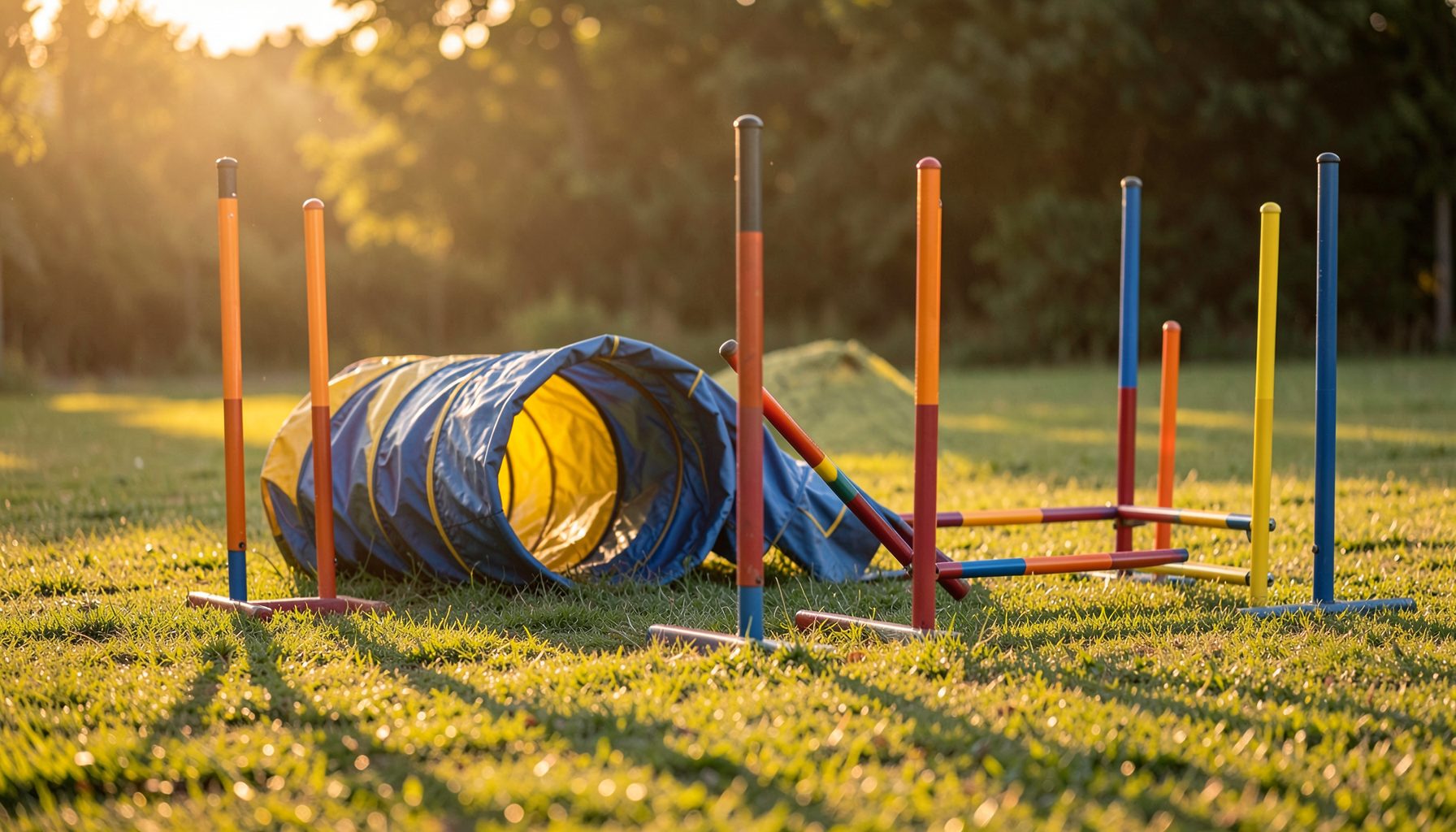
Why every table stay photo captures the tail curl
The table stay in dog agility is one of the briefest moments in the course, often no more than five seconds, yet it carries the weight of an entire performance. Runners line up, whistles blow, dogs leap onto the platform, and for that tiny window the trial goes quiet. Pawprint Pictures has photographed this beat at clubs from Brisbane to Hobart, and made a deliberate choice to always include a clear shot of the tail curl during the pause. It records how the dog felt, how the handler felt, and whether the team clicked under pressure.
A tail in motion tells one story; a tail at rest on the table tells another. When a border collie or kelpie settles into position, the curve of the tail, the set of the ears, and the angle of the back communicate everything to anyone who knows the breed standard. Reviewing later, an owner can spot when a young dog first understood the job, or when a campaigner showed the slightest flicker of nerves.
Photographing the stillness requires patience. The table forces a different rhythm from the rest of the course, asking the photographer to slow down, anticipate the release word, and frame the dog squarely so the curl is unmistakable. Many of the most requested prints in the gallery come from this exact beat.
This piece walks through why the tail curl matters, how Australian conditions shape the shot, what handlers should look for in their galleries, and how to tell a confident pause from a holding-your-breath pause.
The five-second pause and its hidden drama
Agility rules across ANKC-affiliated bodies like Dogs Queensland, Dogs NSW, and the Royal Canin-affiliated trials in Melbourne all treat the table as a counted station. The dog must land on top, hold a down or sit for the prescribed count, and wait for the release cue.
The middle frame of the pause is where the tail curl lives, and it carries information no other part of the body can deliver at that distance. A relaxed tail draped over the flank signals a confident worker. A tail clamped flat signals stress, fatigue, or a recent correction. A tail held high with a tight curl signals arousal, which reads as excitement or early frustration depending on breed and day.
Handlers often realise later, when reviewing their how to recognize your dog's winning run in a crowd of photos, that the table frame told the truth before any of the numbers did. A clear photograph of the tail curl becomes evidence in the larger story of the trial.
Reading body language through the tail
Different breeds carry their tails differently. A papillon's plumed tail arches over the back when engaged. An Australian kelpie's low-set tail drops naturally, with a slight lift at the base signalling working focus. A shetland sheepdog's feathered tail sweeps low during motion, then settles into a soft curl on the pause. A border collie's tail trails behind like a rudder, then curls slightly under when concentrating.
For handlers who show their dogs as well as run them, the same curl confirms whether the dog is offering the right attitude in both rings. A balanced dog carries itself similarly in conformation and agility contexts. A well-timed photograph captures both ideas at once, which is why these images remain popular long after the ribbons have been put away.
The table below shows how four common tail positions translate into behaviour and the best moment to capture.
| Tail position | Likely meaning | Best moment to capture |
|---|---|---|
| Soft curl resting over the back | Confident and settled | Mid-count, dog facing camera |
| Tight, high curl against the spine | Alert or mildly stressed | Early in the pause |
| Low, tucked flat to the body | Tired, unsure, or post-correction | End of the pause |
| Loose drift with gentle movement | Happy but slightly distracted | Just after landing |
A dog that has memorised the sequence often shows a tight, tense curl on the table. A dog that understands the work shows a soft arc, sometimes with the tip drifting gently as it breathes. Photographers wait for that softer frame.
Australian conditions that shape the shot
Australian trials come with quirks that affect the final image. Summer rings at the Royal Queensland Show run hot, and dogs carry heat stress differently than in cooler climates. A tail held slightly lower and wider can signal a dog cooling down. Winter trials in Tasmania or Victoria bring the opposite, with damp coats making dogs sharper and more alert, which shows up as a tighter curl.
Many outdoor trials in regional New South Wales and Western Australia sit in big open paddocks, and the natural backdrops change how the tail reads. Tree lines, post-and-rail fences, and open horizons frame the dog differently. Pawprint Pictures has written about choosing the right outdoor backdrops for agility trials elsewhere, but the same tail curl looks completely different against gum trees compared to a wire fence line.
Handlers here are casual in how they talk about runs, dropping phrases like "she had a beaut table" or "he nearly broke on the pause". Gallery tags at Pawprint Pictures lean on handler names, dog names, and club names rather than formal trial codes. The tail curl photograph fits naturally into that conversational way of remembering a run.
Why handlers treasure this frame
Ask a handler which shot they want printed on canvas, and the answer is usually the table stay. The weave entry is dramatic, the teeter thrilling. The table is the one moment the dog is fully facing the camera, fully in focus, and fully on display. The handler is usually visible in the background, mid-cue, and the dog's expression is at its most readable.
This is also the moment families want. A parent at the ring, a child waving from the rail, a partner timing the run can all be cropped around the central image. The tail curl becomes the natural focal point, drawing the eye to the curve that says everything about the run. These prints end up on the wall, in the family album, and on the Christmas card sent across the country.
ASCA-style agility, popular among stock dog enthusiasts across rural Australia, places strong emphasis on working attitude during pauses. A clear photograph helps confirm to owner, judge, and breeder whether the dog is genuinely settled or simply holding position through training. Anyone curious can read the guide to ASCA agility, but the pause frame carries the same weight as the run itself.
Building a gallery around the stillness
Pawprint Pictures tags every image by event, club, handler, and dog, so a search for a particular kelpie brings up dozens of frames from a weekend, with table count frames sitting alongside contact obstacle and start line shots. Buyers can order prints, mugs, and digital downloads through the secure cart, and the table images tend to outsell action shots by a comfortable margin.
The right frame is not always the most dramatic one. It is the one where the tail is clearly visible, the curl is honest, and the dog's expression matches the run that was actually had. A blurry action shot of a perfect table can feel like a miss. A crisp still shot of a slightly imperfect table can feel like a win.
Reading your own table stay images
A few practical tips for handlers and owners when sorting through their trial galleries:
- Look for the frame where the tail is fully visible and not tucked under the dog or shadow.
- Compare the start line and table photos; a big drop in curl between them often signals early nerves.
- Match the curl to the day's weather, since heat and cold change how a dog carries its tail.
- Note the lighting and backdrop, because an overcast Sydney morning reads differently from a bright Perth arvo.
- Order a print at least once for the family album, as the table stay is the most timeless shot of the run.
- Save the digital file even if you do not print it, because it becomes useful when training the next dog.
A tail curl photograph is more than a pretty picture. It records the moment a dog and handler trusted each other enough to pause in the middle of a noisy ring, and that record is worth keeping. Next trial weekend, whether you are at a regional club in Queensland or a championship in suburban Melbourne, ask your photographer for the table frame by name and look closely at the curl. You will be surprised how much of the run is sitting right there in that single, quiet image.