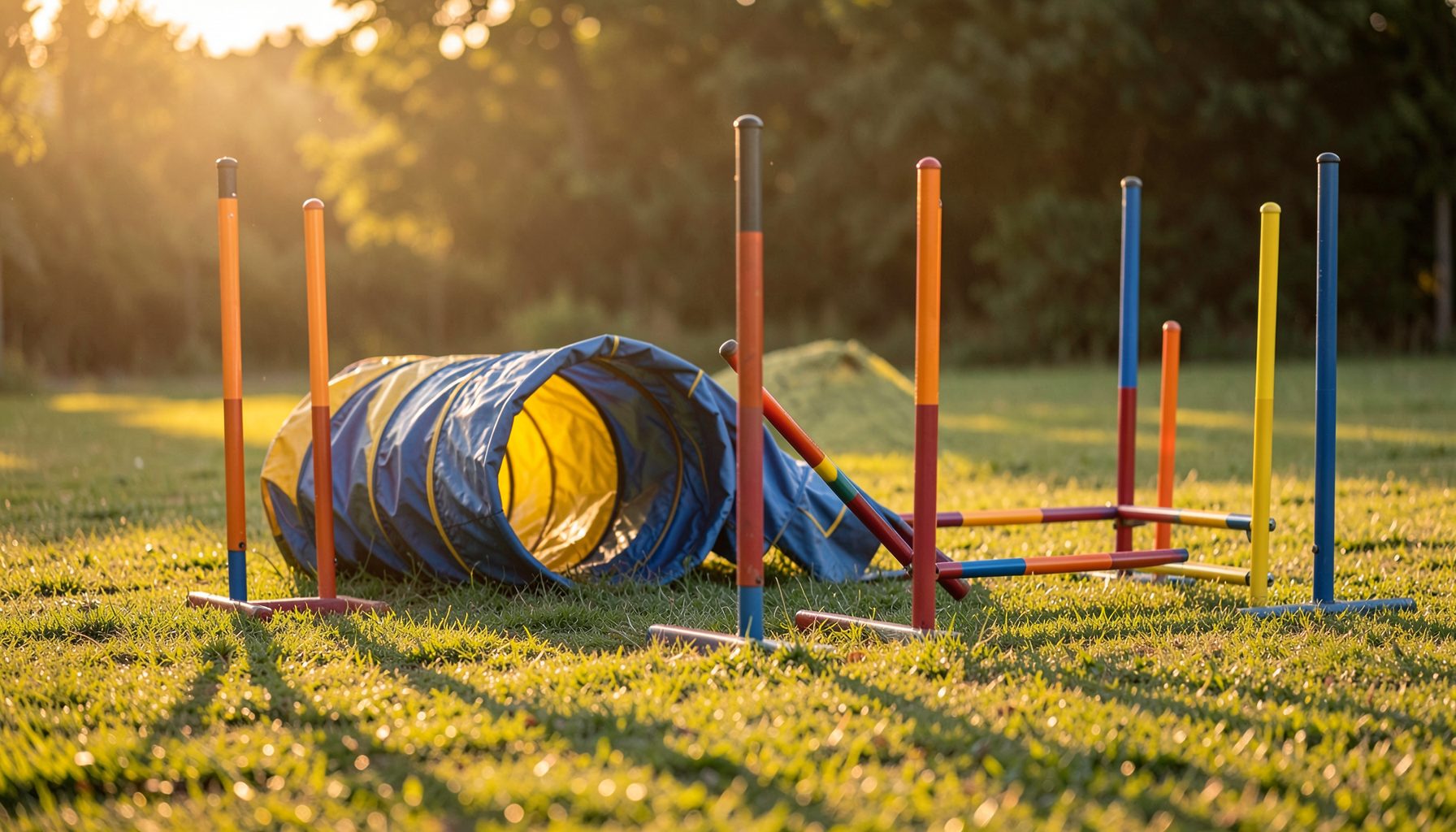
Why the full course map matters before the first run
Dog agility photography is often associated with speed: a dog launching over a jump, turning tightly around a wing, or stretching through the final obstacle. Yet the most useful visual record of an event begins before the first handler walks to the start line. A photograph of the entire course establishes where the action takes place and gives every later image a clear sense of context.
At Pawprint Pictures, photographing the complete course map is part of documenting the event properly. It records the obstacle layout, the running direction, the spacing between challenges and the way the judge has shaped the test. That information matters long after the last dog has left the ring.
A course map photograph also helps organise customer galleries. When images are sorted by event, club, handler and dog, an opening image of the ring provides a shared reference point for everyone browsing the collection. It makes a gallery feel like a record of a competition rather than a disconnected series of action shots.
Why we photograph the full course map before the first dog runs comes down to accuracy, storytelling and service. The map is a quiet image, but it supports the way competitors understand, select and remember their photographs.
The course map sets the day’s visual story
An agility course is more than a collection of jumps and tunnels. Its sequence creates the story of the run: a fast opening, a difficult discrimination, a demanding weave-pole entry or a final sprint towards the finish. A wide photograph captures that design before handlers and dogs begin to obscure parts of it.
This opening image allows viewers to see how individual moments fit into the complete test. A dog taking a contact obstacle may look impressive by itself, but the course map shows whether it came after a sharp turn, a long acceleration or a technical section that tested concentration.
It can also preserve details that are easy to forget once the ring becomes busy:
Details captured in a full-course photograph
- The numbered obstacle sequence and running direction
- The position of tunnels, contacts, jumps and weave poles
- The relationship between the ring, spectators and judge’s area
- The surface, boundaries and distinctive features of the venue
The map becomes a visual bookmark for the event. Months later, a handler can return to the gallery and remember not just a particular jump, but the character of the whole course.
It protects accuracy when the action begins
Once judging starts, the course changes visually from moment to moment. Dogs, handlers, ring crew and spectators move through the frame. Certain obstacles may be hidden by people, while a tight camera angle may make two sections appear closer or further apart than they really were.
A pre-run course photograph gives the photographer a reliable reference. It helps identify which obstacle was involved in an image, especially when several jumps look similar or when a dog is captured during a rapid turn. This is valuable when photographs are later reviewed and assigned to the correct class, handler or dog gallery.
That reference is particularly helpful for technical sequences. Pawprint Pictures’ guide to the weave pole exit explains why small changes in position can affect the strength and meaning of an image. Knowing the full layout makes it easier to place that close action within the broader course.
The result is a more dependable archive. Captions, gallery groupings and search results are less likely to rely on guesswork, even during a long trial with multiple classes and similar-looking runs.
Australian venues make preparation essential
Australian agility events can take place in a wide range of settings, from purpose-built grounds around Melbourne and Sydney to suburban club fields, showgrounds and regional venues. Some rings use lush grass, while others run on compacted surfaces or temporary flooring. The course map records the setting as well as the obstacle arrangement.
Weather adds another local consideration. A bright morning in Brisbane can develop into harsh glare, while a cool Melbourne day may bring changing cloud, wind or damp grass. In Perth and Adelaide, strong sunlight can create deep shadows across equipment. Photographing the course before the first run preserves the original conditions and helps explain why later images have a particular colour or contrast.
Local competition routines also make a clear establishing image useful. Competitors may move between rings, collect leads and crates, or follow a club’s carefully organised running order. At larger events connected with ANKC-affiliated clubs or national sporting organisations, the course photograph helps distinguish one ring and class from another.
Information the image can clarify
- Whether the ring is indoors, outdoors or under temporary cover
- The surface and weather conditions on competition day
- The visual identity of a local club or showground
- Which course belongs to a particular class or event session
For Australian customers ordering prints or digital products, these details add a sense of place. The image can bring back the atmosphere of a familiar club ground, whether the event was held near the coast, in a city park or at a regional agricultural showground.
The map helps handlers find the right gallery
A busy agility weekend may include several rings, classes and organisations, including AKC, USDAA, NADAC, CPE and ASCA events. A handler searching for photographs needs more than a dog’s name. The event date, club, class and course layout can all help confirm that the gallery is the correct one.
The full-course image acts as a visual signpost within that search process. If two classes were held on the same day, the obstacle arrangement may immediately show which gallery contains a particular run. It can also help a handler recognise a session when event names or class abbreviations are unfamiliar.
Once a customer reaches the correct collection, images can be browsed by handler and dog name before prints or other products are selected through the secure shopping cart. The course image supports that journey without competing with the action photographs.
Pawprint Pictures’ event photo gallery shows how a collection can preserve the atmosphere of a complete agility occasion. The opening context gives the individual portraits, action frames and finish-line moments somewhere meaningful to belong.
A complete record adds value after competition
The first course photograph is not usually the image that receives the most attention. Customers naturally look for a dog’s best jump, a joyful expression, a focused contact or a handler’s reaction at the finish. Still, the map often becomes more valuable with time because it preserves information that action images cannot provide alone.
Clubs can use these images when sharing results, recalling a trial or building an archive of past events. Trainers may refer to the layout when discussing handling choices, lines and obstacle discrimination. Families and supporters can understand the challenge even if they were not standing beside the ring on the day.
The image also gives printed collections a stronger beginning. A sequence of photographs can move from the full ring to the handler and dog, then into the decisive moments of the run. That order reflects how the event was experienced: first the setting, then the course, then the performance.
A complete course record respects every part of the competition. It recognises the judge’s design, the club’s work, the venue and the competitors who turned a layout into a sequence of individual stories. The map may be captured before the excitement starts, but it helps every later photograph make sense.
When browsing an agility gallery, remember that the full-course image is the foundation of the record. It shows where the run happened, protects the accuracy of the archive and keeps each memorable dog-and-handler moment connected to the event that made it special.