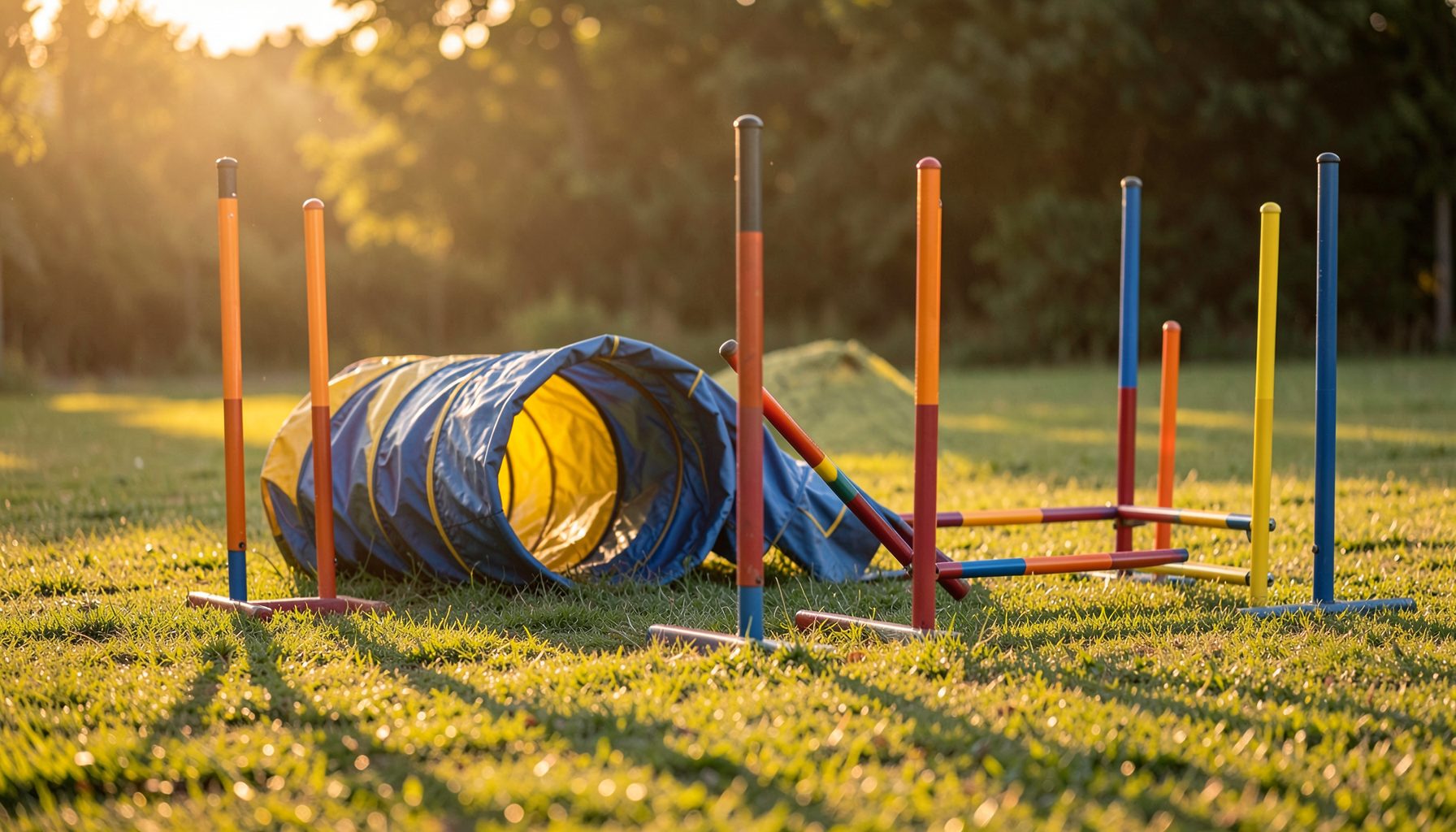
Why We Share Raw Camera Settings With Every Dog Agility Gallery
Every week, our crew loads thousands of frames from trials at the Bill Spilstead Complex in Sydney, the Dogs Queensland training grounds in Durack, and the agility rings at the Royal Melbourne Show. Each image lands in a searchable gallery and carries a small bonus other working photographers appreciate: the exact camera settings used to capture it. Sharing the recipe alongside the result has become one of the most rewarding parts of running a https://pawprintpictures.com/ service that travels so much of the country.
Most galleries show only finished JPEGs. Shutter speed, aperture, ISO, white balance, and lens choice stay hidden inside EXIF, where they rarely get read. By surfacing those numbers in human-readable form, we treat every visitor as a peer rather than a customer, and we invite them to reverse-engineer the moment with us. It turns a sales page into a learning resource without changing the way anyone orders prints.
The idea is simple: dog agility happens fast, the light changes between the morning and the final run, and there is no single perfect exposure. Sharing what worked, and what almost worked, gives newer photographers a starting point instead of a blank page.
The Reasoning Behind Sharing Camera Settings
The dog agility community is unusually generous. Trainers post free courses online, judges publish illustrated guides, and club committees across ANKC member bodies share ring layouts weeks before a trial. A gallery that hides its process feels out of step with that culture, so the team treats the settings file as part of the deliverable, not a behind-the-scenes secret.
There is a practical side as well. Many handlers and club volunteers who buy prints are amateur photographers, often shooting with a mirrorless body bought after a season on the sidelines. A real example from Cranbourne or Canning Vale helps them match the look they love without copying it exactly. The numbers become a starting point, and the photographer decides how far to push them.
For working pros, the raw camera settings form a quiet reference library. A shooter covering a NADAC trial in regional NSW one weekend and an ADAA event in regional South Australia the next can compare conditions, lenses, and shutter choices across both galleries. The platform supports that cross-checking, with a customer-gallery search that pulls the same dog, handler, or event from multiple weekends.
Anatomy of a Raw Settings File
A settings file usually lists focal length, aperture, shutter speed, ISO, white balance preset, metering mode, focus area, drive mode, and lens identifier. Some of the team add a short note about the lens hood, a focal reducer used in a covered ring, or whether a polarising filter was attached. That extra line is often the most valuable part of the bundle.
Exposure information is the most studied element. A shutter of 1/1600 s freezes a Border Collie in mid-stride, while 1/400 s at f/4 lets the speed blur read as motion. ISO 800 inside a covered ring at the Dogs NSW grounds in Orchard Hills looks very different from ISO 3200 under floodlights at a Saturday evening trial in Joondalup. The file shows the trade-off the photographer actually made, not the trade-off they would have liked in hindsight.
Focal length matters just as much. A 70-200 mm lens keeps the dog sharp and the background cream-soft, while a 24-70 mm lets the handler stay in the frame and the agility equipment read as context. Both are valid choices, and the file documents the choice rather than defending it.
Reading Settings Across Australian Venues
| Condition | Typical shutter | Typical aperture | Typical ISO | Filter or modifier |
|---|---|---|---|---|
| Bright summer sun, outdoor ring (Sydney, Brisbane) | 1/2000 s | f/4 | 200 | Polariser, lens hood |
| Overcast winter morning (Melbourne, Hobart) | 1/1250 s | f/2.8 | 800 | None |
| Indoor show, mixed tungsten (Adelaide Showground) | 1/1000 s | f/2 | 1600 | Custom WB on white card |
| Late afternoon gold light, dusty ring (regional WA) | 1/1600 s | f/4 | 400 | Polariser, slight underexposure |
| Floodlit night trial (regional NSW, regional QLD) | 1/800 s | f/2.8 | 3200 | High-ISO noise reduction in post |
The numbers above come from real galleries captured at Australian trials and shows, and they serve as a useful compass for anyone stepping onto an agility field for the first time. They are not a rule book, and a recommended reading list covers how to react when a cloud rolls over the ring mid-class, or when sand from a coastal trial kicks up against the front element.
Local realities matter more than any kit list. The summer sun at the Ekka in Brisbane is a full stop harsher than the soft overcast of a winter morning at KCC Park in Cranbourne. The dust at a regional WA trial scatters the light and forces a tighter aperture than the textbook would suggest. A good settings file tells the next photographer what the conditions actually felt like.
How Fellow Photographers Put the Data to Work
Most readers start by comparing two runs of the same dog, one shot in flat light and one in late afternoon gold, and watching how the shutter speed and ISO shift. That single comparison often teaches more than an entire week of online tutorials. They then check the focus area: did the photographer trust a single point on the dog's eye, or pull back to a wider zone for a weave entry?
Australian dog sport has its own rhythm. A judge walking the ring at a Dogs Queensland trial may pause for a quick photo op, and a handler may celebrate mid-course. The settings file shows whether the photographer prioritised the dog's expression or the handler's reaction, and that small choice tells the reader how to set their own camera for the next trial. Some readers also use the data to plan their gear list, choosing between a 300 mm prime and a 70-200 mm zoom based on the framing they saw in the gallery.
It is also a way of giving back. Several regional clubs have asked for permission to use our settings as teaching material in their handler workshops, and the answer is always yes. The more photographers who understand the link between light, shutter, and the dog's body language, the better the visual record of the sport will be.
Settings Captured at Major Australian Events
The Royal Melbourne Show, the Sydney Royal Easter Show, the Royal Queensland Show, and the Adelaide Showground each have their own lighting personality. The covered rings at Melbourne and Adelaide flood the dogs with even, slightly warm light that lets the photographer push ISO a little lower. The open-air rings at Sydney and the Ekka reward faster shutters and stronger polarisers, especially during late-morning finals.
A useful pattern is to scan the settings from a major event before travelling to a smaller regional trial. If the team's shutter at the Royal Queensland Show drifted from 1/2000 s to 1/1250 s as clouds moved in, a regional photographer in Wagga or Toowoomba can plan to start a touch slower and adjust as the light stabilises. Settings files turn scattered weekends into a connected body of evidence, more useful than any single pretty frame.
Practical Tips for Photographers Working With the Data
- Match the shutter to the dog's pace, not a generic sports preset; weave entries usually need a stop faster than tunnel exits.
- Read the ISO in context: a value that looks high on a spec sheet may be the cleanest option inside a covered Australian ring.
- Compare two frames from the same run, one at peak action and one at rest, to see how the exposure choice shifts the mood.
- Note the focus area alongside the focal length, since the combination decides how much of the handler stays in the story.
- Use the white balance preset as a hint about the venue's lighting, not a rule for your own camera.
- Treat dust, salt air, and late-afternoon glare at Australian trials as part of the exposure, not a problem to fix later.
- Cross-check the data with broader community resources, including the St. Petersburg pet photography reference for international context.
Pick one of your own recent agility frames, open the settings file, and write three lines about what you would change next time you stand at that end of the ring. The note will become the most useful line in your kit bag, and the cycle of shared learning that runs through every gallery will keep growing.