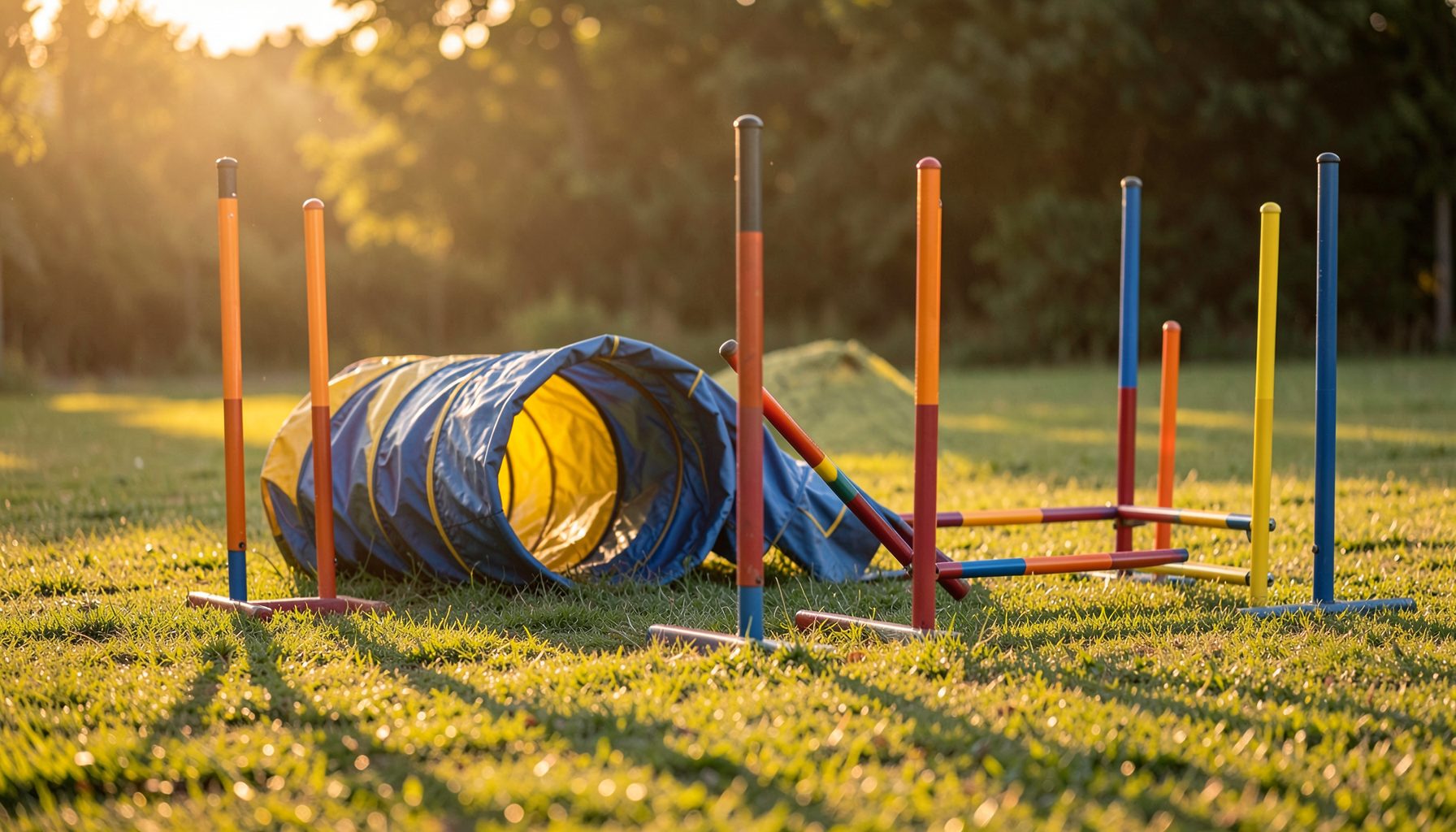
Helping a nervous dog through its first competition day
A first competition can be exciting for a handler and overwhelming for a dog. New smells, unfamiliar buildings, barking, crowded walkways, loud applause, and long periods of waiting can push a sensitive dog beyond its comfort zone. The goal is not to create a perfect performance. It is to help your dog feel safe enough to think, move, and recover.
How to handle a nervous dog on its first competition day begins with preparation well before entering the ring. A calm routine, realistic expectations, and careful attention to body language will give your dog useful support without adding pressure.
Every dog responds differently. Some become quiet and withdrawn, while others pace, vocalize, pull toward the exit, or lose interest in food. Early recognition lets you adjust the plan before mild uncertainty becomes panic.
Learn your dog’s early stress signals
Watch your dog during ordinary training sessions and in mildly unfamiliar places. Lip licking, yawning, shaking off, sniffing the ground, turning away, pinned ears, a tucked tail, or sudden scratching can signal discomfort. These behaviors may be easy to dismiss, especially when a dog still appears willing to work.
More intense signs include freezing, frantic pulling, hiding behind the handler, repeated barking, refusing familiar treats, or failing to respond to well-known cues. A dog that cannot eat or orient toward its handler may be too stressed for productive training at that moment.
Use a simple scale to describe your dog’s state before and during the event. For example, green can mean relaxed and responsive, yellow can mean uncertain but able to engage, and red can mean overwhelmed. This gives you a practical reason to pause, create distance, or leave the area instead of waiting for a dramatic reaction.
Build a familiar routine before the event
Short visits to new training spaces can make competition surroundings less surprising. Practice entering, walking near other dogs, waiting in a crate or vehicle, and settling on a mat. Reward calm observation rather than asking for a long sequence of difficult behaviors.
Keep pre-event practice brief and successful. A nervous dog benefits from predictable patterns: arrive, take a quiet walk, settle, perform a few easy exercises, and rest. Rehearse the same cues and rewards you expect to use at the trial. Avoid introducing new equipment, complicated handling techniques, or intense endurance work during the final days.
Packing can also reduce handler stress. Water, familiar food, a mat, shade or cover, cleanup supplies, medication if prescribed, and backup clothing all have a practical role. A trial-day checklist can help you organize these essentials before leaving home, so your attention remains on your dog.
Create space when you arrive
Arrive with enough time to check in without rushing straight from the car to the ring. First, locate quieter areas and identify the route to the warm-up space. Keep your dog away from crowded entrances when possible, and use a visual barrier if passing dogs, spectators, or busy activity causes agitation.
A loose leash and a relaxed handler help communicate that the surroundings are manageable. Instead of repeatedly saying “calm down,” reward small signs of composure: looking at you, standing quietly, taking a treat, or choosing to lie down. Calm behavior should earn relief, distance, or a reward, not an immediate demand for more work.
Give your dog permission to observe. Some dogs settle faster when they can stand at a distance and watch the action. Others need to remain in a covered crate or vehicle between short walks. The right choice depends on temperature, safety, facility rules, and your dog’s ability to relax in each location.
Choose low-pressure warm-ups
A warm-up should prepare your dog emotionally and physically, not drain its energy. Begin with walking, gentle movement, hand targets, name response, and a few familiar behaviors. If your dog is eager and focused, add simple agility exercises. If the dog is scanning the environment, shortening the session is usually wiser than increasing the intensity.
Avoid drilling contacts, weaves, or sequences after your dog starts making mistakes from stress. Repeating an exercise while the dog is distracted can create frustration and weaken confidence. Step away, allow a reset, and return only when your dog can respond to easy cues.
Handlers should also plan for waiting. Ring delays, nearby runs, loud announcements, and sudden movement can be harder than the actual course. Keep rewards available, provide regular water, and use a mat or quiet station to establish a familiar resting place.
| What you notice | What it may indicate | Helpful response |
|---|---|---|
| Sniffing, yawning, or lip licking | Mild uncertainty | Add distance, use an easy cue, and reward orientation |
| Refusing familiar treats | Stress is increasing | Stop asking for work and move to a quieter area |
| Pacing or repeated scanning | Difficulty settling | Reduce visual stimulation and offer a decompression walk |
| Freezing or hiding | The environment feels overwhelming | Leave the busy area and avoid forcing interaction |
| Loose body, soft eyes, and quick responses | Ready for light engagement | Use a short, familiar warm-up and finish positively |
Let body language guide your decisions
Competition photos can reveal details that are easy to miss while handling. A dog’s posture, facial tension, ear position, tail carriage, and focus may show whether it is engaged, worried, or simply concentrating. Learning canine body language can help you review a run with greater accuracy instead of judging it only by speed or faults.
Pay attention to changes between runs as well. A dog that performed enthusiastically in the morning may become tired, overstimulated, or less comfortable later. A lowered head, slower response, wide eyes, or increased distance from the handler can indicate that the dog needs a break rather than another opportunity.
Keep your feedback simple. Use a familiar reward, a quiet voice, and a short celebration after the run. Avoid showing disappointment over missed obstacles or comparing your dog with competitors. Your dog should finish its first event believing that working with you leads to safety and good experiences.
Keep these priorities in view
A successful first competition may mean entering the ring confidently, recovering after a distraction, or leaving while your dog is still relaxed. Completion, placement, and speed are secondary to building trust. Use the following priorities to keep decisions clear:
- Protect your dog from unnecessary crowding, greetings, and visual pressure.
- Reward check-ins, calm observation, and recovery after startling moments.
- Shorten or skip a run if your dog cannot eat, respond, or settle.
- Schedule quiet breaks before your dog appears exhausted.
- Record what helped so the next event can feel more predictable.
Give yourself permission to change the plan. Withdrawing from a class, leaving early, or watching from a distant area is not failure. It is useful information about your dog’s current threshold and a responsible way to protect future confidence.
Turn the first outing into a foundation
After the event, offer water, food when your dog is ready, a quiet place to rest, and a low-key walk. Some dogs sleep deeply; others remain restless for several hours because their nervous systems are still processing the day. Keep the rest of the evening predictable and avoid adding another stimulating activity.
Review the event when both of you are rested. Note the arrival time, warm-up length, crowd density, successful rewards, difficult moments, and recovery time. If your dog seems unusually tired or unsettled afterward, use this guide to plan post-competition recovery before the next demanding outing.
A first trial is valuable even when the run is imperfect. Each calm repetition teaches your dog that unfamiliar places, waiting, movement, and performance can be handled with your support. Browse Pawprint Pictures event galleries after the day, locate your dog’s images by event or handler, and use those moments to celebrate progress you may have missed from inside the ring. When you are ready, visit the relevant gallery and preserve the first competition as a record of your team’s growing confidence.