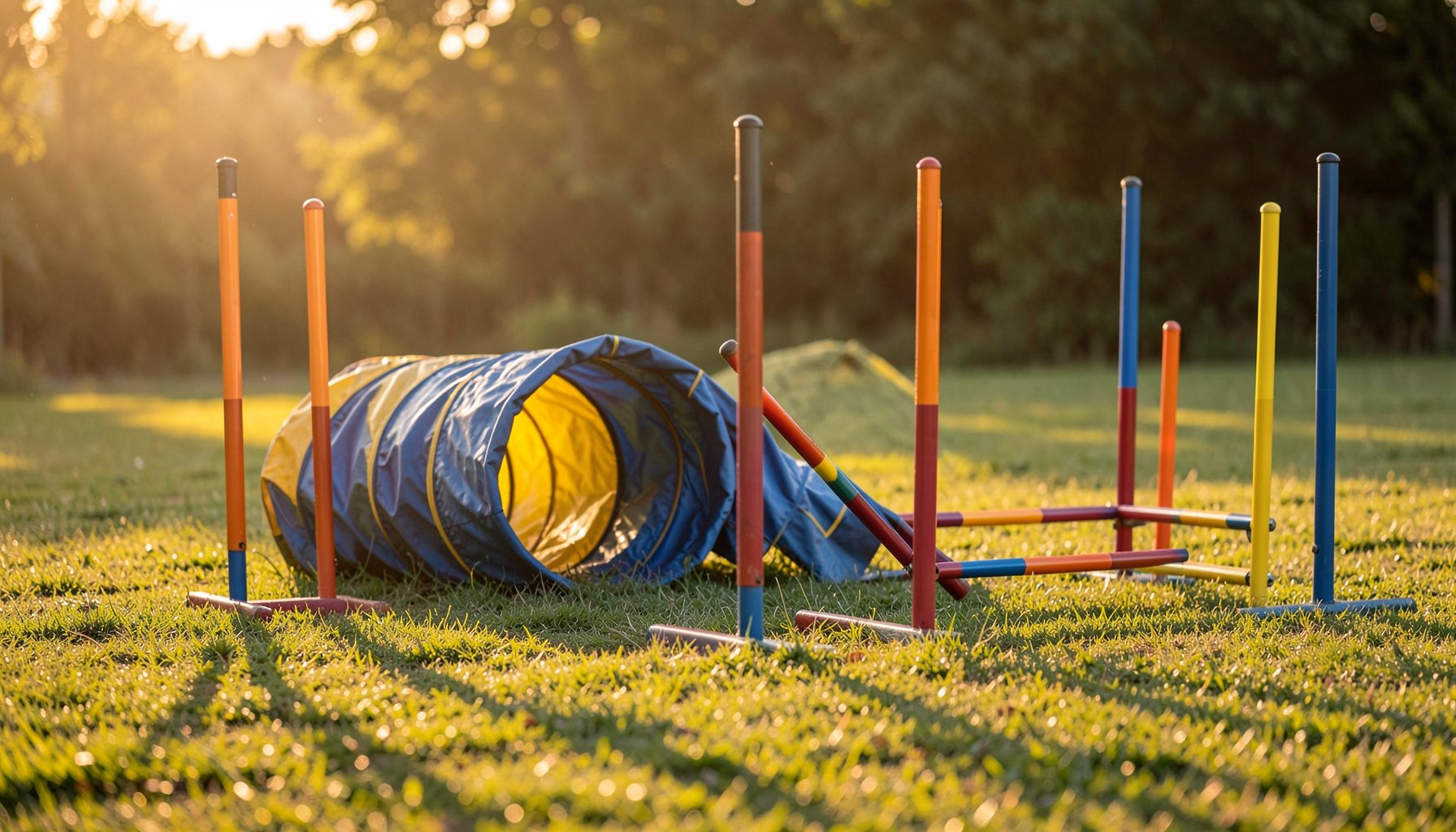
Capturing a Dog’s Joy After a Clean Agility Run
To photograph a dog’s happy expression after a clean run, you need to anticipate the instant when concentration gives way to delight. The best frame may come seconds after the final obstacle, when the dog looks toward its handler, opens its mouth, lifts its ears, or races forward for praise.
Agility photography combines sports timing with portrait awareness. A fast shutter speed can freeze a flying ear or bouncing collar, but technical settings alone will not create an expressive image. Position, anticipation, light, and a clear understanding of the dog’s behavior all matter.
Whether you are photographing a local club trial, a major championship, or a training session, study the flow of the course before taking pictures. Photographers who understand where the final obstacle leads can prepare for the emotional payoff instead of reacting too late.
Read The Finish Before It Happens
Watch several runs before settling into a shooting position. Notice where dogs land after the last jump, whether handlers kneel for a reward, and how quickly each team leaves the ring. Some dogs sprint directly toward a toy, while others pause to make eye contact with their person.
The most expressive moment often occurs just outside the competition area. A dog may glance back at the handler, shake off tension, or leap into an enthusiastic greeting. Leave enough space around the finish so you can follow that movement without cutting off paws, ears, or the handler’s gesture.
A low camera angle can make the dog’s expression feel energetic and immediate. Kneel safely outside the ring boundary, keep your equipment close, and avoid blocking officials or competitors. If moving is restricted, choose a background position that gives you a clean view of the exit lane.
Choose Settings For Fast Emotional Moments
Use continuous autofocus and a focus area that can track the dog’s face or upper body. Many modern cameras perform well with animal-eye detection, but check the result during early runs. A busy background, patterned jump wing, or fast head turn can cause the camera to shift focus away from the expression.
A shutter speed around 1/1000 second is a useful starting point for a dog running toward the handler. In dim indoor arenas, you may need to raise the ISO or open the aperture. A moderate aperture, such as f/3.2 to f/5.6, can keep the face sharp while softening distracting equipment and spectators.
Shoot short bursts as the dog approaches the reward or greeting. Avoid holding the shutter continuously for every competitor, since large bursts fill memory cards and make later editing slower. Instead, begin when the dog’s body language changes from task-focused to socially engaged.
For additional inspiration, browse agility event galleries to see how action, composition, and post-run expressions can work together in professional event coverage.
Focus On The Face And The Relationship
A happy expression can be subtle. Look for bright, attentive eyes, a relaxed open mouth, a tongue extended to one side, raised eyebrows, or ears that lift toward the handler. Some dogs show joy through a full-body wiggle rather than a broad grin, so include enough of the shoulders and posture to communicate that energy.
The handler is often part of the story. A frame showing the dog looking up at a crouching person can convey trust and accomplishment more powerfully than an isolated face. Keep the dog’s eyes visible, and compose so the direction of the gaze has room in front of it.
When the dog runs straight toward you, focus on the eyes and keep the lens near eye level. When the dog turns toward the handler, shift your position to preserve the connection between them. A longer lens can help maintain distance while producing flattering perspective and a less cluttered background.
| Moment | What To Watch For | Useful Approach |
|---|---|---|
| Final obstacle | Landing, stride, and direction of travel | Track the dog early and keep space ahead |
| First glance at the handler | Eye contact and lifted ears | Use a short burst as the head turns |
| Reward or greeting | Open mouth, wagging body, jumping | Raise the shutter speed and include context |
| Calm pause afterward | Relaxed face and proud posture | Recompose for a portrait-style frame |
Use Light And Background With Intention
Outdoor trials often provide bright, attractive light, but harsh midday sun can create deep shadows around the eyes. If possible, position yourself where the dog moves into even shade or soft side light. A slightly overcast day can be ideal for capturing facial detail without forcing the dog to squint.
Indoor venues require more careful exposure decisions. Watch for mixed lighting from windows, fluorescent fixtures, and arena lamps. Shoot in RAW when available, expose for the dog’s face, and check highlights on pale coats. White fur can lose detail quickly when the expression is captured against a dark background.
Avoid placing the finish line directly in front of distracting banners, fencing, parked vehicles, or bright patches of empty sky. A small change in shooting angle may replace visual clutter with grass, arena flooring, or a softly blurred spectator area. Keep the dog prominent while retaining enough environmental detail to identify the event.
Build A Story Beyond The Single Frame
A strong post-run sequence may include the final obstacle, the handler’s reaction, the dog’s first joyful glance, and a relaxed portrait afterward. This variety gives owners more than one emotional interpretation of the run and helps preserve the atmosphere of the day.
During editing, select images with sharp eyes and natural body language first. Remove frames where the mouth is awkwardly closed, the eyes are hidden, or the dog’s expression looks strained. Small adjustments to exposure, white balance, crop, and shadow detail can strengthen an already meaningful photograph.
Avoid excessive smoothing or dramatic color effects. Dog owners generally want recognizable markings, natural coat texture, and an honest representation of their teammate. A clean crop around the face may be appropriate, but retain enough context when the handler’s celebration is essential to the story.
For a more deliberate portrait after the action, review this guide to a winning dog portrait. The same principles of relaxed posture, eye contact, and simple backgrounds can help when the dog has settled after competing.
Prepare For Consistent Event Coverage
Professional event photography requires organization as much as camera skill. Record the class, ring, handler, and dog whenever possible, especially at busy trials with similar-looking competitors. Clear file names and accurate notes make it easier to match images with the correct gallery later.
A practical workflow also includes checking batteries, formatting memory cards, cleaning the front element, and carrying weather protection. Bring a lens suitable for the venue, but avoid changing equipment during the most active runs. Missing the celebratory moment while adjusting gear is more costly than working with a slightly less ideal focal length.
- Arrive early and watch the course briefing before choosing a position.
- Prefocus or begin tracking before the dog reaches the final obstacle.
- Keep shooting through the handler’s first praise or reward.
- Capture both close facial expressions and wider teamwork frames.
- Review images for sharp eyes before making extensive edits.
Preserve The Moment For The Team
A clean run is a personal achievement for the dog and handler, and the photograph should reflect that shared feeling. The most valuable image may show a huge grin, a proud stance, a tail in motion, or a joyful reunion rather than a technically perfect obstacle shot.
After an event, owners often search by club, trial, handler, or dog name to find their images. Organized galleries make that process easier and give families a practical way to revisit the day. You can browse a sample gallery to see how event photographs can present both competition action and the expressive moments that follow.
Take the time to photograph the celebration as carefully as the run itself. Anticipate the finish, follow the dog’s eyes, keep the background clean, and stay ready for the instant concentration becomes unmistakable happiness. Then preserve those images in a gallery or print that lets the team relive its achievement long after the ribbons have been packed away.