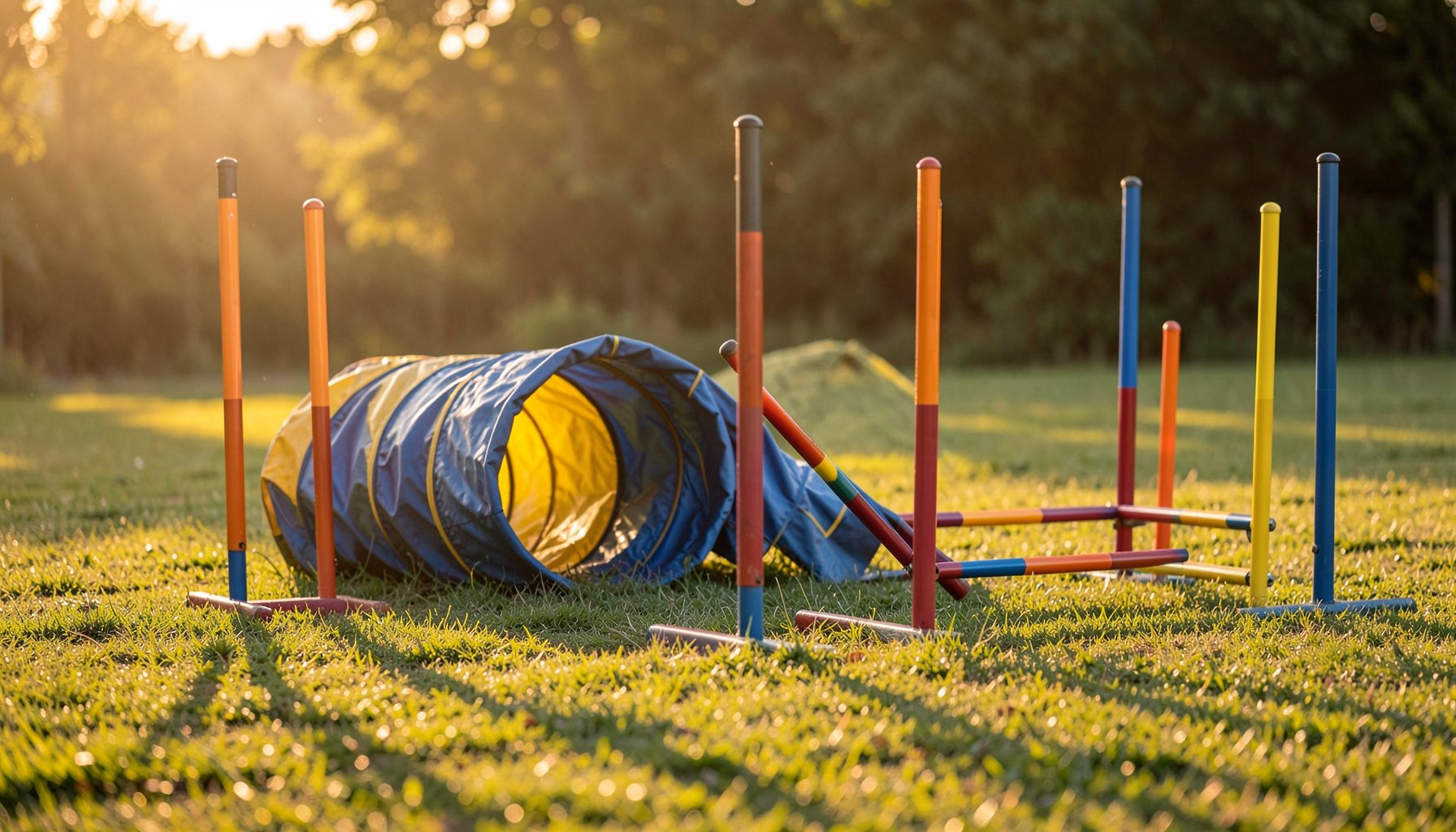
Choosing Club Dog Photos for a Strong Collage
A club collage works best when every portrait remains clear beside action shots, group photographs and relaxed moments near the vehicles. The practical task is to select a photo that works well in a collage of multiple dogs from your club: it must be recognisable, visually balanced and true to that dog’s performance.
Pawprint Pictures helps by organising galleries by event, club, handler and dog, making it easier to compare images without browsing through unrelated collections. Once the right frames are identified, owners can browse the secure shopping cart and choose prints or other photo products suited to their club display.
Start with one clear story
Begin with the story you want the collage to tell. A strong action image can show athleticism, a waiting portrait can reveal personality, and a handler-and-dog frame can add companionship. Trying to make one photograph perform all three jobs often leaves the dog too small or the background too busy.
Look for images in which the dog’s outline is complete and its attention is obvious. The ears, muzzle, tail and paws should be visible rather than cropped into an unrecognisable shape. A frame that works beside a large black Labrador must also work beside a small, lightly coloured terrier.
A professional dog agility photographer understands how anticipation, commitment and recovery affect the appearance of a run. That understanding helps when choosing the exact frame that captures the dog at its clearest, especially when several photographs appear equally dramatic in the gallery.
Check movement, posture and wellbeing
Examine the entire body, not merely the face. Look for balanced posture, clean foot placement and a direction that appears consistent with the obstacle. A photograph can look exciting while concealing a cramped stride, an awkward landing or a moment when the handler is pulling the dog off line.
Pain that cats hide can be surprisingly difficult to recognise, and the same attentive approach is sensible with dogs. Changes in stride, head carriage or willingness to work deserve a veterinary check rather than a flattering crop. Good photographs should celebrate healthy movement, not turn discomfort into visual drama.
Australian trial days often begin early, particularly when Brisbane’s summer heat or Sydney’s humidity is forecast. Cooler dawn conditions are common around Melbourne and Adelaide, while western venues may experience intense afternoon sun. Choose images that look comfortable in the actual conditions, and avoid selecting a frame that suggests heat stress, heavy panting or reluctance to continue.
Balance colour, scale and visual weight
Dogs of different sizes create an immediate design challenge. A small dog in a large landscape can disappear beside a solid-coloured retriever, while a close crop of the retriever may leave no breathing room in the finished collage. Check how much space surrounds each dog rather than judging the photographs separately.
Colour also affects the balance. Pale dogs can disappear against sand, light grass or a white van, while a dark dog may merge into shaded timber or a dark photograph. Australian sunlight can create hard highlights, so look for images with detail in both the white coat and the shadows. An evenly lit portrait may complement a high-contrast action photograph better than another equally dramatic frame.
Club culture matters too. Australian handlers commonly call an agility trial a “run” and celebrate a “good run”, while helpers, judges and owners gather around the ring between classes. A candid photograph with natural expressions can bring that community atmosphere into the collage, provided the main dogs remain visually distinct. Images of the truck, camp chairs and waiting handlers can provide context without overpowering the athletes.
Choose angles that reveal control
Direction, eye line and obstacle position determine whether an action photograph feels energetic or confusing. The dog should have somewhere to move towards within the frame, even when the photograph captures a sharp turn away from the camera. Leave a little space in front of the muzzle rather than cropping tightly against the direction of travel.
For a jump, the nose-to-bar jumping form is easier to judge when the ears, spine and lead are visible. Watch for an image showing the dog gathering itself cleanly, without the handler obscuring the body. A technically imperfect attempt can still be more attractive than a photograph taken at an awkward angle.
The collection method also matters. Search by event and handler first, then confirm the dog’s name, especially where several animals have similar names or coats. Some organisations use abbreviations, nicknames or multiple registered names, so support for locating event photographs can prevent an excellent frame being overlooked. It also helps to note the class, date and obstacle sequence in your own records.
Compare how each crop will sit together
The best crop preserves the dog’s character while allowing neighbouring images to breathe. Landscape frames suit wide leaps and group scenes, while portrait crops suit alert dogs waiting at the start line. The following comparison shows how common image types can contribute to a balanced display.
| Image choice | Visual strength | Possible weakness | Best place in the collage |
|---|---|---|---|
| Landscape action | Conveys speed and field direction | Small dogs may lose detail | Central feature |
| Portrait at the start | Shows expression and body condition | Can feel cramped beside wide images | Narrow side panel |
| Square working frame | Balanced shape and useful flexibility | May hide part of the stride | Main grid |
| Handler with dog | Adds partnership and scale | Competes for attention | Opening image |
| Candid group moment | Warmth and club atmosphere | Background may be inconsistent | Closing section |
Apply the same test to every candidate: squint at the image, reduce it to thumbnail size and imagine it beside the other selected frames. The strongest photograph will remain identifiable even when the whole collage is viewed from across the room. That simple check often reveals an unbalanced crop faster than examining every pixel.
Consistency should guide the overall arrangement without making every frame look identical. A shared colour palette can come from the venue, while a mixture of action, portrait and candid images creates pace. Leave deliberate gaps around dogs with pale coats or intricate silhouettes, and use tighter crops only where the photograph has already proven readable at a smaller size.
Keep the memory of the day
A useful final selection balances the featured dog with supporting images and avoids choosing several near-identical jumps. The following recommendations make the review process straightforward:
- Select one frame that clearly represents each dog’s strongest moment in the collage.
- Check the crop at thumbnail size and remove any distracting edges or accidental tangencies.
- Group images by shared colour and visual weight, not merely by event order.
- Include at least one quieter portrait to give the arrangement space to breathe.
- Confirm the handler, dog, class and event before ordering products.
- Review the full layout on the display screen or print size before finalising purchases.
After ordering, check that the selected frames can be cropped consistently without cutting off paws, tails or essential facial detail. Products such as mounted prints, canvases or photo books should reflect the same visual plan rather than treating each image as an isolated purchase. Digital files may also be needed for a club booklet, screen presentation or commemorative display.
What should stay with the viewer is not perfect symmetry or identical poses, but the clear sense of each dog being recognised, moving confidently and sharing a memorable day with the rest of the club.