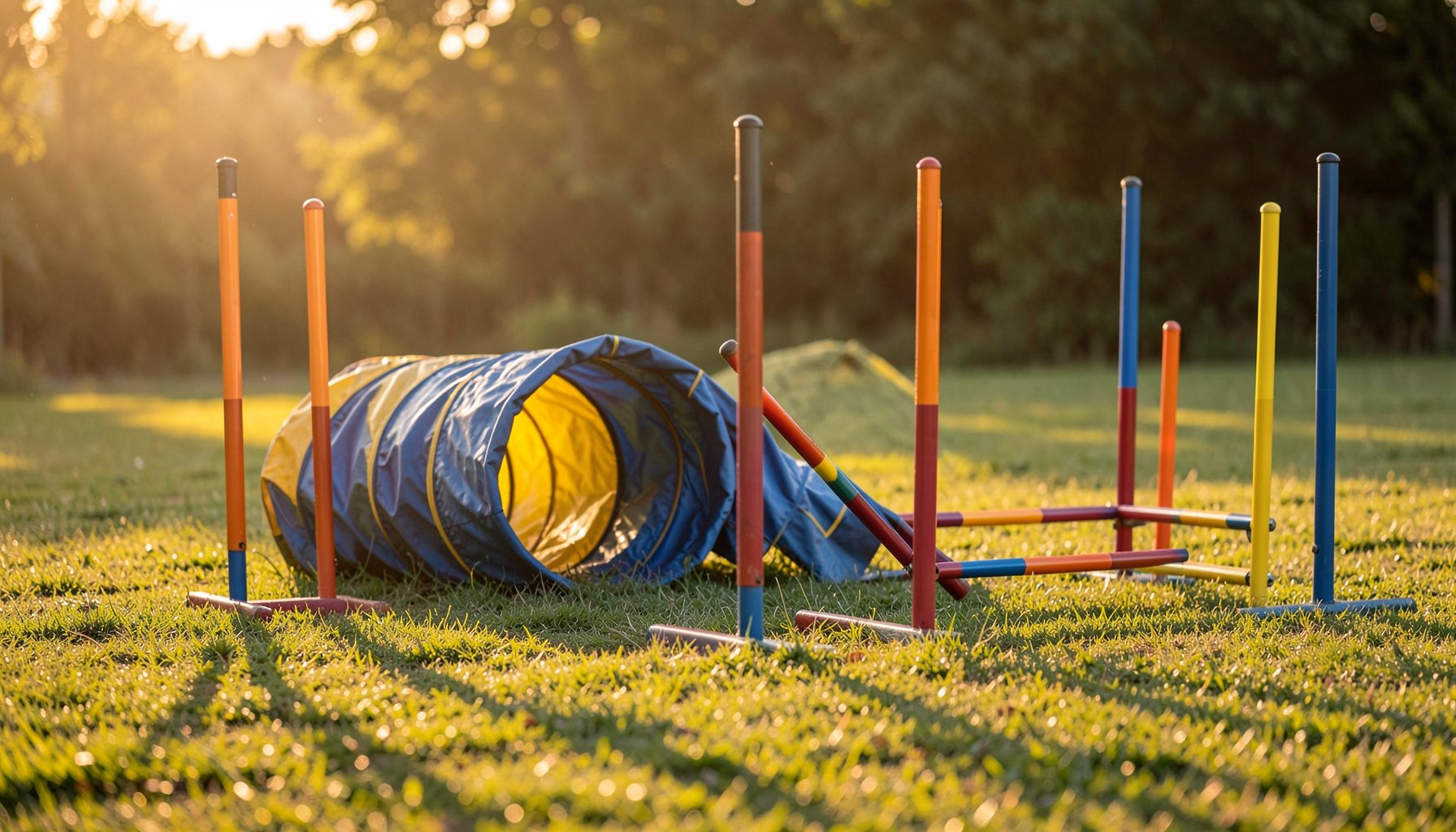
The best locations for dog agility photos beyond the ring
Dog agility photography is often associated with the action inside the competition ring: a dog clearing a jump, threading weave poles, or powering through a tunnel. Those moments are essential, but some of the most revealing images happen just outside the marked course. A wider range of locations can show preparation, partnership, concentration, and the atmosphere that makes an event memorable.
The area around an agility trial offers many opportunities for expressive action shots and candid portraits. Start lines, exits, warm-up spaces, walkways, and shaded rest areas each provide different backgrounds, lighting conditions, and emotional details. Choosing the right position helps a photographer tell the complete story of a handler and dog rather than documenting obstacles alone.
These locations also give owners more variety when selecting images for prints, albums, or social media. A focused portrait beside the ring may complement a dramatic jump shot, while a relaxed post-run image can capture personality that is easy to miss during competition.
Look for the course-side vantage point
The best location is not always directly beside the most impressive obstacle. A position near a corner or diagonal stretch can reveal several elements at once, including the dog’s body position, the handler’s cue, and the next obstacle in the sequence. This creates images with context and movement instead of isolated snapshots.
Before settling into one place, study the course map and watch a few runs. Notice where dogs accelerate, where handlers turn sharply, and where the pair briefly faces the camera. A low shooting position can make a jump look powerful, while a higher angle may better show a contact obstacle or a complicated path through the equipment.
Safety and courtesy should guide every choice. Stay outside the ring boundary, avoid blocking competitors or ring crew, and keep equipment secure. A quiet, predictable position lets dogs work without distraction and gives the photographer a better chance of capturing natural behavior.
Use the start and finish areas
The start line is one of the richest locations for storytelling. Dogs may be alert, eager, playful, or intensely focused as they wait for the release cue. Handlers often lean in, make eye contact, or use a familiar gesture before the run begins. These brief interactions can produce intimate images that carry more emotional weight than a standard action frame.
The finish area offers a different kind of energy. Dogs may race toward their handlers, shake off tension, or celebrate with a toy. The handler’s reaction can be just as expressive, especially after a difficult course or a personal best. Positioning near the exit, while leaving room for teams to clear the ring, allows a photographer to capture that immediate release of emotion.
Use a longer lens when the space is crowded. It provides working distance and helps isolate the team from equipment, fencing, and spectators. A wider lens can work well when the background is clean and the photographer wants to include the ring entrance or event signage.
Photograph the warm-up and staging spaces
Warm-up areas reveal the preparation behind a competition run. Dogs stretch, practice short sequences, watch other teams, and settle into the rhythm of the event. Handlers check collars, adjust leads, reward focus, and review the course in their minds. These scenes create documentary-style photographs that feel personal and authentic.
The staging area can also produce excellent portraits. A dog waiting calmly beside its handler may show a completely different expression from the same dog racing over a hurdle. Look for ears forward, a steady gaze, a favorite toy, or a moment of connection between the pair. These details help identify the dog’s character and the handler’s relationship with it.
Because these areas can be busy, obtain permission when appropriate and remain unobtrusive. Avoid photographing private conversations or moments when a team is clearly preparing under pressure. The strongest candid images usually come from patience rather than interruption.
Let the light shape the photograph
Light changes significantly around an agility venue. Open fields may offer bright, even illumination in the morning, while late afternoon can create warm highlights along a dog’s coat. Covered arenas often require higher ISO settings and careful attention to shutter speed because dogs move quickly and artificial lighting may be uneven.
Background brightness matters as much as the subject. A dog running against a dark tree line may stand out beautifully, while a pale sky behind a white-coated dog can reduce detail. Moving only a few steps may place the team in front of a cleaner background or improve the direction of the light.
For outdoor trials, this natural light guide explains why changing daylight can become an advantage rather than a limitation. Use backlight for glowing edges around fur, side light for texture, and open shade for softer portraits near the ring.
Compare locations before choosing a frame
Different locations support different visual goals. A ring-side position emphasizes speed and athletic ability, while a quieter edge of the venue may produce a portrait that communicates calm and companionship. Planning a gallery with several viewpoints creates a fuller record of the event.
| Location | Best subject | Visual advantage | Main consideration |
|---|---|---|---|
| Ring corner | Turns and obstacle sequences | Shows motion and direction | Requires careful timing |
| Start line | Handler-dog connection | Captures focus and anticipation | Keep clear of the release path |
| Finish exit | Celebration and reactions | Strong emotional expressions | Teams need space to leave |
| Warm-up area | Preparation and personality | Candid, documentary feeling | Ask permission when needed |
| Shaded venue edge | Portraits and quiet moments | Softer light and cleaner backgrounds | May be farther from action |
| Spectator-side diagonal | Full team movement | Adds depth and course context | Check for distracting backgrounds |
A strong event gallery usually combines these perspectives rather than relying on one favorite spot. Action images can establish the excitement of the trial, while portraits and candid frames give the collection warmth. When reviewing photographs, consider how each image contributes to the story and whether the set includes both movement and connection.
Build a practical shooting route
A simple route helps prevent missed opportunities. Begin by scouting the ring perimeter, checking the sun, and identifying safe areas with unobstructed views. Then choose one action position for the first runs, move to the staging or warm-up area during a quieter period, and return to the finish zone when likely subjects are competing.
Bring equipment that supports flexibility without making movement difficult. A telephoto lens is useful for ring-side action, while a shorter lens works better for portraits and candid interactions. Extra batteries, memory cards, and a lens cloth are especially important at long trials where dust, grass, or changing weather can affect equipment.
- Scout backgrounds and light before the first class begins.
- Select positions that show both the dog and handler clearly.
- Leave safe space around ring gates, exits, and staging lanes.
- Vary focal lengths to create action shots and environmental portraits.
- Record class, handler, and dog details for accurate gallery organization.
A consistent workflow also makes it easier to organize images by event, club, handler, and dog name. Clear organization matters when competitors return later to locate a specific run or browse a complete set of photographs. Pawprint Pictures customers can use the customer gallery search to find event images and explore available photo products through a secure shopping cart.
Capture the atmosphere between runs
Some of the most memorable photographs happen away from competition altogether. Dogs resting beside crates, handlers walking together between rings, and friends watching a class can show the community surrounding the sport. These images work especially well as supporting photographs in an event gallery or printed collection.
Pay attention to small gestures: a handler rewarding a dog with a treat, a dog resting its chin on a knee, or a team reviewing a course map together. Such moments may seem ordinary at the venue, yet they often become meaningful reminders of the day.
The goal is to photograph the whole experience with respect and purpose. By moving beyond the center of the ring, photographers can document anticipation, effort, celebration, and companionship in a way that action images alone cannot provide. Explore the next event with these viewpoints in mind, then preserve the strongest moments in a gallery that reflects both the athletic performance and the bond behind it.