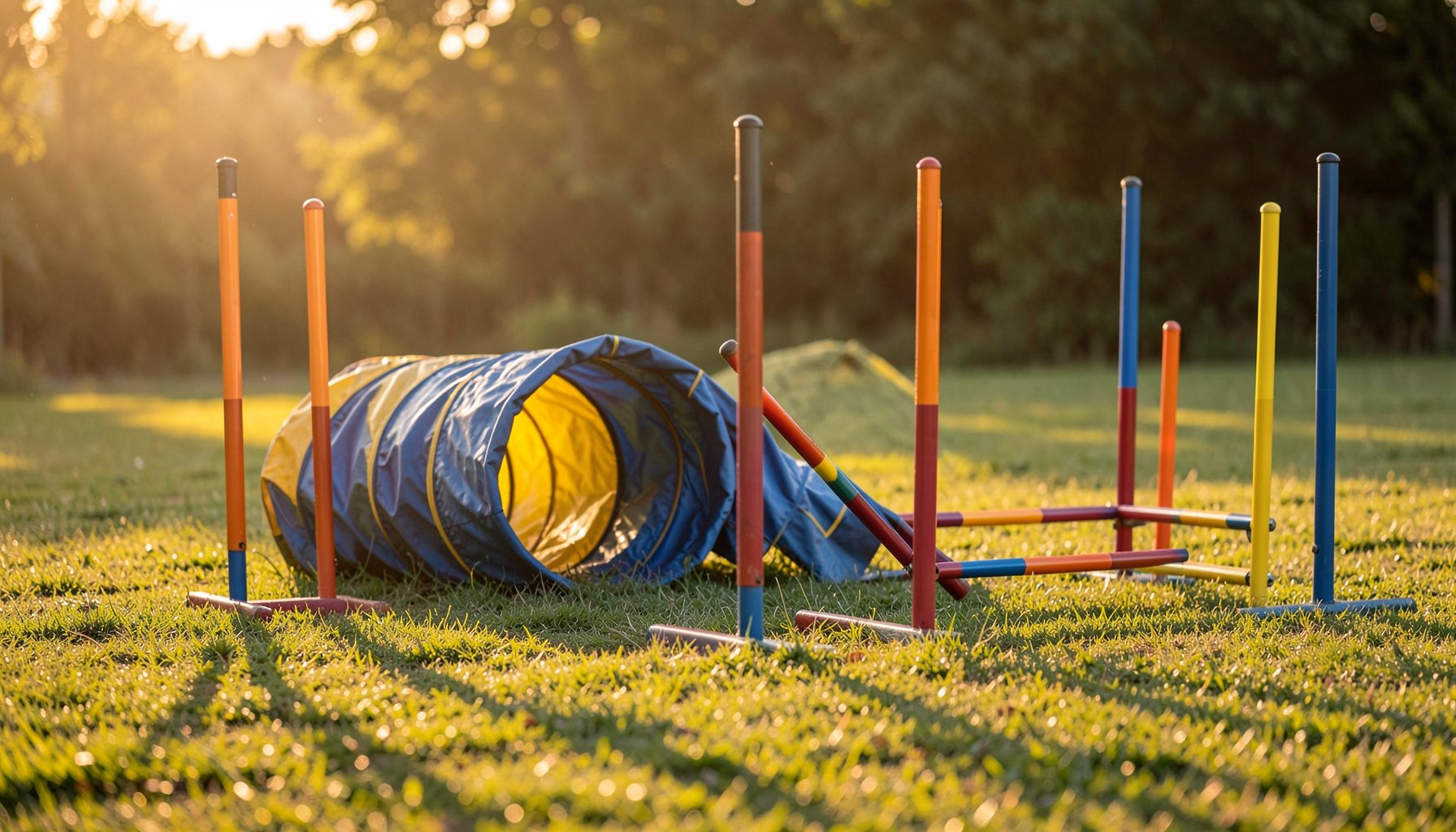
The best times of day for outdoor agility photography
Outdoor dog agility photography depends on timing as much as technique. The sun’s position changes the brightness, color, contrast, and direction of light throughout an event, while a dog’s speed demands precise shutter settings. Choosing the right part of the day can make the difference between a sharp action image and a blurred frame.
The ideal time also depends on the venue, course orientation, weather, and event schedule. A sunny field with little shade creates different conditions from a tree-lined training area or an overcast trial. The strongest photographers adapt to those variables rather than relying on a single favorite hour.
For handlers and owners, thoughtful timing can produce more expressive photographs of jumps, tunnels, contacts, weave poles, and fast turns. It also helps preserve the atmosphere of the event, from quiet morning focus to the energetic finish of an afternoon run.
Why changing sunlight matters
Natural light gives outdoor action photographs depth and realism. In the early morning and late afternoon, sunlight arrives at a lower angle, creating softer highlights and longer shadows. This can add texture to a dog’s coat and separate the subject from the grass, fencing, and equipment.
Around midday, the sun is higher and often much harsher. Bright overhead light can create dark eye sockets, strong shadows beneath the dog, and distracting glare on white or pale coats. That does not make midday unusable, but it usually requires careful positioning and exposure control.
A useful overview of how changing daylight affects event images is available in this guide to natural outdoor light. Understanding the direction and quality of sunlight helps a photographer choose where to stand before the next run begins.
Early morning brings soft, clean detail
Morning sessions often offer some of the most forgiving light for agility photography. When the sun is still low, its warmth can bring out the texture of a dog’s fur without producing the severe contrast associated with later hours. The cooler air may also help dogs stay energetic and focused during training or competition.
The main challenge is often uneven light. Parts of the course may remain in shadow while other sections are illuminated, especially near trees, buildings, or temporary structures. Photographers should watch the dog’s path and expose for the brightest area where the action is expected, rather than allowing the camera to react unpredictably to every background change.
Morning dew can also create attractive highlights in grass and add atmosphere to wide shots. However, mist, condensation, or low light may require a faster lens, a higher ISO, or a slightly slower shutter speed during calmer moments between obstacles.
Midday requires deliberate positioning
Midday is common for all-day trials, and photographers cannot always choose a different schedule. The best response is to use the sun’s direction strategically. Standing with the sun behind or to the side of the camera can illuminate the dog’s face and body more evenly, while shooting directly into bright sunlight may create silhouettes or flare.
Open shade can be valuable when it is available. A shaded section of the course can reduce harsh contrast, though photographers should check that the dog remains separated from a dark background. If the course runs between bright and shaded areas, it may be necessary to choose a consistent exposure that protects highlights on white fur.
At this time of day, a fast shutter speed remains essential. Agility dogs can accelerate, jump, and change direction in an instant, so shutter speeds around 1/1000 second or faster are often useful. The exact setting depends on the dog’s movement, available light, lens, and desired amount of motion blur.
Late afternoon adds warmth and separation
Late afternoon is often a favorite period for outdoor pet photography because the sun becomes less intense and more directional. Warm light can give a dog’s coat a rich glow, while the lower angle creates a brighter edge along ears, tails, and shoulders. This rim lighting can help a moving dog stand out from a busy field.
The best results usually come when the photographer watches the background as carefully as the subject. A golden patch of grass or a softly lit fence can complement the image, while a bright patch behind the dog can distract from its expression. Moving a few steps may change the background completely without affecting the timing of the shot.
Toward sunset, colors become increasingly warm and shadows lengthen. Photographers may need to raise ISO or open the aperture as the light fades. The reward is a more intimate, dramatic look that captures both the athletic movement and the personality of the dog.
Match timing to the kind of image
Different moments call for different lighting conditions. A jump photograph benefits from clear detail in the face, paws, and obstacle, while a wider scene may work beautifully with longer shadows and visible sun flare. Close portraits between runs can take advantage of soft morning or evening light even when the course action occurs at another time.
Weather changes the role of the clock. Cloud cover acts like a large diffuser, reducing harsh shadows and making many hours suitable for consistent action images. Light rain can deepen colors, while a bright overcast sky can produce clean, balanced exposure across the field.
| Time or condition | Visual character | Main advantage | Common concern |
|---|---|---|---|
| Early morning | Soft, cool, gentle shadows | Detailed coats and calm atmosphere | Low light and uneven shade |
| Midday sun | Bright, contrasty, direct | Strongly illuminated action | Harsh shadows and glare |
| Bright overcast | Even, diffused light | Consistent exposure across the course | Flat backgrounds or muted color |
| Late afternoon | Warm, directional, golden | Separation and expressive highlights | Falling light and long shadows |
| Near sunset | Deep warmth and drama | Atmospheric portraits and wide scenes | Insufficient shutter speed |
Plan around the event schedule
The best lighting opportunity may not match the event’s headline run. A photographer covering a club show, trial, or training session should review the order of classes and note when the course faces the sun. If a particular jump or tunnel is beautifully lit in the morning but falls into shadow later, that information can guide shooting positions and expectations.
It is also important to account for handler movement and spectator traffic. Arriving early allows time to identify safe locations, observe the course, and test autofocus against the background. Photographers should always follow event rules and remain outside restricted areas, even when a different angle would produce more dramatic light.
Organizing images by event, club, handler, and dog name makes it easier for owners to locate the right run after the day is over. When a gallery contains many classes and changing conditions, accurate event details are especially valuable for matching photographs to the correct team.
Practical timing decisions
A simple plan can make outdoor agility coverage more consistent:
- Arrive before the first important runs to observe sun direction, shadows, and background distractions.
- Favor early morning or late afternoon for warm, dimensional light and calmer portrait moments.
- Use shade or bright overcast conditions when possible for balanced exposure on dogs with pale or dark coats.
- Keep the shutter speed high enough to freeze the fastest movement, then adjust ISO as daylight changes.
- Photograph the same team from more than one angle when the course and lighting allow it.
Even with careful planning, conditions can change quickly. Clouds may cover the sun, a run may be delayed, or a dog may perform a key obstacle in a patch of unexpected shade. Checking the histogram and reviewing a few test frames helps prevent blown highlights and keeps exposure under control.
From capture to finished photographs
Good timing continues to matter after the shutter is pressed. Images captured in soft light may need only modest color and contrast adjustments, while midday photographs may benefit from careful shadow recovery and highlight control. Editing should preserve the dog’s natural coat color and the authentic atmosphere of the event.
For owners searching for photographs from a specific trial or training day, a clearly organized customer gallery can save time. Pawprint Pictures provides event and participant-based browsing so handlers can locate images connected with their dog and run. When ordering prints or other products, customers can review the site’s privacy policy for information about personal data and online transactions.
A well-timed photograph records more than a successful obstacle. It can show concentration before a jump, the instant a dog leaves the ground, or the connection between handler and teammate. Those moments are often strongest when light, position, and timing work together.
Browse Pawprint Pictures galleries to find your dog’s agility moments from clubs, trials, shows, and training sessions. If locating or ordering event photographs requires assistance, the customer support guide provides practical help for navigating the gallery and purchase process.