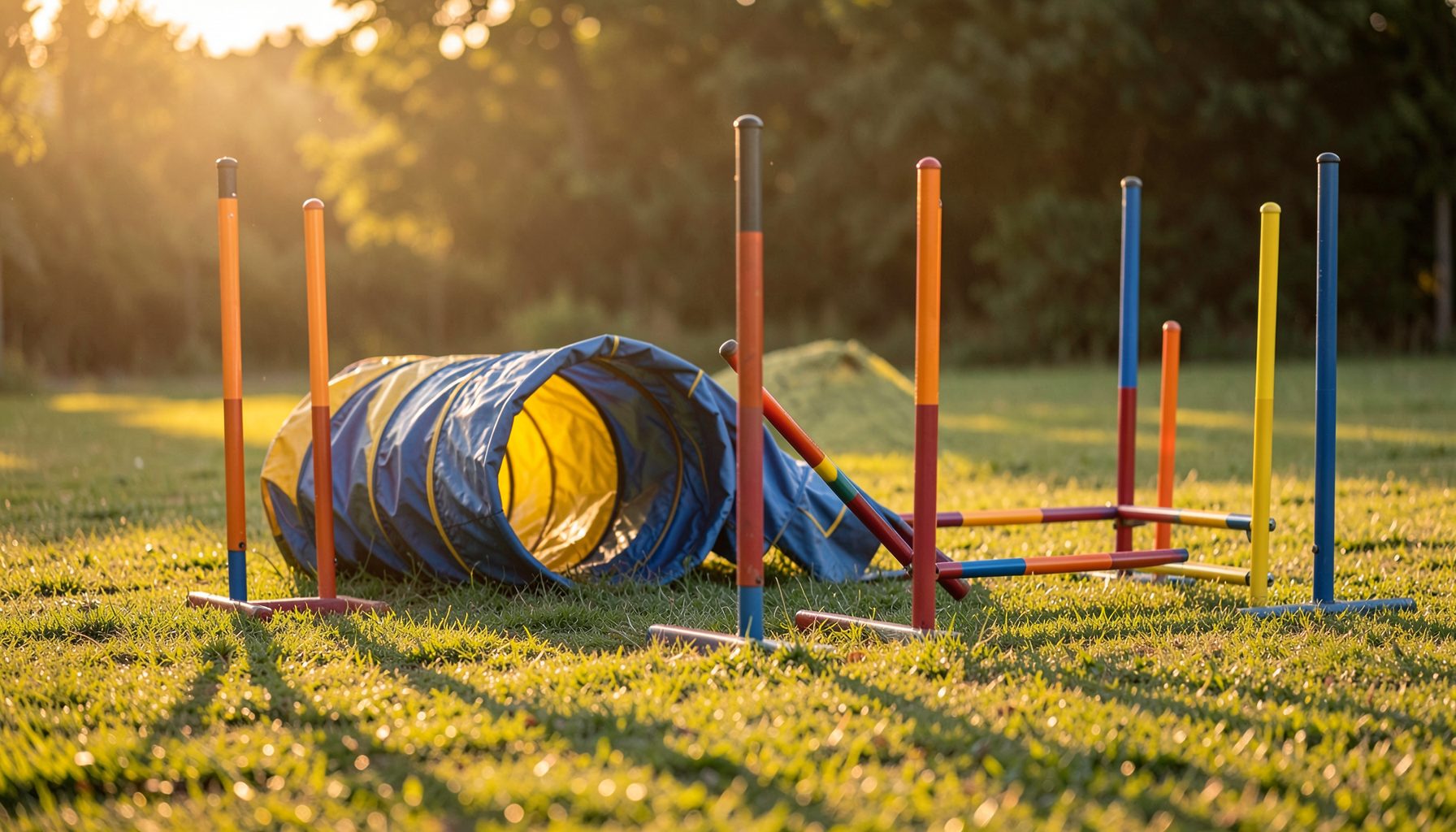
The story behind our most-requested USDAA grand prix photo
For more than a decade we have followed agility handlers from Brisbane, Sydney and Melbourne to USDAA events, cameras slung over our shoulders on the drive between clubs. Among the thousands of jump shots, contact photos and podium portraits we have filed, one frame keeps turning up in our inbox. It is the image handlers mention when they call about prints of their own dogs, and the picture we hear about from clubs as far apart as Adelaide and Perth. The story behind it involves a stubborn border collie, a handler from Geelong, a seesaw that almost went wrong, and a final round where everything aligned for a single breath.
That print now travels back to Australian homes as wall art, mugs and calendars pinned above kibble bins. We have framed it for living rooms in Queensland, hallways in Tasmania and waiting rooms at veterinary clinics in regional NSW. What started as a single shutter press has become something close to a recurring character in our yearly sales data, and a quiet reminder that one image can outlast every other shot from the same weekend.
We get asked about the photo so often that we wanted to tell the story properly, including the parts that almost went wrong. This is how the image came to exist, the people inside the frame, and what we have learned about the kind of moment worth chasing.
A USDAA grand prix final in Australian spring
The event was held over a long weekend in late October, with jacaranda petals drifting across the warm-up lanes. Three of the eight finalists were Australian handlers who had crossed the Tasman and the Pacific to chase the title. We were shooting under contract for Pawprint Pictures, with semifinals in the morning and finals under floodlights after lunch.
We pick our shooting positions the day before, then make peace with the fact that the favourite might not even start. That morning we had mapped three camera locations around the ring, two for jump spreads and one positioned low to catch a clean handler framing shot as teams crossed the start line. The seesaw sat at the far end of the course, and we knew the final stretch would either become a celebration or a recovery zone.
The handler from Geelong and her border collie
The handler at the centre of our most-requested print is a long-time competitor from Geelong who started in agility in the early 2000s with a cattle dog from a foster program. By the time this final came around she had been running her current dog, a five-year-old border collie named Taz, for three seasons. They were a quiet partnership, but anyone who trained at their Victorian home club knew how much rehearsal had gone into the contact obstacles.
Australian handlers often arrive at international events carrying decades of homegrown training philosophy, shaped by sheepdog trials in the high country and dock jumping at coastal clubs. Watching her warm up that morning, we knew this was the team our final-round shot would feature, if the course went her way.
The moment everything lined up
In the final round Taz came off the dogwalk three strides ahead of plan, which should have been a disaster at that speed. The handler absorbed the line, called a blind cross, and steered him cleanly onto the seesaw. We had been warned that Taz hated the bounce of the plank, so the team had spent months training a fast commitment. The tip of the plank was already tipping downward when his rear paws left it, his body stretched parallel to the ground, ears pinned flat, eyes locked on the next obstacle.
Our second camera caught the arc, but it was the low-position body that produced the frame handlers keep requesting. The background fell away into clean arena lighting, the handler was visible in soft focus behind, and Taz looked like a small aircraft leaving the runway. There was no cropping trick and no burst-rate miracle. It was the right camera, the right angle, and a dog who left the seesaw a heartbeat earlier than usual. The difficulty of that specific obstacle is something we explore in our seesaw timing guide, where shutter speed and angle change the story of a contact.
Why this frame gets requested again and again
The print works for a reason that has nothing to do with camera settings. The handler is recognisable without dominating the composition, the dog is mid-effort rather than mid-celebration, and the lighting separates the two without flattening the background. Buyers tell us they like it because it captures the partnership instead of the prize, mirroring a wider shift in Australian print orders away from trophy shots and toward images that feel like the sport itself.
There is also a quiet cultural pull in seeing an Australian handler at the centre of an international feature image. Customers from clubs in Brisbane and the Sunshine Coast often mention the pride of recognising one of their own mid-stride in a frame that ended up on walls overseas.
How we approach a frame like that
A shot of this quality starts long before the final round. We scout for background separation, look for clean sight lines on the contacts, and walk the course when the ring is empty. On the day we keep two bodies in play so the dramatic frames have a backup angle. For anyone who trains at a local club, the principle applies just as well to phone clips as it does to DSLRs: pick your spot before the run, and stay low.
We also spend time thinking about how the finished image will live. Prints end up above sofas, behind desks, in veterinary waiting rooms and inside framed collages that include training diaries and ribbon charts. Choosing an image that works in a hallway is its own small art form, and it helps to understand how the colours of a course will sit against the colours of a room. Our guide to matching decor with prints walks through that decision in more detail, including frame choice and the impact of matte versus gloss finishes on arena lighting.
Choosing the right print from your own gallery
If you are browsing the Pawprint Pictures library and want something with the same weight as the Taz frame, look for these qualities when you open an event gallery:
- The handler is recognisable but not blocking the dog
- The dog is mid-effort rather than stopped or sitting
- The background is uncluttered, with clear separation from the subject
- The obstacle in frame tells part of the story, such as a tipping seesaw or tunnel exit
- The lighting comes from the side or above rather than from behind the camera
- The print resolution supports the size you want to hang, which our team can confirm before checkout
For most Australian living rooms an A2 or A3 print feels right, while larger pieces tend to suit rumpus rooms, training facilities and clinics. If you are unsure about size or finish, our customer team can mock up a frame against a photo of your wall before you commit.
If any of this brings a particular event or dog to mind, the simplest next step is to open your club gallery on the Pawprint Pictures site and search by handler name or dog name, then send our team the image number you would like printed. We will confirm file quality, walk you through paper and frame options, and have the finished piece packed and shipped from our Australian warehouse within five working days.