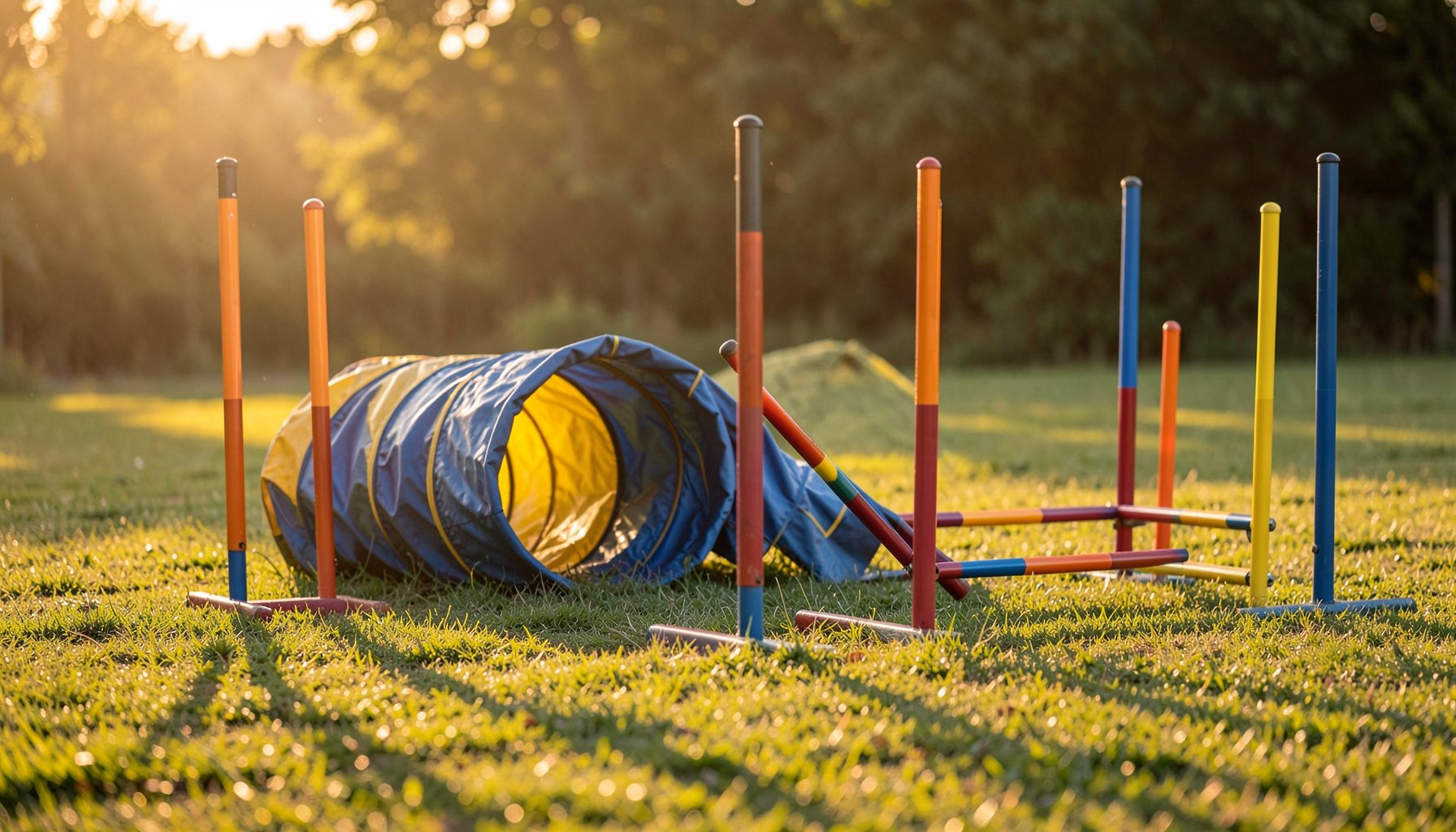
How to order a photo blanket showing your dog’s full course map
An agility run tells a larger story than a close-up portrait. It shows the line your dog took, the obstacles judged, the tight turn after a blind and the handler’s timing at the start line. A printed blanket can hold that memory in a format you can use every day, rather than leaving it as a small image buried in a gallery.
The key is to order a photo blanket that shows your dog’s full course map, not a photograph with a few familiar jumps and an indistinct background. The finished product should let someone unfamiliar with the event understand where the dog ran while still giving the handler a cheerful reminder of one particular partnership.
Pawprint Pictures makes this practical for Australian owners and handlers by organising galleries by event, club, handler and dog, including collections associated with AKC, USDAA, NADAC, CPE and ASCA. You can search the customer galleries, compare products and use the secure shopping cart once you have found the right frame.
Start with a photograph that contains the entire course
Open the largest available preview rather than judging from a thumbnail. Look for a wide, elevated or side-on view that includes the run’s boundary, the start and finish, and every obstacle in the route. If the dog is beautiful but the tunnel and final jump are cropped out, the image will not communicate the course well.
If the gallery contains only a tight action frame, ask whether a wider original or a panoramic course overview is available. A photographer may have made a separate frame specifically for this purpose. It is worth choosing the wider image for the blanket and reserving the close portrait for smaller prints or cards.
A useful technical reference is Pawprint Pictures’ contact zone photo guide, which explains why the approach and take-off point can matter in an agility image. The same attention to the moment of contact helps you judge whether a candidate photograph records a clear run or merely an isolated jump.
Confirm the map scale and route accuracy
A map that is technically complete can still be unreadable on fabric. Compare the course image with the blanket’s print area and proportions, and decide whether a landscape, portrait or square composition best preserves the route. Keep labels, jump numbers and the dog’s marker inside the safe area, since some products crop close to the edge.
Check that the route is accurate: the order of jumps, the placement of weave poles, tunnels, gates and A-frames, and the direction of travel. Australian course plans may be shown in metres, while imported event paperwork can use yards, so confirm the units before accepting a printed diagram. The event date, dog name and handler name should also be checked against the gallery entry.
A clean diagram with strong contrast is more useful than a busy field of grass. Ask whether the original can be supplied in high resolution and whether a simple marker, arrow or caption can be added without covering an obstacle. The finished blanket should feel like a record of the course, not a collage of unrelated details.
Check the proof before the blanket is made
Before paying, request a digital proof or crop preview for the exact blanket size. Check the image at the scale you will see on the bed or sofa, including the direction of any text and the position of the dog. A preview can reveal a stretched ratio, a clipped obstacle or a faint line that looked perfectly clear in the gallery.
The dog’s expression matters too, especially if the blanket is a gift. A relaxed face and visible eye contact can make the image engaging, but expression should never come at the expense of the route. If your dog finds cameras distracting, practising a smile on command cue can produce a useful portrait while you keep the course image as the main design.
Ask what type of blanket is being used, whether the image is printed or woven, how the edges are finished and what care instructions apply. Fleece, brushed polyester and other soft fills change the texture and can affect fine lines. For a keepsake, a clear, low-sheen surface and colours that will not disappear in a bright room are sensible priorities.
Practical recommendations for Australian buyers
Australian conditions deserve a place in the decision. Melbourne and Sydney can bring changeable rain and damp clothing, while Brisbane and Perth often have hot, bright summers; Adelaide tends to be dry, and Canberra can have cool evenings. A blanket displayed near a window may fade faster in strong UV, and a thick fleece can feel excessive in a warm house. Ask for colour and care guidance suited to your location.
The blanket is a display item rather than a cooling garment, so dog comfort should be planned separately for the event. For a heat-sensitive dog, seeking mobile veterinary advice before a long outdoor session is sensible, and any cooling mat, water and shade should be arranged independently of the print order.
The Australian market also makes small fulfilment details important. Prices may be shown in Australian dollars, so check whether GST is included, then compare the blanket with framed prints or smaller products. Confirm production time, the courier or Australia Post option, tracking, and any freight charge for delivery to regional, rural or remote addresses. A clear invoice and secure checkout are useful because personalised items may have a restricted return policy. The following checks cover the choices that most often determine whether the final textile is useful.
- Choose a wide or panoramic frame that contains the entire agility route, including the start, finish and all obstacles.
- Confirm that course labels and the dog marker remain legible at the blanket’s actual dimensions, not just on a large monitor.
- Request a crop proof and written care instructions before approving a custom image.
- Compare the fleece or polyester weight, finish, dimensions and AUD price, including the treatment of GST.
- Check the production lead time, courier or Australia Post option, tracking and any regional or remote freight charge.
Keep the whole run in view
A course-map blanket succeeds when the viewer can recognise the venue and follow the dog’s path without a second explanation. The dog’s face, the complete route and the identifying details need to be balanced, while the product proof remains the final check on the image rather than an afterthought.
The lasting detail to remember is that a striking dog portrait and a useful agility keepsake are not always the same photograph. A frame preserving the entire course, checked at fabric scale, lets the handler–dog partnership provide the warmth. That is the image you will still recognise years after the hurdles are packed away.