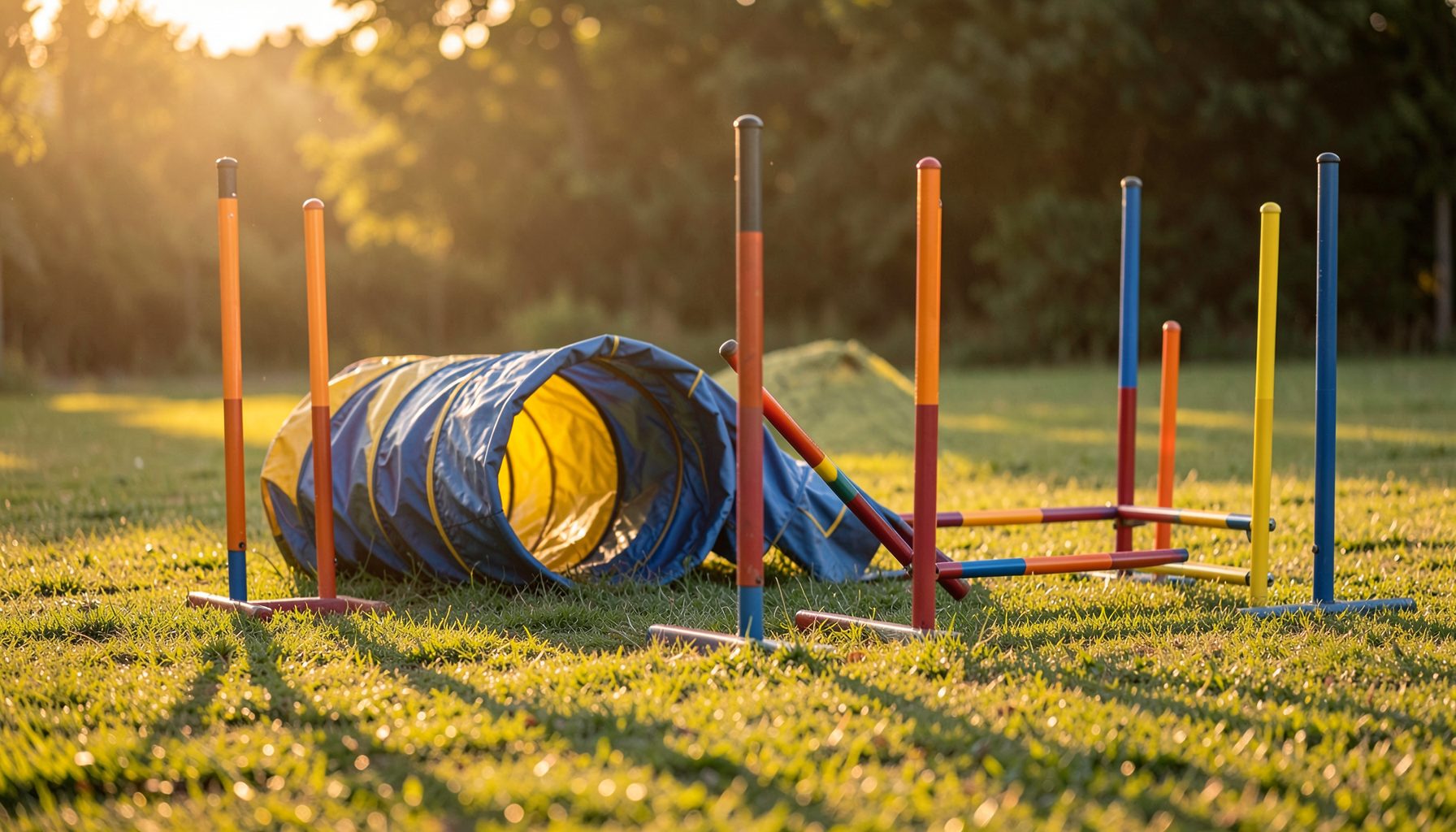
The Drama Behind a Dog’s Teeter-Totter Moment
A dog pausing on the teeter is suspended between motion and control. The board has tipped, the handler is driving forward, and for a fraction of a second the dog must wait for the contact zone before racing towards the next obstacle. Captured at that exact instant, the image carries tension that feels almost cinematic.
That is what makes a photo of the dog’s pause on the teeter a dramatic wall piece rather than just another action snapshot. The composition records speed, balance, concentration and partnership in a single frame, preserving the small decision that can determine the rhythm of an entire agility run.
The Split Second That Tells The Story
The strongest teeter photographs show the board in motion or at its tipping point, with the dog’s paws placed carefully and its body ready to launch. A lowered head, focused eyes and tucked hindquarters reveal that the dog is processing instructions while managing its own momentum.
This pause has visual suspense because the outcome is still unknown. Will the dog hold the contact? Will the handler’s cue arrive at precisely the right moment? A well-timed photograph makes viewers feel that answer is about to unfold, even when the run has already finished.
The image also preserves a detail that spectators can miss from outside the ring. At a club trial in Melbourne or a weekend competition outside Brisbane, the crowd may see only a rapid sequence of obstacles. A wall print slows that sequence down and gives the teeter moment the attention it deserves.
Balance, Movement And Canine Character
A teeter shot works when it includes both stability and energy. The dog may be still for a heartbeat, yet the angled plank, lifted tail, extended neck or braced legs suggest continued movement. That contrast creates a sense of pressure within the frame.
Expression adds another layer. Some dogs look intensely serious, while others appear bright-eyed, eager or slightly cheeky as they wait for the release. Ears, whiskers and muscle position can communicate breed character just as clearly as a formal portrait, especially when the image is sharp enough to show the dog’s face.
The handler’s presence can strengthen the story without taking attention away from the dog. A visible hand signal, forward lean or concentrated expression connects the animal’s pause to the human partnership behind the run. The result celebrates teamwork, not simply athletic ability.
A Strong Composition For The Wall
A dramatic agility photograph needs space and direction. If the dog is facing towards the right, open space in front of the nose can suggest the route ahead. Diagonal lines from the teeter board draw the eye through the image, while the handler and background obstacles create depth.
Low camera angles are particularly effective because they make the dog appear powerful and place the viewer close to the action. A clean background helps the dog stand out, though a hint of the ring, equipment or spectators can provide valuable context. The best frame feels connected to a real competition without becoming visually crowded.
Crop choices affect where the photograph belongs in a home. A wide image can suit a hallway or office wall, while a vertical crop may work above a desk or beside a trophy cabinet. For Australian homes, where strong natural light can enter through large windows, a balanced composition with clear subject separation often remains readable from across the room.
Light, Colour And The Feeling Of Speed
Outdoor agility photography often benefits from the bright conditions found around Sydney, Perth and regional showgrounds, but harsh midday sun can create deep shadows beneath the dog and board. Soft morning or late-afternoon light reveals fur texture and gives the teeter a warmer, more dimensional appearance.
Colour can reinforce the mood. A saturated obstacle against green grass makes the dog’s movement easy to follow, while muted surroundings place greater emphasis on expression and form. Even a monochrome print can be powerful when the original moment is built around shape, contrast and concentration rather than bright equipment colours.
Motion blur has a place, but the critical contact moment usually benefits from crisp detail. Sharp paws, eyes and plank edges make the balance feel real. When the surrounding background carries a small amount of blur, the dog appears frozen in time while the world continues moving around it.
Turning An Event Image Into Artwork
A competition photograph becomes a wall piece when it has emotional meaning as well as technical quality. It may capture a first clear round, a personal best, a comeback after injury or the run that earned a qualifying result. Those memories give the print a lasting role in a home, training room or club office.
Size should support the image’s visual intensity. A close, expressive teeter portrait can handle a larger enlargement because the face and body remain compelling at a distance. A wider scene may work best at a size that preserves the relationship between dog, handler and course.
Material and finish also influence the final impression. A matte surface can reduce glare in a sunny room, while a sharper photographic finish may suit a darker study. Before ordering, handlers can browse event galleries and compare nearby frames to find the image with the clearest expression, strongest body position and most meaningful context. Pawprint Pictures also helps customers find event photos when they remember the competition but need assistance locating the right gallery.
Finding The Exact Moment In A Large Gallery
Agility events can produce thousands of photographs, often divided by class, ring, club or organisation. Searching by the dog’s name is useful when the naming information has been entered consistently, especially for NADAC events. This NADAC gallery guide explains a practical route for owners trying to locate their dog without browsing every image.
Handler names are another valuable search path. This is particularly helpful when a dog’s registered name differs from its everyday name, or when several dogs compete under the same handler at a trial. The handler search guide can make a large event gallery easier to navigate.
Once the likely images are found, compare the sequence rather than choosing the first acceptable frame. Look for the photograph where the teeter angle, paw placement, expression and handler position work together. The most dramatic picture is usually the one that communicates the whole moment at a glance.
Details That Strengthen The Final Print
A strong wall image is built from the right moment, careful selection and a display choice that suits the room. These practical checks help protect the drama of the photograph:
- Choose a frame with clear eyes, stable paws and visible teeter movement.
- Prefer an uncluttered background that keeps attention on the dog and handler.
- Match the crop to the wall space, leaving enough room in front of the dog’s direction of travel.
- Select a print finish that controls reflections in bright Australian interiors.
- Check the image at the intended enlargement size before placing the order.
- Keep event, class and result details with the print so its story is remembered.
A teeter photograph can also become part of a small sequence: approach, contact, pause and release. Displaying one decisive image often has greater impact than filling a wall with near-identical frames, particularly when the chosen photograph has a strong diagonal and a recognisable expression.
A Moment Worth Seeing Every Day
The dog’s pause on the teeter is visually compelling because it compresses agility into a single act of trust and discipline. The animal is balancing on a moving surface, listening for the handler and preparing to accelerate, while the camera captures the exact point where control becomes momentum.
For an Australian competitor, that image may bring back a dusty country trial, a chilly winter morning in Adelaide, or a noisy club event in Sydney. Printed at a considered size and placed where it can be seen often, the photograph becomes more than a record of a run: it becomes a daily reminder of timing, partnership and the split second when everything held perfectly still.