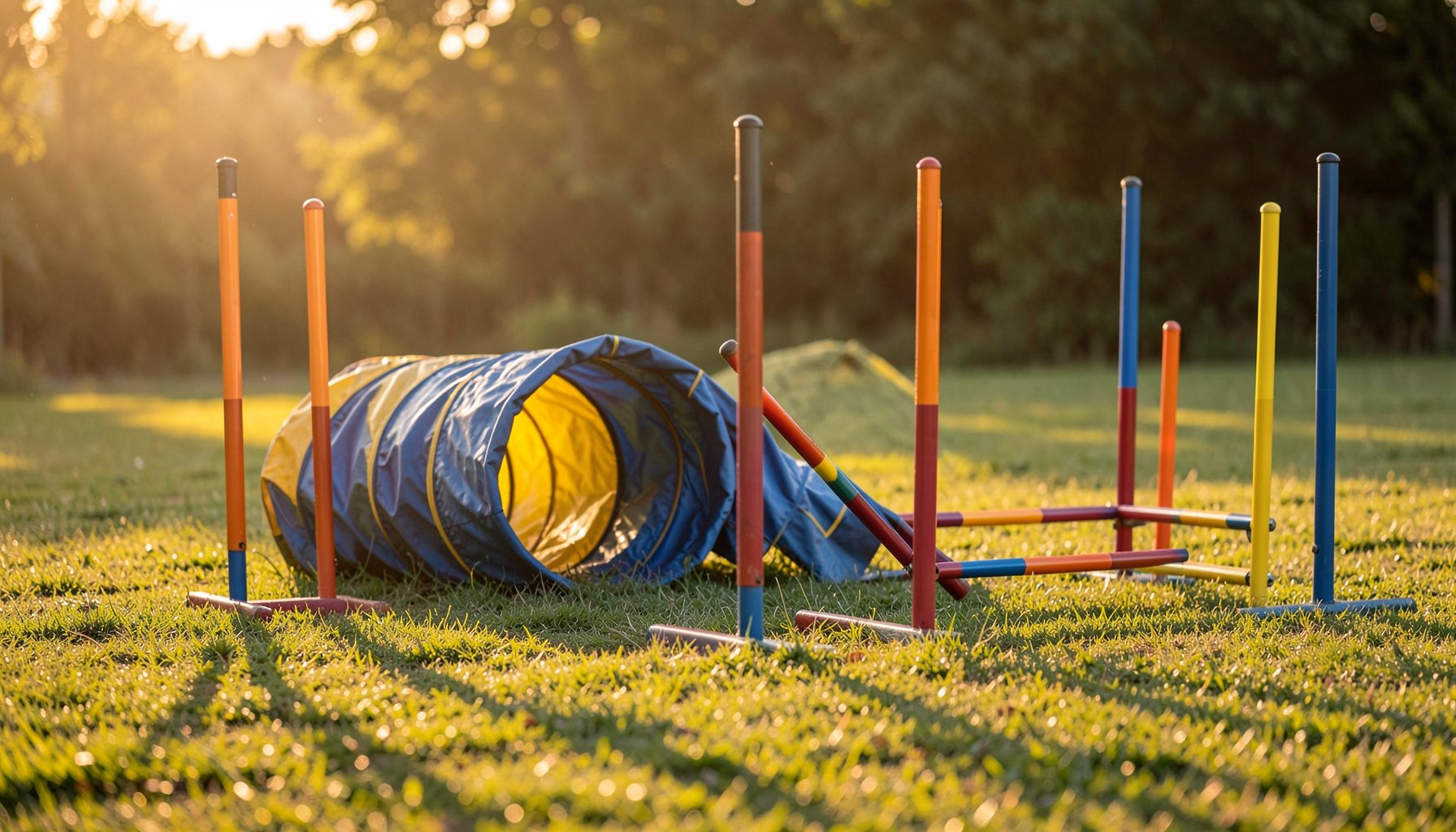
The first look after a blind turn
A blind turn asks a dog to commit to a line before it can see the next element of the course. The moment a dog first spots the next obstacle after a blind turn lasts only a fraction of a second, yet it can reveal focus, confidence and the quality of the handler's cues.
Photographing that instant differs from chasing a jump at full stretch. The nose lifts, the eyes fix on the target and the body reorganises for the next stride. A sequence that includes the approach and reaction tells a clearer story than one isolated airborne frame.
Choosing what to preserve starts with recognising what each part of the run communicates:
| Moment | What it communicates | Best display role |
|---|---|---|
| First look beyond a blind | Focus and commitment | Hero image in a sequence |
| Take-off at a jump | Power and timing | Wall-sized action frame |
| Contact on an A-frame | Control and trust | Training album |
| Entry into a weave | Rhythm and precision | Multi-shot display |
| Finish-line release | Joy and partnership | Celebration print |
Australian handlers regularly split their photographs between competition memories and practical training records. Pawprint Pictures gathers event images into searchable galleries by event, club, handler and dog, covering activities associated with AKC, USDAA, NADAC, CPE and ASCA, so a favourite run does not disappear in a camera roll.
Prints and other photo products can be ordered through a secure shopping cart. When comparing canvas panels, calendars or framed prints, Australian buyers should check dimensions and Australian-dollar prices rather than relying on screen size alone. Anticipating the first look, photographing it without disturbance and choosing a frame that keeps the story intact are the priorities.
What the first look reveals
A blind obstacle removes visual clues until the dog reaches its edge. The next element may be a jump, a set of poles or a change of direction, so the dog's first look contains information about how it is solving the course.
Watch for small changes that precede commitment: a head lift, a sharper ear direction, a muzzle turning towards the target, or a hind leg preparing to redirect. These details give a photograph meaning beyond speed because they show decision-making rather than simple movement.
A controlled burst around the blind, timed by the dog's appearance rather than the handler's stride, improves the odds without requiring an impossible freeze of the fastest action. In training, the same signal may also give the handler useful information.
Anticipating a fraction of a second
Position matters more than a large burst of frames. A photographer square to the blind may capture the body but lose the eye line. Moving a few steps around the obstacle can reveal the dog's face as it emerges, provided the move stays outside the run-on and safety zone.
Use the dog's approach as the starting cue. Begin just before it reaches the visual barrier, follow the head, and continue through the first look and next stride. Fast shutter speeds and a lens that sees past the barrier still matter more than a very long zoom.
Composition should keep both expression and direction. Leave space in front of the dog's gaze, remove distracting bags or handlers from the background where possible, and avoid cropping tightly to the head if the feet show the balance of the turn. A low viewpoint can work, but only from a safe position.
Working with Australian light and weather
Australian conditions can change the same course between runs. Sydney's hard sunlight and coastal glare can wash out detail, while Melbourne's changeable weather may move from grey cloud to bright sun within an hour. Brisbane's summer heat also leads many handlers towards early-morning or cooler evening training.
Check where the sun will be before choosing a side of the course. Face into the light and a black coat can lose detail around the eyes and muzzle. For focused advice on photographing dark-coated dogs, read the guide before a bright outdoor event.
Have equipment ready before the first dog is called. Remove lens caps, clear sand or grass from the front element, keep batteries charged, and carry water for yourself as well as a spare for the dog. A hat and sunscreen matter on exposed event grounds, and photographers should rotate between shaded positions rather than remain in full sun.
Keeping the dog and handler at ease
Preparation includes physical wellbeing, not just camera settings. A dog that is uncomfortable, overheated or distracted will not give the same expression, and nobody should pressure a handler to repeat a run for a better frame. Persistent dental discomfort or other pain deserves attention; this guide to recognising dental pain outlines warning signs to discuss with a veterinarian.
Flash is rarely necessary and can interrupt concentration at close range. Stay clear of the dog's path, keep conversation brief before the run, and avoid sudden movements around equipment. Shooting from beyond the marked competition area also protects other dogs, spectators and the working team.
Australian handlers should also check the rules that apply to their venue. State and territory animal-welfare laws set general duties of care, while many local councils impose separate lead requirements for reserves and public recreation areas. Clubs have their own event rules, so photographer access and equipment placement should be confirmed with the organiser.
A preparation checklist for both sides of the run
A good sequence starts with a shared understanding of the blind. The handler knows the intended line; the photographer needs to know where the dog will emerge and what it will see. This makes the exercise a practical checklist rather than a search for one perfect instant.
The shared brief can be divided into two short checks.
Before the run
- Walk the line beside the handler and note the dog's likely sightline at the edge.
- Identify the background you want behind the dog's first look.
- Agree on signals so the photographer can follow without distracting the handler.
- Check the dog's comfort, hydration and the footing around the obstacle.
- Choose a camera position outside the run-on and competition safety areas.
During the run
- Follow the dog's head and eyes rather than waiting for the body to jump.
- Start the sequence before the dog reaches the blind.
- Hold the burst through the first look and the next stride.
- Keep the direction of travel clear within the frame.
- Lower the camera only when the position remains safe.
These checks reduce wasted effort at busy events. A photographer who knows the line can spend less time reacting to a surprise and more time preserving the instant that explains the run.
Turning the sequence into a lasting display
A single striking image can anchor a display, but the first look gains meaning beside the approach, take-off and landing. Event, club, handler and dog names provide useful search paths through a large trial. Pawprint Pictures uses those details to organise galleries, making it easier to find the first-look frame alongside its context.
Print size and format should follow the story rather than a preset package. A wide frame preserves the dog's line of sight; a square crop can emphasise expression; a vertical layout suits a portrait beside a doorway; and a sequence can fill a hallway without making every image compete for attention. Options for multi-shot photo products show how several images of the same dog can be arranged together.
The practical takeaway is to choose one frame for its expression and one sequence for its context. Keep the first-look photograph where the eye returns, and let the surrounding images explain how the dog got there.