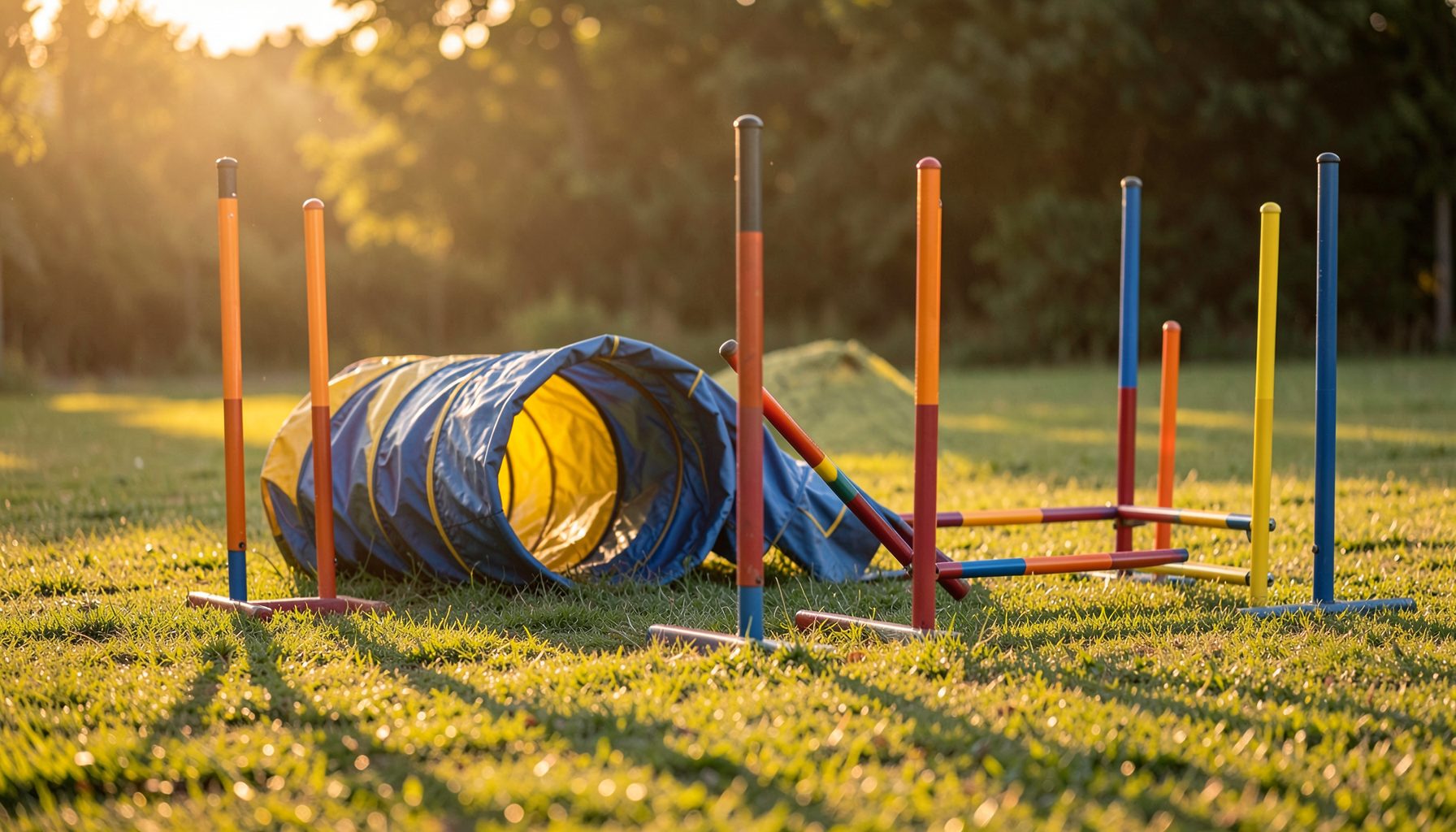
The moment the lead slips free at the agility start line
Every run begins in stillness. The dog is set, the handler breathes in, the crowd at the trial grounds hushes just enough to hear the collar tag clink against the jump bar. Then, in a fraction of a second, the lead leaves the handler's hands and the partnership becomes motion. We make sure the camera is already there.
Catching that instant is not luck. It is a habit we have built across thousands of starts at trials from Brisbane to Perth, at club grounds tucked behind suburban ovals, and at major shows where rings stretch across acres of showground turf. Australian handlers move quickly, often working between heat, wind and a packed weekend of classes, and the photos we take need to feel as alive as the runs themselves.
Our annual events gallery collects these moments by club, judge and trial date so you can find your own start-line split-second within seconds. The rest of this piece explains why that single frame matters more than almost any other we shoot.
The instant that defines every run
A dog agility run is won or lost before the dog reaches the first obstacle. The release moment tells the story of how that partnership was tuned long before this trial weekend. We see it in the dog's shoulder rotation, in the way the handler's wrist flicks open, and in the slight forward lean of the handler's torso as commitment arrives.
Photographers working the agility circuit talk about the "leaving" frame, the one where dog and human are still in contact for a heartbeat before they become two separate bodies chasing the clock. This is the frame that captures intent rather than outcome. A clean run can look chaotic at the weaves, but the release shows whether the dog understood the plan from the first step.
Sports photography in Australia has its own rhythm, with handlers often travelling long distances between events and packing two or three trials into a single weekend. That pressure on time makes the start-line photograph even more meaningful, because it is often the only image taken before fatigue, errors or course-rewalks complicate the day.
What the camera actually records
In roughly 200 milliseconds, three things happen at once. The handler opens the hand, the dog's head snaps toward the first obstacle, and the lead falls away in an arc through the air. Our shutter settings, focus points and pre-release capture are all tuned to this very short window.
We shoot the release at a fast shutter speed, often 1/1600s or quicker, paired with continuous autofocus tracking on the dog's eye rather than the handler's hand. This way the lead is sharp even when the dog is already blurring into its acceleration. The image then shows the lead frozen in the air, the handler's fingers still extended, and the dog committing to its line.
This is also why we use a second camera body set to a wider angle. While the main lens tracks the dog, the second frame holds the handler and the start flag together, so the gallery gives you both the technical shot and the emotional one.
Reading the handler before the dog moves
Handlers give away the release half a second before it happens. The shoulder drops, the weight shifts onto the balls of the feet, and the eyes flick from the dog to the first jump. A good agility photographer recognises these cues the way a cricketer reads a bowler's grip.
We have shot handlers at the Dogs Queensland grounds, at KCC Park in Victoria, and at the many suburban obedience and agility clubs that dot the eastern seaboard from the Gold Coast to Hobart. Body language is consistent across states, even when the slang differs and what one handler calls a "send" another might call a "go" or a "push out".
Learning to read this body language is one of the reasons we recommend skimming our agility event guide before you book a trial weekend. A run that starts with the right handler-dog relationship always photographs better than one that begins in uncertainty.
Why this frame outlasts the rest of the gallery
Run photos get shared. Win photos get framed. The release photo, however, becomes the one families put on the mantlepiece. Years later, when the dog has retired and the handlers have moved up to the next height class, the start-line image still means something.
What a release photo can tell you years later:
- The dog's confidence in that exact season of training
- The handler's coaching style, whether flashy or quiet
- The era of the sport, from older jump styles to current equipment
- The bond between handler and dog, captured before the public performance
- The nerves, or the lack of them, that morning at the trial grounds
It is also the rare photograph where you see the lead. Once the run begins, the lead is gone, slung across the handler's wrist or dropped at the start flag. The release is the only frame where that little piece of leather or nylon is still part of the picture.
How Australian conditions shape the shot
Heat, glare and crowd size change everything. Trials at the Sydney Royal Easter Show draw galleries that our usual club-level shoots do not, while an evening run at a Brisbane winter trial brings cool air, calmer dogs, and a totally different shade of light. Local conditions shape the release shot more than handlers realise.
We adjust for:
- Harsh afternoon sun with a polariser and faster shutter speeds
- Coastal wind by shifting angle so the lead arc stays readable
- Indoor carpet at the bigger canine complexes, where higher ISO and flash fill become essential
- Showground turf at the larger Royal shows, where the start flag is further from the photographer than at club grounds
Sometimes the conditions are ideal and the release is a single clean frame. More often, the magic comes from a sequence of three or four frames where the lead, the hand and the dog's intent are all visible in slightly different positions across the burst.
Making sure it happens at your next trial
If you are trialling this season, take a moment at the start line to set yourself up for a great photo. Place the dog slightly ahead of your feet, give yourself a clean sightline to the first obstacle, and trust the moment. The camera is closer than you think.
We position ourselves opposite the handler's strong hand so the lead leaves the frame cleanly on one side. If you are running a tricky start sequence, mention it to the photographer at the start of the day; we can pre-focus on the dog's launch point and be ready before the judge calls your number.
Book a trial weekend photo session in your state, pick an upcoming event within driving distance of home, and your release moment is already on its way to being shot.