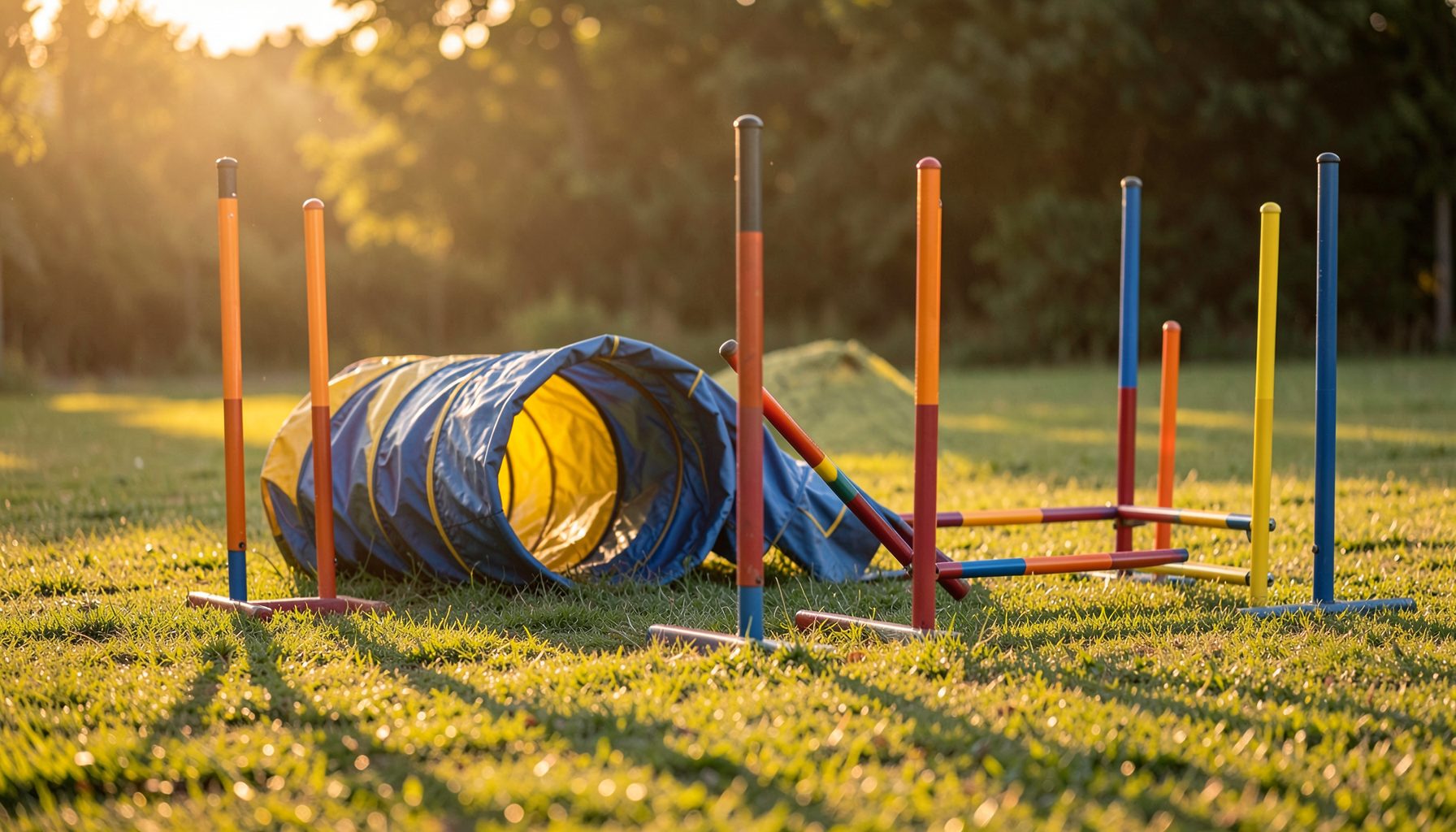
Track Your Dog’s Agility Progression Across Multiple Events
Photographs can reveal changes that are easy to miss during a busy agility season. A dog may appear to take the same tunnel, weave poles or contact obstacle successfully each time, yet small differences in stride, posture, commitment and handler timing can show where training is improving or beginning to stall.
A useful progression record combines competition photos, video, course notes and training observations. By comparing the same obstacle across several events, you can separate genuine development from the effects of weather, surface, venue layout, fatigue and the pressure of a crowded trial day.
| Evidence source | What it shows best | Limitation |
|---|---|---|
| Event photograph | Body position, obstacle commitment and handler location | Captures one instant |
| Video run | Rhythm, speed, recovery and connected sequences | Harder to review consistently |
| Training notes | Cues, repetitions and known distractions | May reflect a controlled setting |
| Judge’s result or comment | Outcome, faults and official context | Usually lacks technical detail |
Choose One Obstacle And A Clear Baseline
Start with an obstacle that matters to your team. It might be a wide approach to a jump, a contact zone where your dog hesitates, a tunnel entry that causes refusals or weave poles where speed changes from run to run. Tracking everything at once creates a large collection of images without a useful comparison.
Record the earliest reliable example as your baseline. Note the event, date, class, surface, obstacle direction, approximate approach angle and what happened immediately before and after it. A first photograph may show that your dog completed the obstacle, but the surrounding context explains whether the performance was smooth, rushed or dependent on an unusually generous line.
For newer teams, an introductory CPE event can provide helpful context about class structure and scoring; this CPE event guide can help you understand what details to save alongside each image.
Build A Consistent Event Record
Create one entry for every selected performance, even when the result feels ordinary. A clear file name such as “2024-08-17 Canberra weave poles, left entry” is easier to search than an image number copied from a download folder. Keep the original photograph and add a short note rather than relying on memory months later.
Australian competition schedules often involve a full day at an oval, indoor centre or showground, with travel between clubs and events. A run at a cool morning trial in Melbourne may look very different from one on a hot Western Sydney afternoon or a humid Queensland weekend. Include temperature, surface and time of day where they may have affected your dog.
Save the event name, class, obstacle direction, outcome, cue used and any unusual distraction. If a photographer groups galleries by event, club, handler and dog name, those search options can make it easier to locate several weekends from the same season rather than scrolling through unrelated runs.
Compare Body Mechanics Instead Of Results Alone
A clear finish is valuable, but it does not automatically mean the movement was efficient. Look at the dog’s head position, shoulder angle, spine, rear-end engagement and foot placement. For a contact obstacle, compare the approach, the running or stopped contact behaviour and the dog’s ability to leave promptly. For a jump, examine take-off distance and whether the landing sends the dog naturally towards the next line.
Weave poles deserve especially careful review. A still image can show whether the dog is entering on the correct side, bending evenly and keeping its eyes directed through the channel. It cannot prove the whole performance, so pair it with video or your own notes. These weave photo tips explain why timing and camera position matter when you want meaningful images rather than attractive but ambiguous ones.
Compare posture across at least three events before deciding that a change is real. One unusually compressed frame might reflect the instant the shutter fired, not a lasting improvement or problem.
Separate Training Progress From Event Variables
A dog’s performance is shaped by more than skill. Different equipment, ring size, judge’s course design, crowd noise and nearby dogs can alter an approach. Grass may be damp at a morning event, while an indoor mat may provide a completely different grip. A hot day can reduce drive or make a careful dog appear slower.
When reviewing photographs, mark conditions that could influence the result. An image from a regional trial after a long drive should not be compared too literally with one from a familiar club training night. Likewise, an obstacle taken late in a three-run day may show fatigue rather than lost understanding.
Useful observations to record include:
- Surface and weather conditions
- Time of day and run order
- Obstacle position and approach angle
- Nearby distractions or ring congestion
- Handler position and verbal cue
Use Galleries To Find The Right Evidence
A professional event gallery can help fill gaps in your own records, particularly when you remember the run but did not capture video. Search by the competition, club, handler and dog name, then check adjacent images from the same sequence. A single frame may show the obstacle, while the next image reveals the landing or handler response.
Look for repeated visual evidence instead of selecting only the most flattering photograph. The sharpest image may show the dog at peak extension, while a less dramatic frame may reveal a late cue, an uneven weave entry or a better line to the next obstacle. Keep both if they answer different questions.
For Australian handlers who travel to events around Brisbane, Adelaide, Perth or regional New South Wales, organised galleries can also preserve a season that is spread across many venues. Consistent naming makes it easier to compare a dog’s first trial with a later run after several weeks of focused work.
Turn Images Into Practical Training Decisions
A progression record should lead to a small, testable adjustment. If photographs show your dog repeatedly landing wide after a particular jump, review your approach line and reward placement. If weave entries are accurate but the dog exits slowly, separate entry training from speed and independence work.
Avoid changing several cues at once. Choose one feature, test it in training and look for the same change at the next suitable event. Mark whether the dog improved in accuracy, speed, confidence or recovery, since progress in one area may temporarily reduce performance in another.
The following signals are useful to track over time:
- Earlier commitment to the obstacle
- More balanced take-off or entry posture
- Faster recovery after a difficult line
- Less dependence on the handler’s position
- Consistent performance under new conditions
Choose Products That Preserve The Story
Once you have identified meaningful images, select products that support long-term comparison. Digital files are practical for side-by-side reviews and training folders, while prints can create a physical record of milestones. A framed image of a first successful contact behaviour has a different purpose from a sequence used to study technique.
Before ordering, check that the image number, dog name and event are correct. Crop choices matter too: a tight crop may highlight shoulder position, while a wider image can show the handler’s line and the next obstacle. The overview of popular photo products can help you match the format to whether you want a keepsake, display piece or reference image.
Create a simple archive with folders by year, obstacle and event. Add a short caption explaining what changed. Over time, the collection becomes more useful than a set of disconnected action shots because each photograph has a reason for being kept.
Keep The Long View
Review your record at the end of a training block rather than after every run. A single refusal, slow weave or awkward contact may be noise; a pattern across several events is more informative. Look for steady trends in confidence, independence, accuracy and the handler’s ability to support the line without over-directing.
Progress is rarely perfectly linear. A dog can gain speed, lose precision for a period, then develop a stronger overall performance once the new skill settles. The most valuable comparison is therefore not simply whether the obstacle was completed, but how comfortably and reliably the team handled it in changing conditions.
Remember that tracking the same obstacle across events works best when photographs are read alongside context. Save the image, note the conditions, compare body mechanics and connect each observation to a measured training decision.