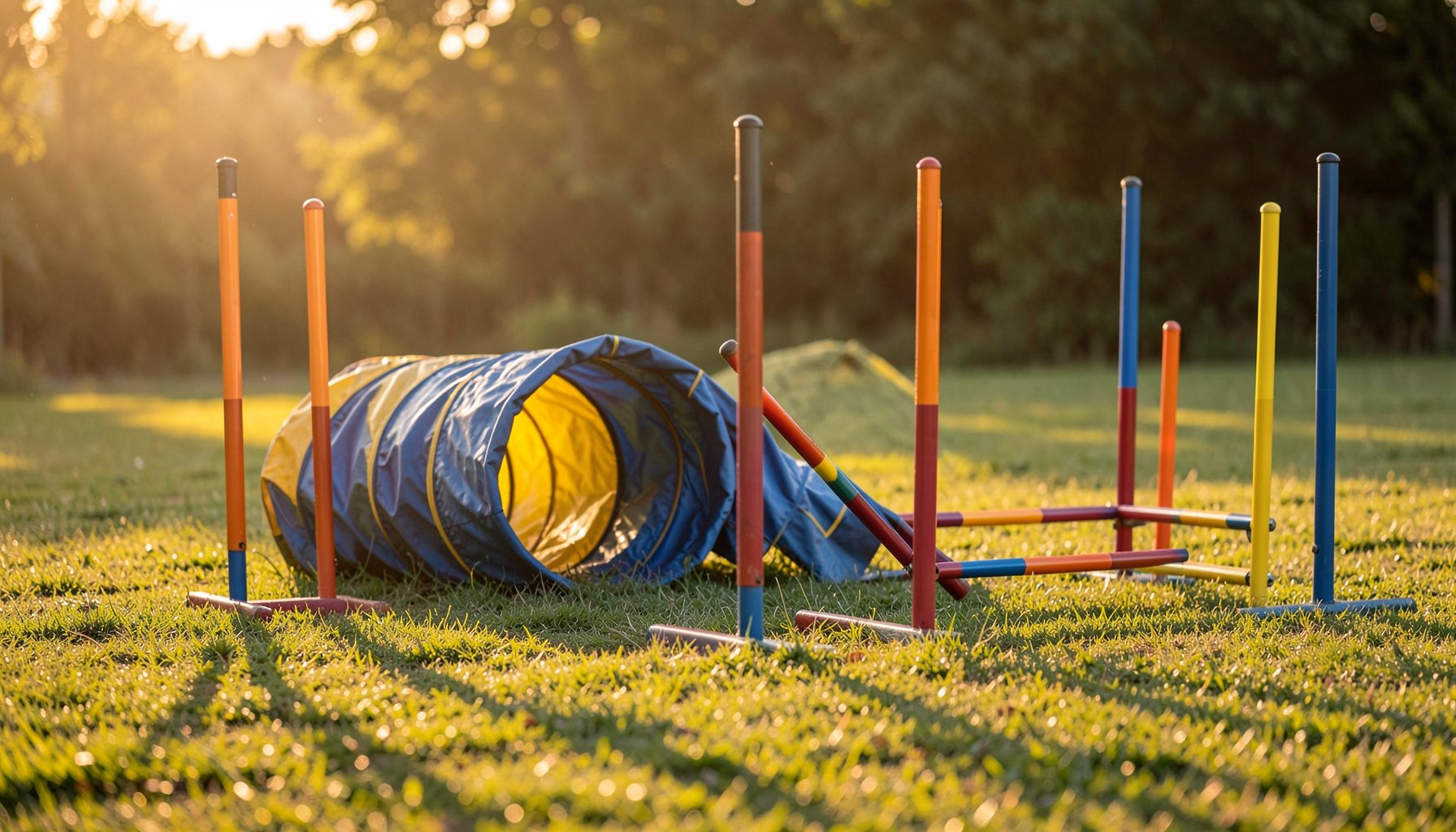
The Evolution of Dog Agility Photography From Film to Fast Digital
Dog agility photography has changed as dramatically as the sport itself. What once depended on carefully timed film exposures, manual focus, and limited opportunities to capture a run can now involve high-speed digital cameras, rapid autofocus, burst shooting, and searchable online galleries. The goal, however, remains the same: preserve the concentration, speed, partnership, and personality that make each performance memorable.
An agility course is a demanding photographic environment. Dogs accelerate, leap, climb, weave, and turn within seconds, while handlers move through the ring and communicate through subtle gestures. A meaningful image must show more than a clean obstacle performance; it should reveal the relationship between dog and handler.
For competitors, spectators, and event photographers, understanding this progression explains why modern coverage feels more complete. From the equipment used at ringside to the way images are organized and purchased afterward, every stage now supports a richer record of the day.
The film era rewarded patience and preparation
Early dog agility photographers worked with film cameras that offered little room for error. A roll contained a fixed number of exposures, and every frame had a cost. Photographers had to anticipate where a dog would take off, land, or change direction, then press the shutter at precisely the right moment.
Manual focus added another layer of difficulty. A photographer might pre-focus on a contact zone, jump, or weave-pole entry and wait for the dog to enter that area. Exposure settings also required careful thought because indoor arenas, shaded outdoor rings, and bright grass courses produced very different lighting conditions.
The reward was a physical collection of negatives, slides, or prints. Reviewing the images could take days, and a missed moment could not be recovered. Yet this limitation encouraged deliberate observation. Photographers learned course layouts, watched handler lines, and developed a strong sense of timing.
Digital cameras changed the rhythm of the ring
The arrival of digital single-lens reflex cameras transformed event photography. High ISO performance made it easier to work in dim arenas, while motor drives allowed photographers to record a sequence rather than rely on one carefully timed exposure. Immediate playback also made it possible to check focus, shutter speed, and composition during the event.
Autofocus systems became faster and more reliable as manufacturers introduced improved tracking modes. A camera could follow a moving dog across part of the frame, helping photographers capture motion over jumps, tunnels, and fast approaches. Large memory cards replaced the strict limits of film rolls, although disciplined shooting remained important for managing thousands of files.
Modern mirrorless cameras have extended these benefits with electronic viewfinders, silent shooting, animal-detection autofocus, and sophisticated subject tracking. These tools do not replace experience. They give a knowledgeable photographer more opportunities to apply it when a dog changes pace or takes an unexpected line.
Technique still matters more than technology
A fast camera cannot solve every challenge on an agility course. Motion blur, distracting backgrounds, harsh shadows, and blocked sightlines can weaken an image even when the dog is sharply focused. Photographers still need to choose a useful position, understand the direction of travel, and predict the most expressive part of an obstacle.
Learning how each obstacle affects body position is especially valuable. A dog ascending an A-frame has a different visual shape from one exploding out of a tunnel, while a broad jump may require a wider composition to show the full extension. This guide to common agility obstacles offers useful context for anticipating those moments.
Shutter speed is another essential decision. A fast setting can freeze flying ears, suspended paws, and focused eyes, while a slower setting can convey speed through controlled blur. Good agility photography uses both approaches, depending on whether the aim is a crisp competition record or a more impressionistic image of movement.
Event coverage became more accessible and organized
In the film era, owners often had to wait for a local photographer to display proofs or advertise printed images. Digital workflows shortened that gap. Files could be edited, uploaded, and made available while the event was still fresh in competitors’ minds.
Online galleries also changed how customers find their photographs. Instead of searching through a physical proof book, an owner may browse by event, club, handler, or dog name. This structure is particularly helpful at large trials where hundreds of teams compete across several classes and rings.
The atmosphere of a competition matters too. A spectator who understands ring etiquette, class flow, and the difference between a training session and a sanctioned trial is better prepared to appreciate the photographs. A practical AKC trial spectator guide can help newcomers understand what they are seeing and where photography fits into the event experience.
| Era | Typical equipment | Main limitation | Customer experience |
|---|---|---|---|
| Early film | Manual-focus camera and film rolls | Limited exposures and delayed review | Prints or proofs available later |
| Early digital | DSLR, memory cards, basic autofocus | Large files and inconsistent tracking | Faster editing and online previews |
| Current systems | Mirrorless or advanced DSLR with animal autofocus | High volume requires careful selection | Searchable galleries and varied products |
| Emerging workflow | Connected cameras and automated tools | Privacy, accuracy, and quality control | Quicker delivery with human review still important |
Editing became part of the creative process
Digital editing allows photographers to correct exposure, crop distracting edges, reduce noise, and bring out detail in a dog’s coat. It can also create a consistent visual style across an entire event. Careful editing preserves the authenticity of the run while making the final image clearer and more attractive.
Selection is just as important as adjustment. A long burst may contain several technically sharp frames, but the strongest photograph usually has a distinct expression, clean body position, and meaningful interaction with the handler. The best galleries balance action images with quieter moments before or after a run.
Body language helps guide that choice. Ears, eyes, tail carriage, paw placement, and the handler’s posture can communicate confidence, uncertainty, excitement, or concentration. Photographers and owners can gain valuable insight from this explanation of reading canine body language, especially when selecting an image that feels true to the team.
The photograph now serves several purposes
A competition image may be purchased as a framed print, shared on social media, added to a scrapbook, or used to document a dog’s progress. A single photograph can preserve a qualifying run, celebrate a title, or mark a first successful performance. As agility careers unfold, these images become a visual history of changing skills and partnerships.
Digital galleries support this long-term value by making photographs easier to locate after the event. When images are grouped by organization, club, event, handler, and dog, customers can return to earlier trials without sorting through anonymous files. Secure shopping carts also allow owners to order prints and other photo products from the same gallery.
For professional photographers, the workflow has become broader than pressing the shutter. It includes event preparation, file management, ethical editing, gallery construction, customer support, and reliable product fulfillment. The photographer’s role now connects the energy of the ring with the practical needs of the people who want to preserve it.
Practical choices for stronger agility images
Whether using a professional camera or learning with a simpler setup, a few habits consistently improve results. Preparation reduces missed opportunities and helps the photographer work respectfully around competitors, judges, ring crews, and other spectators.
Before photographing a class or training session, consider these priorities:
- Watch a few runs to understand the course flow and likely shooting positions.
- Use a shutter speed fast enough to control the dog’s movement in the available light.
- Focus on expressive moments, including takeoffs, landings, turns, and handler communication.
- Leave room in the frame for motion rather than cropping tightly in every image.
- Review sequences critically and choose photographs that show both technical action and character.
Different organizations and venues may have their own access rules, lighting conditions, and ring layouts. A flexible approach helps the photographer adapt without distracting teams or obstructing officials. Respectful coverage is part of professional event photography.
The technology will continue to advance, but the central skill remains observation. Cameras can track a dog’s eye and record dozens of frames per second; only a thoughtful photographer can recognize which frame tells the clearest story.
Pawprint Pictures brings that balance of timing, organization, and customer-focused delivery to dog agility events, club shows, trials, and training sessions. Browse event galleries, search by handler or dog name, and preserve the runs that deserve to be remembered with photographs and products selected for your team.