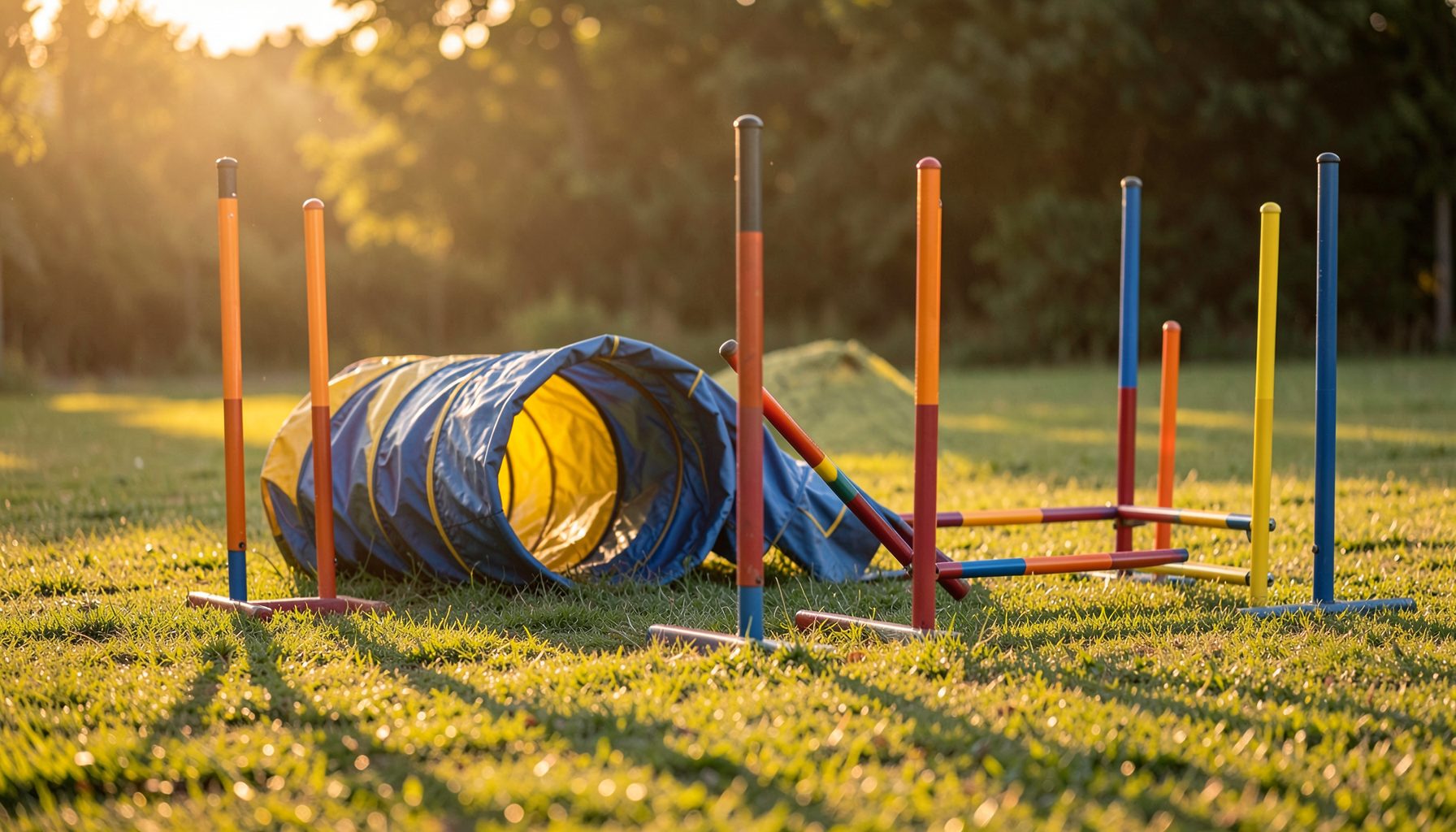
Why a low camera angle gives agility dogs more power
A dog flying over a jump, driving through a tunnel or stretching towards the weave poles can look dramatically stronger when photographed from near ground level. The lower viewpoint changes the relationship between the dog, the obstacle and the background, making movement feel larger and more forceful. Learn more about Creating A Personal Accountability System That Works For Your Life 6ae3.
This effect works because viewers see the dog from closer to its own height. The chest appears broader, the legs look longer and the body occupies more of the frame. A low-angle action photograph can turn a fast run at a local club grounds in Sydney or Melbourne into an image with the presence of a major championship moment.
At Pawprint Pictures, event galleries help handlers find images by competition, club, handler and dog name across organisations and formats. Browsing customer galleries makes it easier to compare how perspective, timing and composition affect the final photographs before choosing prints or other products.
Why perspective changes the image
A camera positioned low to the ground points slightly upward, which gives the dog visual dominance. The horizon drops behind the subject, while jumps, contact equipment and tunnel entrances can appear taller and more imposing. This creates a sense of forward drive, even when the dog is captured in a split second.
The angle also brings the viewer into the course. Instead of looking down at the dog, the photograph feels as though it shares the running line. A Border Collie powering towards the lens can seem almost three-dimensional, with its face, shoulders and front paws leading the action.
Background control is another advantage. Shooting from standing height often includes fencing, parked cars, club marquees and distracting spectators. Lowering the camera can replace much of that clutter with grass, rubber surfacing or a clean strip of sky, keeping attention on the dog’s expression and athletic form.
Finding the right shooting position
Low angle does not mean placing the camera directly on the ground for every frame. A kneeling position, a monopod set low or a camera held just above the grass may provide enough change in perspective while allowing faster movement along the ring. The safest position is always outside the course and well clear of the dog’s line.
Study the sequence before taking photographs. A jump viewed from the landing side can show the dog extending through the air, while a position near the exit of a tunnel may capture acceleration and focus. For weave poles, a low three-quarter angle often reveals the curve of the spine and the rhythm of the legs without making the poles merge together.
The dog’s welfare and the event’s rules come first. Never crouch where a handler, steward or competing dog needs to pass, and avoid sudden movement near nervous animals. A calm presence matters at trials, especially for inexperienced competitors; this practical guide to a first competition day offers useful context for understanding that environment.
Timing, lens choice and camera control
A powerful viewpoint still depends on timing. Aim to release the shutter when the dog’s body is extended, the ears are alert and the eyes are visible. At a jump, this may be the instant the front legs reach forward. At a contact obstacle, the strongest frame could show the dog driving down the ramp with its weight committed to the next turn.
A medium telephoto lens is often a practical choice because it keeps the photographer at a safe distance while compressing the background slightly. A wide lens can exaggerate the low-angle effect, but it requires careful positioning and may distort the dog’s nose or legs if the subject gets too close. Continuous autofocus, a fast shutter speed and a burst mode help preserve the decisive moment.
For outdoor Australian events, bright sun can create deep shadows beneath the dog’s chest and muzzle. Expose for the face rather than the pale grass, and watch for harsh contrast during midday competitions. In softer early-morning light, the low viewpoint can pick up texture in the turf while maintaining detail in dark coats.
Matching the angle to the action
Different obstacles call for different camera heights. The comparison below gives a starting point rather than a fixed rule, since course layout, dog size and available space will influence the result.
| Course moment | Useful camera height | Visual effect | Main caution |
|---|---|---|---|
| Jump take-off | Knee to ankle level | Emphasises lift, chest and forward reach | Keep clear of the landing zone |
| Tunnel exit | Low kneeling position | Makes acceleration feel explosive | Avoid blocking the handler’s path |
| Weave poles | Low three-quarter angle | Shows rhythm, bend and concentration | Check that poles do not hide the face |
| A-frame or dog walk | Slightly below ramp level | Highlights climbing effort and drive | Follow venue and steward instructions |
| Fast approach | Low but distant | Enlarges the dog against the course | Use a longer lens for safety |
A low angle is especially effective when the dog is moving towards the camera or crossing diagonally across the frame. A side-on position can show stride length, while a head-on view communicates intensity. Leave room in front of the dog so the image still feels directional rather than cramped.
Adapting the technique to Australian events
Australian agility photography often involves open grounds, strong sunlight and changing weather. A competition near Brisbane may have humid morning conditions, while a Melbourne winter trial can bring flat light and damp grass. In Perth or Adelaide, hard midday brightness may make a low viewpoint particularly valuable because the ground can act as a clean, bright base beneath the subject.
Local clubs may run events on ovals, showgrounds or council reserves where the background includes temporary fencing and marquees. Arriving early allows the photographer to identify clean sightlines before handlers and spectators fill the perimeter. It also helps reveal where the sun will fall during the classes, which is important when a low position could place the camera directly into glare.
Australian handlers also understand the value of images that show both athleticism and partnership. A frame with the dog powering over an obstacle can sit alongside one showing the handler’s body position and cue. For spectators who want to understand the rhythm of a trial, this AKC trial guide explains the event atmosphere and structure, even though Australian competitions commonly follow local club and ANKC-related practices.
Turning strong frames into lasting keepsakes
When reviewing an event gallery, look beyond a sharp face. The best low-angle photograph usually combines clear eyes, a strong body line, visible effort and enough environmental detail to identify the obstacle. Pawprint Pictures organises photographs so owners can search by event, club, handler or dog, then order suitable products through a secure cart.
A dramatic action file also needs careful preparation if it will be enlarged for a wall print. Cropping too tightly can remove paws, ears or the direction of travel, while excessive sharpening can make grass and coat detail look harsh. Before ordering a large display, review guidance on large-format printing so the chosen file is suited to its intended size.
Practical choices for a stronger viewpoint
Use these habits when photographing agility from a lower position:
- Choose a safe location outside the ring and away from landing zones.
- Pre-focus on the obstacle area where the dog will be most expressive.
- Keep the lens low enough to alter perspective without sacrificing stability.
- Photograph during softer light when possible, especially for black or heavily marked coats.
- Leave space in the direction of travel so the frame feels energetic.
- Compare several moments from the same run before selecting a print-worthy image.
The most convincing low-angle photographs are created through a combination of viewpoint, timing and respect for the event. A camera close to the dog’s level can make a compact terrier look determined, a Border Collie look airborne and a large working breed look immensely powerful. The practical takeaway is simple: get low, stay safely outside the course, and press the shutter when the dog’s body is fully committed to its next move.